


Energy & Oil Gas
2025 Outlook for the Energy Construction Sector in Australia After COVID 19
Renewables build out and gas firming projects shape the fabrication demand profile for Australian energy construction.
The Impact of COVID 19
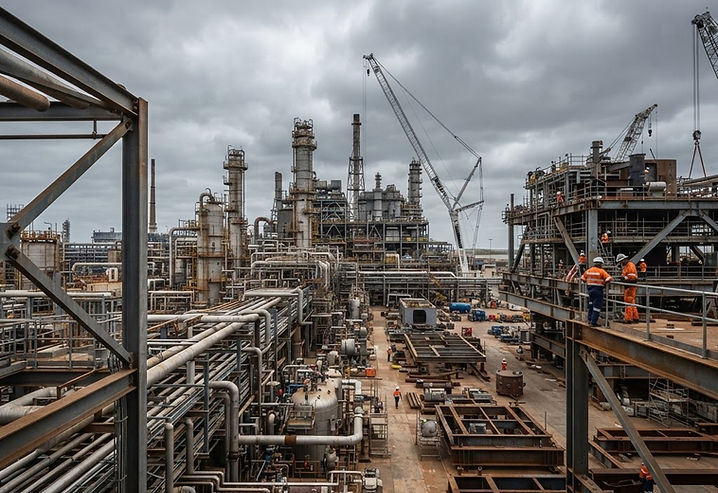
The COVID 19 pandemic has had a profound impact on the Energy Construction Sector in Australia and other various sectors worldwide, and Australia’s energy construction sector is no exception. The immediate onset of the pandemic brought about unprecedented disruptions, leading to project delays, labor shortages, and a reevaluation of operational practices. Many heavy steel fabrication companies faced significant setbacks, with supply chain interruptions affecting the availability of essential materials for ongoing projects. Steel fabrication in Australia, especially for energy projects, experienced delays as travel restrictions hindered the movement of skilled labor and resources necessary for timely completion.
As the pandemic progressed, the ramifications on the energy construction sector became more pronounced. Economic uncertainties caused by fluctuating demand for energy led to critical evaluations of existing projects and future investments. Some energy construction initiatives were put on hold or scaled down, causing a noticeable shift in project prioritization within the industry. Furthermore, the labor shortages exacerbated by the pandemic prompted companies to innovate their recruitment strategies, emphasizing health and safety protocols while attracting a new workforce.
Despite these challenges, the energy construction sector has demonstrated resilience and adaptability. Industry experts highlight that the obstacles presented by COVID 19 accelerated the adoption of digital technologies and remote work solutions, allowing companies to maintain productivity while adhering to social distancing guidelines. Innovations in project management software and virtual collaboration tools have emerged as essential assets for organizations navigating this new landscape. Consequently, steel fabrication companies have had to pivot towards digital solutions to streamline processes and improve efficiency.
In conclusion, the energy construction sector in Australia is evolving as a response to the disruptions caused by the COVID 19 pandemic. The challenges faced by heavy steel fabrication companies and the steel fabrication industry at large have initiated changes that may shape the future of energy construction, promoting greater resilience and innovation in the face of adversity.
Shifts in Energy Demand and Policy Changes
The COVID 19 pandemic has fundamentally transformed the energy landscape in Australia, resulting in shifts in energy demand alongside significant policy modifications. As public awareness surrounding climate change escalated, there emerged a notable surge in preference for renewable energy sources. The government’s recognition of this shift has translated into substantial policy changes designed to facilitate a transition towards cleaner energy and bolster sustainability initiatives within the sector.
Australia has historically relied on fossil fuels; however, the demand for renewable energy is now on the rise. Reports indicate that the share of renewable energy in Australia’s total generation is expected to reach more than 50% by 2025, a significant development that aligns with global trends towards reducing carbon footprints. This shift is motivated not only by regulatory frameworks but also by evolving consumer preferences and societal expectations of energy suppliers.
In response to the pandemic, the Australian government has introduced several policies aimed at accelerating the energy transition. Programs that enhance investments in infrastructure for renewable energy have become a focal point. These initiatives are complemented by incentives for heavy steel fabrication companies involved in renewable energy projects, such as wind and solar farms. The integration of advanced technologies and sustainable practices is essential for ensuring this transition is both economically viable and environmentally sound.

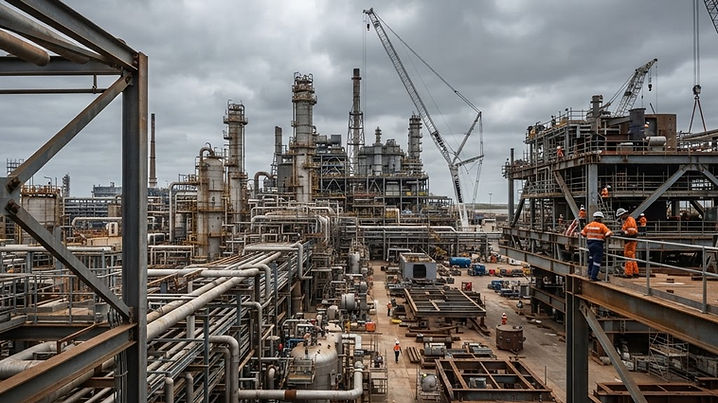
Furthermore, projections suggest that Australia’s energy consumption is slated to evolve, with increasing portions sourced from renewable avenues. National energy market reports also highlight that the anticipated decline in coal usage is likely to coincide with a surge in demand for renewable energy services. Overall, the trajectory indicates a definitive move toward sustainability, spurred by policy frameworks introduced during and after the pandemic aimed at robust and enduring energy reforms.
Technological Innovations and Future Trends
The energy construction sector in Australia is witnessing a transformative phase driven by various technological advancements. One significant area of innovation lies in the development and implementation of smart grids. These advanced power systems enhance the efficiency and reliability of energy distribution by utilizing real time data analysis, which supports integration with renewable energy sources and allows for optimized energy consumption. As heavy steel fabrication companies adapt to these advancements, they play a crucial role in constructing the necessary infrastructure to support smart grid technologies.
In addition to smart grids, energy storage solutions are emerging as a critical component in managing supply and demand, particularly as Australia continues to invest in renewable energy. Companies are increasingly adopting battery storage technologies that allow for the utilization of excess energy generated during peak production times, effectively addressing intermittency issues associated with solar and wind energy. This trend reflects a growing recognition of the importance of resilient energy storage systems in achieving long term sustainability goals.
The Digitalization of Project Management
The digitalization of project management also significantly influences efficiency within the energy construction sector. The integration of cutting edge software and digital tools facilitates enhanced collaboration and accuracy in project execution. For instance, Building Information Modeling (BIM) allows teams to visualize the entire construction process, ultimately improving coordination among different stakeholders. Furthermore, the role of Artificial Intelligence (AI) in streamlining operations and reducing costs is becoming increasingly apparent, with AI driven tools optimizing workflows and predicting project outcomes.
Moreover, the trend of modular construction is gaining traction, enabling faster project delivery and reducing material waste. This approach is particularly beneficial for heavy steel fabrication companies, as it aligns with the industry’s push for efficiency while ensuring high quality outputs. Looking ahead to 2025, these technological innovations and trends are set to reshape the energy construction sector, driving substantial improvements in sustainability and operational effectiveness
Investment Opportunities and Challenges Ahead
As Australia approaches 2025, the energy construction sector is poised to experience significant investment opportunities driven by the global shift towards sustainability and reducing carbon emissions. A substantial amount of capital is being directed towards renewable energy projects, including solar and wind installations, which are seen as critical elements in the transition to a cleaner energy future. Major investments are also being made in grid upgrades to accommodate the influx of renewable energy sources and to enhance energy transmission efficiency. Furthermore, energy efficiency initiatives are gaining traction among both private and public sectors seeking to maximize resource use while reducing their environmental footprints.
However, navigating this investment landscape is not without its challenges. Regulatory hurdles remain one of the primary concerns for investors in the energy construction sector. In Australia, evolving regulations aimed at promoting sustainability can often introduce complexities that may deter investment. It is essential for heavy steel fabrication companies and stakeholders involved in these projects to stay abreast of the latest legislative changes to ensure compliance and facilitate smoother project execution.
Market volatility is another challenge as fluctuations in commodity prices, particularly in steel and other materials crucial for energy infrastructure, can impact project budgets and timelines. Investors may find it beneficial to establish long term contracts with suppliers or seek partnerships that secure price stability for essential materials used in construction processes.
The globalization of supply chains can further complicate investment in the energy construction sector. While international partnerships can offer access to advanced technologies and expertise, they may also introduce risks related to geopolitical tensions and trade policies. To mitigate these challenges, investors are advised to adopt a diversified approach, spreading investments across various projects and geographies, to enhance resilience and adaptation capabilities in the face of potential disruptions. By identifying strategic partnerships and remaining adaptable, opportunities for successful investments in steel fabrication in Australia can be maximized while navigating the associated risks.
K999 Thailand carries out work of this kind through its site construction and installation team in Rayong.
Further reading
Follow Hydrogen across the wider market on Project Atlas Intel.
How K999 can help
Process equipment for energy projects
Pressure containment and pipeline work carries the tightest documentation on the shop floor, and the articles here track the codes and market conditions behind that work.
Pressure vessels and tanks- 01
Pressure vessels, steel tanks and pig launchers built to ASME and client specifications.
- 02
Pipe spool fabrication with heat induction bending for long radius and tight radius bends.
- 03
Full traceability from mill certificates through weld maps to hydrotest records.
More on Energy & Oil Gas
All articles


Request for quotation
Need fabricated steel to that standard?
Every enquiry is answered within 48 hours by our estimating team in Rayong. The priced quotation follows once drawings, quantities and standards are confirmed. Stainless steel fabrication, structural steel fabrication, pipe spooling, pressure vessels, steel tanks, mining equipment and conveyors, pig launchers, chutes and hoppers, send the package and we will price it.
Before you request a quotation
Steel fabrication quotation questions
What structural steel fabrication, pressure vessel and pipe spooling packages cost, what to send with an enquiry, and how delivery to site works.
Structural steel fabrication is priced from the section and plate tonnage, the detailing and drawing hours, welding and fitting manhours, NDT requirements, blast and coating system, packing and freight. Grade matters as much as weight: AS/NZS, ASTM, JIS and BS sections carry different mill prices, and heavy built up members take longer than rolled sections. Our Rayong workshop produces around 10,000 tonnes of structural steel fabrication a year, so a clear bill of materials is usually enough to price. Send the drawings and we answer within 48 hours; the priced quotation follows once quantities, standards and delivery dates are confirmed.
For steel fabrication work, send the drawings or IFC package, a bill of materials with material grades, the welding and NDT requirements, the coating specification, the delivery port and your site dates. Add the inspection and test plan, any third party inspection requirement, and whether trial assembly or match marking is needed. Where drawings are still in progress, a scope list with sizes, quantities and duty is enough to start, and the estimate is refined once the final package arrives. Every enquiry is answered within 48 hours, and the priced quotation is issued after scope, standards and quantities are confirmed.
Yes. Pressure vessel fabrication is carried out to ASME Section VIII Div. 1 under our ASME U stamp No. 43,462, or to AS/NZS and BS where the project specifies, covering separators, air receivers, water drums, waste heat recovery units and pig launchers. Steel tanks for fuel, biofuel, chemical, water and food duty are designed in house with our E Tank programme to API, ASME, BS and AS/NZS. Because structural steel, vessels, tanks and their supports are built in the same workshops, one enquiry can cover the vessel package, the tank package and the structural steel that carries them, with a single coating and documentation system and one shipment.
Steel fabrication Australia packages are scheduled from a 33,000 m2 Rayong yard with an 80,000 m2 assembly yard inside Sattahip port, so fabrication, trial assembly, blasting, coating and packing run in one place. Programme length depends on tonnage, material lead times, the coating system and inspection scope, and it is confirmed with the quotation. We quote FOB Laem Chabang, Map Ta Phut or Sattahip, or CIF and DAP to your Australian port, with packing lists, weights, lifting points and a data book per shipment. Staged deliveries can follow your site erection sequence instead of shipping everything at once.
There is no fixed minimum. Pipe spooling Australia packages run at up to 3,000 diameter inches per shift on SCH.40, from a single replacement spool to a full plant piping scope, with spools numbered, X rayed where specified and coated to match erection order. Mining equipment fabrication covers chutes, hoppers, ore bins, transfer towers and conveyor structures with Bisalloy, Hardox, rubber lining or hardfacing fitted in house, from one wear liner set to modules of up to 2,500 tonnes assembled at Sattahip. Send the scope list and we will tell you what the smallest sensible batch is for your programme.