


Manufacturing & Technology
Additive Manufacturing Transforms Meat Processing Industry
Printed food contact tooling and spare parts cut changeover time in food and beverage processing plants.
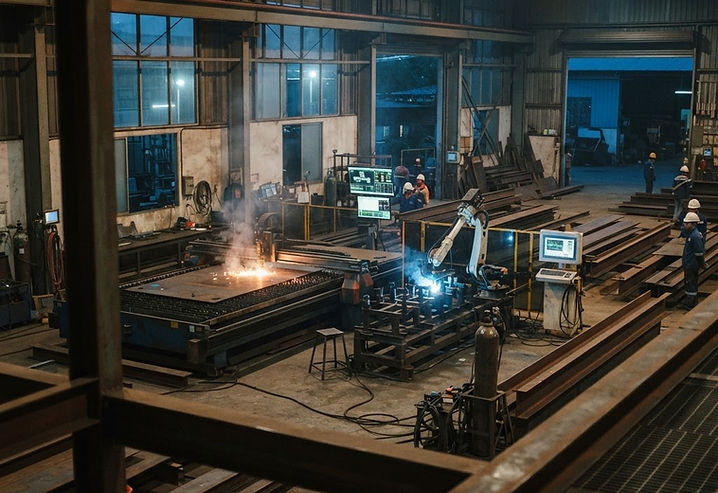
In a high volume environment like a processing plant, parts such as bolts and rollers can wear or break. Time is money, hence if parts fail productivity slows until they can be sourced and replaced. This is why the Australian Meat Processor Corporation (AMPC) took part in a world first trial of a 3D printing service mode. The aim was to help red meat processors benefit from printing equipment parts and revolutionising maintenance of products developed via structural steel fabrication. So, what are the issues faced and solution offered in transforming the meat processing industry? This blog will look to dive deeper into this topic.
The Challenge
The trial is a collaboration between the AMPC, Markforged and Konica Minolta Australia. It involves a three year, multifaceted program, which involves two Markforged X7 carbon fibre 3D printers being shipped to the processing plants in an innovative ‘try before you buy’ arrangement. Processing staff are trained to use the printers to assess whether they would be a good investment. The Casino Food Coop (Australia’s largest farmer owned, meat processing cooperative) was identified as a facility that could benefit from 3D printing and trialled the Markforged X7 3D printer.
Three areas needed to be addressed within The Casino Food Coop facility to reduce the risk of not being able to deliver products at full capacity and to optimise manufacturing performance with asset resilience.

Printer Hinges, The plastic hinge deforms and breaks after many years of use. Since the hinge part was discontinued by the manufacturer, the only option would be to replace all the label machines, which would be extremely costly.
Leather Tannery Drum, This removes hair and fat before the leather is dyed. A gear in the tannery failed, which resulted in leather production stopping until a replacement part could be manufactured. The impact of stalled production was significant, costing tens of thousands of dollars of product output on the tannery a day.
Fan Blades, The fan blades on evaporators optimise the temperature in the cooling rooms. If one blade becomes unstable, the whole evaporator breaks apart and the cool room cannot perform at optimal levels. Since the original equipment manufacturer for the evaporators is no longer in operation, the cost of manufacturing new blades was significant.
The Solution
The 3D printing solution, leveraging additive manufacturing postprocessing techniques, allowed The Casino Food Coop to solve the above challenges with relative ease and prevent costly downtime across its operation. With the ability to print new hinges for the label printers as needed, The Casino Food Coop can now prevent downtime on the machines and ensure that labels can continue to be printed. In addition, the longevity of the label printers has been extended, thereby saving thousands of dollars in replacement costs. For the tannery, it meant that a temporary replacement could be 3D printed and used to keep the machine running until a new gear could be manufactured. Processing could continue as usual, avoiding significant losses. Being able to quickly print a fan blade for the cool room evaporators delivered significant cost savings and risk mitigation to the business. Previously, the coop would have commissioned a steel manufacturer to make a replacement blade, costing up to $10,000 each. Now, 3D printing of a replacement blade using rapid prototyping takes days and is a fraction of the price.
Looking Ahead
With the potential of issues adversely impacting stakeholders, finding a solution for existing challenges was essential. All applications using the 3D printer are pivotal to The Casino Food Coop for equipment maintenance and operation, helping to prevent unplanned downtime and meet supply contracts. The possibilities for 3D printing in meat processing are endless and its transformative potential is just being realized!
K999 Thailand carries out work of this kind through its steel fabrication capability team in Rayong.
Further reading
Follow Infrastructure across the wider market on Project Atlas Intel.
How K999 can help
How we apply the technology
Faster quoting, cleaner detailing and fewer site surprises come from the tools we use before the first cut, and the articles here explain how those tools change the work.
3D modelling and detailing- 01
3D modelling and shop detailing that resolves clashes before fabrication starts.
- 02
Fibre laser cutting for plate profiles, with nesting planned around the rolling schedule.
- 03
Project management that reports progress against the same model the client approved.
More on Manufacturing & Technology
All articles

Request for quotation
Need fabricated steel to that standard?
Every enquiry is answered within 48 hours by our estimating team in Rayong. The priced quotation follows once drawings, quantities and standards are confirmed. Stainless steel fabrication, structural steel fabrication, pipe spooling, pressure vessels, steel tanks, mining equipment and conveyors, pig launchers, chutes and hoppers, send the package and we will price it.
Before you request a quotation
Steel fabrication quotation questions
What structural steel fabrication, pressure vessel and pipe spooling packages cost, what to send with an enquiry, and how delivery to site works.
Structural steel fabrication is priced from the section and plate tonnage, the detailing and drawing hours, welding and fitting manhours, NDT requirements, blast and coating system, packing and freight. Grade matters as much as weight: AS/NZS, ASTM, JIS and BS sections carry different mill prices, and heavy built up members take longer than rolled sections. Our Rayong workshop produces around 10,000 tonnes of structural steel fabrication a year, so a clear bill of materials is usually enough to price. Send the drawings and we answer within 48 hours; the priced quotation follows once quantities, standards and delivery dates are confirmed.
For steel fabrication work, send the drawings or IFC package, a bill of materials with material grades, the welding and NDT requirements, the coating specification, the delivery port and your site dates. Add the inspection and test plan, any third party inspection requirement, and whether trial assembly or match marking is needed. Where drawings are still in progress, a scope list with sizes, quantities and duty is enough to start, and the estimate is refined once the final package arrives. Every enquiry is answered within 48 hours, and the priced quotation is issued after scope, standards and quantities are confirmed.
Yes. Pressure vessel fabrication is carried out to ASME Section VIII Div. 1 under our ASME U stamp No. 43,462, or to AS/NZS and BS where the project specifies, covering separators, air receivers, water drums, waste heat recovery units and pig launchers. Steel tanks for fuel, biofuel, chemical, water and food duty are designed in house with our E Tank programme to API, ASME, BS and AS/NZS. Because structural steel, vessels, tanks and their supports are built in the same workshops, one enquiry can cover the vessel package, the tank package and the structural steel that carries them, with a single coating and documentation system and one shipment.
Steel fabrication Australia packages are scheduled from a 33,000 m2 Rayong yard with an 80,000 m2 assembly yard inside Sattahip port, so fabrication, trial assembly, blasting, coating and packing run in one place. Programme length depends on tonnage, material lead times, the coating system and inspection scope, and it is confirmed with the quotation. We quote FOB Laem Chabang, Map Ta Phut or Sattahip, or CIF and DAP to your Australian port, with packing lists, weights, lifting points and a data book per shipment. Staged deliveries can follow your site erection sequence instead of shipping everything at once.
There is no fixed minimum. Pipe spooling Australia packages run at up to 3,000 diameter inches per shift on SCH.40, from a single replacement spool to a full plant piping scope, with spools numbered, X rayed where specified and coated to match erection order. Mining equipment fabrication covers chutes, hoppers, ore bins, transfer towers and conveyor structures with Bisalloy, Hardox, rubber lining or hardfacing fitted in house, from one wear liner set to modules of up to 2,500 tonnes assembled at Sattahip. Send the scope list and we will tell you what the smallest sensible batch is for your programme.