


Industry News
Advantages of Clean Lubricants and Bearings
Clean lubricant practice and sealed bearings extend service intervals on conveyor and crusher equipment.
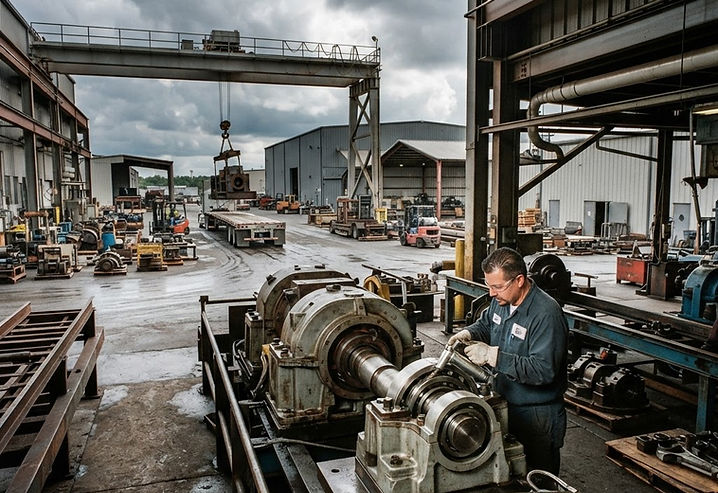
The importance of bearing and lubricant cleanliness is perhaps self evident, yet too little attention is paid to this critical quality. Even when small particles of foreign matter are not actually causing failure, they can ruin the bearing’s smooth running qualities and low torque values, which, again, means higher energy bills and a less competitive plant. The results of poor maintenance and dirty bearings is lack of productivity, plant down time, increased safety hazards, and unnecessarily high energy costs. This avoidable failure creates costs that cannot be ignored in an increasingly competitive world.
Types of Contaminants
According to a major bearing producer, a particle of 5 microns, 5 µm, or less can cause a precision bearing to fail. To put this into perspective a human hair averages about 100 µm; coal dust 1 to 100µm, iron dust 4 to 20µm, atmospheric dust up to 30µm, combustion related particulates from industrial processes up to 2.5µm and tobacco smoke up to 4µm. In general terms, dirt and contaminants that can impede a bearing’s performance are divided into three main categories:
Airborne contaminants: industrial smoke and dust, metal flakes, abrasive flakes, lint etc. which might enter the bearing due to poor storage and/or workshop practices.
Transferred contaminants: dirt that is picked up from one source and passed along to the bearing from hands, work surfaces, packaging, water tanks, poorly managed grease packing during assembly, grease degraded by moisture (condensation in the container and/or housing) and contaminants such as fumes and smoke.

Introduced dirt: impurities that enter the bearings from dirty lubricants or can be forced into the bearing during relubrication by contaminated equipment or grease points not thoroughly cleaned.
These sources of contamination should all be considered abrasive, corrosive, or leading causes of degradation of bearing performance and are all avoidable.
Merits of Clean Lubrication
Cleanliness should extend beyond the bearings themselves to work and storage areas, benches, tools, fixtures, and housings. Bearing installation operations should be located away from other machining operations, such as grinding and drilling etc. to help minimise contamination problems. Selection of right lubricants leads to increased sustainability in metal manufacturing and poor lubrication practices are a leading cause of contamination. Unsealed containers are susceptible to contamination from solids and from water due to condensation. Once a grease container is opened, it is susceptible to oxidisation and water contamination which results from condensation caused by daily temperature cycles and from storage in humid conditions. Oxidisation and condensation also occur the same way inside bearing housing.
Strict attention needs to be paid to cleanliness during grease transfers from bulk supplies to greasing apparatus, and to the application of greasing equipment to grease points. Due to the nature of site conditions and the task itself, careful cleaning of grease points prior to greasing is frequently either not carried out properly, or at all. Static charges caused by friction in heat induction bending services can cause bearing currents which in turn can cause the steel rings and balls of the bearings to become magnetised, which worsens the problem of fine metallic particles introduced into the bearing as they will tend to stay there. Electrolytic action is present in most bearings where it is possible for the bearing and journal to act as electrodes, and where, due to some electrical phenomena, a difference of potential exists between them. A clean lubricant oil film acts as an insulator but impurities are the main cause of conductivity. Clean, uncontaminated lubricant oil cannot act as an electrolyte: the presence of water or other foreign matter will initiate electrolytic action of the oil in the grease, which will shorten the life of the bearing.
Final Words
There are multiple advantages to having clean lubrication and bearings, especially considering the operations floor is vulnerable to different types of contamination. In the long run, equipment malfunction or degeneration is likely to occur in the absence of proper maintenance and this would require machine turnover at an advanced rate. Thus, in the manufacturing industry, clean lubricants and bearings go a long way towards ensuring increased productivity and lower costs!
K999 Thailand carries out work of this kind through its structural steel fabrication team in Rayong.
Further reading
Follow Oil & Gas across the wider market on Project Atlas Intel.
Calculation tool
Run the numbers for this yourself with the free engineering calculations explained from Engineering Toolbox Australia. Treat the result as a first check, then confirm the final design with your engineer.
How K999 can help
Where we fit the story
Trade policy, commodity cycles and energy markets decide when projects move, and they decide what gets fabricated. These articles collect the changes we track for our clients.
See our projects- 01
Work delivered for mining, energy, processing and manufacturing clients across Australia and Southeast Asia.
- 02
Fabrication in Rayong with assembly at Sattahip, shipping from Laem Chabang and Map Ta Phut.
- 03
Enquiries answered within 48 hours by our estimating team.
More on Industry News
All articles


Request for quotation
Need fabricated steel to that standard?
Every enquiry is answered within 48 hours by our estimating team in Rayong. The priced quotation follows once drawings, quantities and standards are confirmed. Stainless steel fabrication, structural steel fabrication, pipe spooling, pressure vessels, steel tanks, mining equipment and conveyors, pig launchers, chutes and hoppers, send the package and we will price it.
Before you request a quotation
Steel fabrication quotation questions
What structural steel fabrication, pressure vessel and pipe spooling packages cost, what to send with an enquiry, and how delivery to site works.
Structural steel fabrication is priced from the section and plate tonnage, the detailing and drawing hours, welding and fitting manhours, NDT requirements, blast and coating system, packing and freight. Grade matters as much as weight: AS/NZS, ASTM, JIS and BS sections carry different mill prices, and heavy built up members take longer than rolled sections. Our Rayong workshop produces around 10,000 tonnes of structural steel fabrication a year, so a clear bill of materials is usually enough to price. Send the drawings and we answer within 48 hours; the priced quotation follows once quantities, standards and delivery dates are confirmed.
For steel fabrication work, send the drawings or IFC package, a bill of materials with material grades, the welding and NDT requirements, the coating specification, the delivery port and your site dates. Add the inspection and test plan, any third party inspection requirement, and whether trial assembly or match marking is needed. Where drawings are still in progress, a scope list with sizes, quantities and duty is enough to start, and the estimate is refined once the final package arrives. Every enquiry is answered within 48 hours, and the priced quotation is issued after scope, standards and quantities are confirmed.
Yes. Pressure vessel fabrication is carried out to ASME Section VIII Div. 1 under our ASME U stamp No. 43,462, or to AS/NZS and BS where the project specifies, covering separators, air receivers, water drums, waste heat recovery units and pig launchers. Steel tanks for fuel, biofuel, chemical, water and food duty are designed in house with our E Tank programme to API, ASME, BS and AS/NZS. Because structural steel, vessels, tanks and their supports are built in the same workshops, one enquiry can cover the vessel package, the tank package and the structural steel that carries them, with a single coating and documentation system and one shipment.
Steel fabrication Australia packages are scheduled from a 33,000 m2 Rayong yard with an 80,000 m2 assembly yard inside Sattahip port, so fabrication, trial assembly, blasting, coating and packing run in one place. Programme length depends on tonnage, material lead times, the coating system and inspection scope, and it is confirmed with the quotation. We quote FOB Laem Chabang, Map Ta Phut or Sattahip, or CIF and DAP to your Australian port, with packing lists, weights, lifting points and a data book per shipment. Staged deliveries can follow your site erection sequence instead of shipping everything at once.
There is no fixed minimum. Pipe spooling Australia packages run at up to 3,000 diameter inches per shift on SCH.40, from a single replacement spool to a full plant piping scope, with spools numbered, X rayed where specified and coated to match erection order. Mining equipment fabrication covers chutes, hoppers, ore bins, transfer towers and conveyor structures with Bisalloy, Hardox, rubber lining or hardfacing fitted in house, from one wear liner set to modules of up to 2,500 tonnes assembled at Sattahip. Send the scope list and we will tell you what the smallest sensible batch is for your programme.