


Manufacturing & Technology
AI Adoption in Supply Chains
Demand forecasting and route optimisation are the first places AI pays back in industrial supply chains.
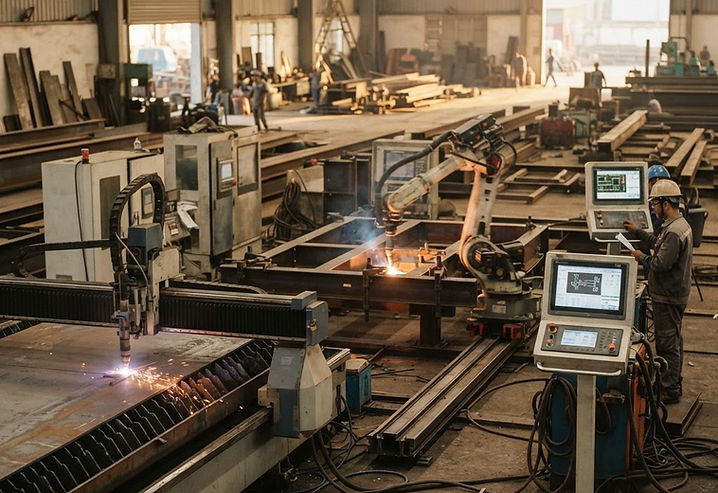
Modern supply chain management is experiencing revolutionary technological changes that transcend traditional production methods. Software companies are pioneering these changes by developing AI solutions for areas of concern and ensuring adequate supply chain operations. From planning production schedules and managing inventory to enhancing demand predictions and optimizing shipments of products such as pressure vessels, leveraging AI can refine tasks across the board. Applying this level of innovation guarantees efficiency, reliability, and accuracy, permitting staff to focus on transforming the AI’s findings into meaningful action steps. This blog delves into this exciting topic in greater detail.
Transforming Demand Forecasting
Growing geopolitical tensions cause supply chain companies to face heightened levels of uncertainty, especially when predicting upcoming product demands. Advanced AI algorithms analyse large datasets in real time to anticipate inventory and market changes and helps in future proofing supply chains. They use current market trends, historical consumer patterns, and economic factors. Utilizing these results can prevent stockouts and overstocking, which improves your company’s cost effectiveness. It can also streamline the shipment process and respond faster to setbacks, mitigating issues of timely deliverables to customers. Traditional methods primarily focused on past performances rather than future ones, but AI specializes in predictive analytics across all industries, not just supply chains. AI models are simply more agile and adaptable than traditional analytics, which require frequent manual updates. With an ever evolving system constantly teaching itself to perform sufficient calculations, supply chain experts can rest assured that this technology is not overlooking complex data patterns.
Planning and Optimization

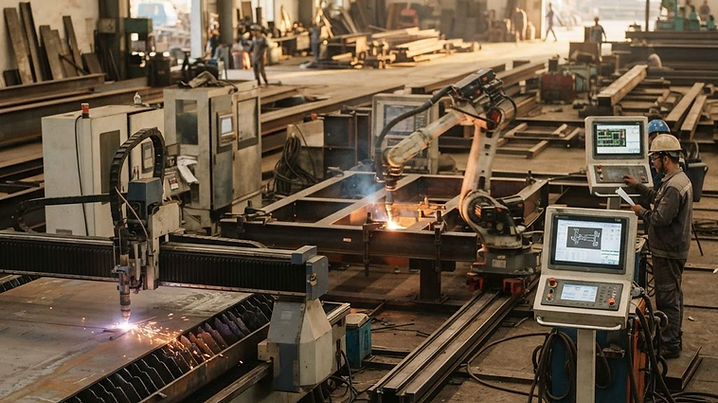
Depending on a company’s specific needs and areas of improvement, AI can significantly impact supply chain planning and overall optimization. AI systems can track material and warehouse capacity limits to meet demands. They can also prioritize tasks like order fulfilment, inventory and storage updates, risk management, and supplier communication. One transformative approach is utilizing AI automation. Mundane, manual tasks like data entry are not always quick and easy. These tedious but necessary duties consume much of employees’ time, taking their attention away from critical projects. Substituting human intervention with AI. such as introducing AI video surveillance, to perform these assignments could allow the team to devote more time to planning and structuring.
Barriers to AI Adoption
Arguably, one of the most significant barriers that prevent supply chain companies from using AI systems is the lack of AI knowledge within an organization. It is a classic case of “blissful ignorance,” which is why it is essential to start educating leaders on the powerful advantages of implementing AI. Highlighting benefits like improved cost effectiveness, optimized proficiency, and reduced resources could lead them to embrace the latest evolution of workplace technology. Bergur Thormundsson, a research expert with Statista, published a survey where 600 senior technology personnel at supply chain companies were asked about AI usage. Roughly 38% said integrating AI into their operations will be critical by 2025. Augmenting different roles could result in employees carrying out new hybrid structures, improving productivity, and acquiring more skills, which could increase growth opportunities. For all these reasons, organizations must overcome barriers when they’reinitially trying to apply AI driven solutions.
What’s Next?
Supply chain companies underwent many production and inventory setbacks within the past five years. Labor shortages, geopolitical conflicts, cybersecurity, unreliable suppliers, and fluctuating demands of pipe fabrication Australia were some of the most prevalent obstacles. AI solutions are combatting these disruptions. In cybersecurity, for example, AI algorithms can detect and prevent potential cyber threats by optimizing data security. They also track usage patterns to enhance data encryption and identify fraudulent activity. AI adoption is becoming a standard within supply chain management, and its integration will not slow down anytime soon!
K999 Thailand carries out work of this kind through its steel fabrication capability team in Rayong.
Further reading
Follow industrial project intelligence across the wider market on Project Atlas Intel.
Calculation tool
Run the numbers for this yourself with the free steel weight calculator from Engineering Toolbox Australia. Treat the result as a first check, then confirm the final design with your engineer.
How K999 can help
How we apply the technology
Faster quoting, cleaner detailing and fewer site surprises come from the tools we use before the first cut, and the articles here explain how those tools change the work.
3D modelling and detailing- 01
3D modelling and shop detailing that resolves clashes before fabrication starts.
- 02
Fibre laser cutting for plate profiles, with nesting planned around the rolling schedule.
- 03
Project management that reports progress against the same model the client approved.
More on Manufacturing & Technology
All articles

Request for quotation
Need fabricated steel to that standard?
Every enquiry is answered within 48 hours by our estimating team in Rayong. The priced quotation follows once drawings, quantities and standards are confirmed. Stainless steel fabrication, structural steel fabrication, pipe spooling, pressure vessels, steel tanks, mining equipment and conveyors, pig launchers, chutes and hoppers, send the package and we will price it.
Before you request a quotation
Steel fabrication quotation questions
What structural steel fabrication, pressure vessel and pipe spooling packages cost, what to send with an enquiry, and how delivery to site works.
Structural steel fabrication is priced from the section and plate tonnage, the detailing and drawing hours, welding and fitting manhours, NDT requirements, blast and coating system, packing and freight. Grade matters as much as weight: AS/NZS, ASTM, JIS and BS sections carry different mill prices, and heavy built up members take longer than rolled sections. Our Rayong workshop produces around 10,000 tonnes of structural steel fabrication a year, so a clear bill of materials is usually enough to price. Send the drawings and we answer within 48 hours; the priced quotation follows once quantities, standards and delivery dates are confirmed.
For steel fabrication work, send the drawings or IFC package, a bill of materials with material grades, the welding and NDT requirements, the coating specification, the delivery port and your site dates. Add the inspection and test plan, any third party inspection requirement, and whether trial assembly or match marking is needed. Where drawings are still in progress, a scope list with sizes, quantities and duty is enough to start, and the estimate is refined once the final package arrives. Every enquiry is answered within 48 hours, and the priced quotation is issued after scope, standards and quantities are confirmed.
Yes. Pressure vessel fabrication is carried out to ASME Section VIII Div. 1 under our ASME U stamp No. 43,462, or to AS/NZS and BS where the project specifies, covering separators, air receivers, water drums, waste heat recovery units and pig launchers. Steel tanks for fuel, biofuel, chemical, water and food duty are designed in house with our E Tank programme to API, ASME, BS and AS/NZS. Because structural steel, vessels, tanks and their supports are built in the same workshops, one enquiry can cover the vessel package, the tank package and the structural steel that carries them, with a single coating and documentation system and one shipment.
Steel fabrication Australia packages are scheduled from a 33,000 m2 Rayong yard with an 80,000 m2 assembly yard inside Sattahip port, so fabrication, trial assembly, blasting, coating and packing run in one place. Programme length depends on tonnage, material lead times, the coating system and inspection scope, and it is confirmed with the quotation. We quote FOB Laem Chabang, Map Ta Phut or Sattahip, or CIF and DAP to your Australian port, with packing lists, weights, lifting points and a data book per shipment. Staged deliveries can follow your site erection sequence instead of shipping everything at once.
There is no fixed minimum. Pipe spooling Australia packages run at up to 3,000 diameter inches per shift on SCH.40, from a single replacement spool to a full plant piping scope, with spools numbered, X rayed where specified and coated to match erection order. Mining equipment fabrication covers chutes, hoppers, ore bins, transfer towers and conveyor structures with Bisalloy, Hardox, rubber lining or hardfacing fitted in house, from one wear liner set to modules of up to 2,500 tonnes assembled at Sattahip. Send the scope list and we will tell you what the smallest sensible batch is for your programme.