


Materials & Coatings
Alcoa plans to restart aluminium smelter in Spain
Alcoa Corporation today announced that a majority of the workers at its San Ciprián complex in Spain have agreed to an improved plan for the restart of the aluminium smelter in 2024.
Alcoa Corporation today announced that a majority of the workers at its San Ciprián complex in Spain have agreed to an improved plan for the restart of the aluminium smelter in 2024. In 2020, the company attempted to lay off some 500 workers but was forced to abandon the plan after a Spanish court declared it “null and void.” Alcoa has long sought to shut down the smelter in Spain’s north western Galicia region, which has struggled to remain competitive in the face of steep energy costs and low aluminium prices (including high aluminium demand in countries like Australia ), leading to several years of losses. In December 2021, the U.S. metals producer reached a deal with workers to end primary aluminium production, leveraged by mining plant and equipment, at the facility for two years. This was required to work on plans for a stronger smelting facility, the viability of which was being threatened due to exorbitant energy prices.
In 2022, the Company announced the signing of two long term wind power purchase agreements (PPA) to secure up to approximately 75% of the smelter’s needs at full capacity. The supply of energy will depend on the permitting and development of the windfarms. The updated agreement with the workforce provides a detailed schedule that will commence the restart process in phases beginning in January 2024. The agreement also includes increased investments in the facility and protections for the workforce. “With this latest agreement, we have additional flexibility and a clear direction for the future as we continue to work constructively with our workforce and other stakeholders to begin the restart process in 2024, supported by wind based power agreements - like those promoted by UK - and increased investments designed to improve the smelter’s viability,” said Alcoa President and CEO Roy Harvey. “We will continue to work cooperatively with the regional and national governments in Spain as we move forward with these plans.”
The Company has agreed to provide a total of $181 million for both capital investments and restart expenses, which is $78 million higher than the original agreement. Highlights of the new agreement include:

Capital Investment: The agreement provides for $146 million in metal and steel fabrication projects, primarily for the development of a new anode plant.
Restart Expenditures: Restart expenses of $35 million remain unchanged from the original agreement.
Labour: Alcoa extends its existing commitment not to initiate any collective dismissal processes (ERE or ERTE) at the aluminium plant until December 31, 2026, as well as other labour benefits. The workers’ representatives undertake to maintain social peace at least until December 31, 2026.
Restart Timing: The phased approach to the restart process will begin on January 1, 2024. Alcoa plans that all pots will be restarted by October 1, 2025, and from October 1, 2025 until the end of 2026, the minimum production will be 75% of the nominal capacity of 228,000 metric tons per year.
As a result of the agreement, Alcoa expects to record restructuring related charges in the first quarter 2023 of approximately $50 million (pre- and after tax), or $0.28 per share, to be paid over 2024 and 2025.
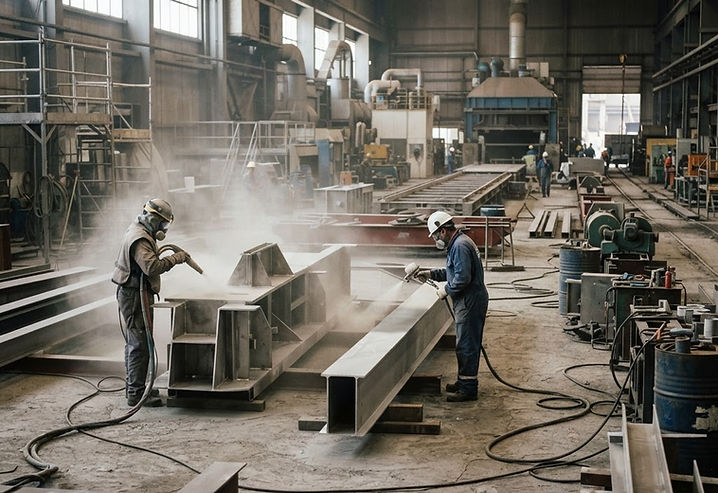
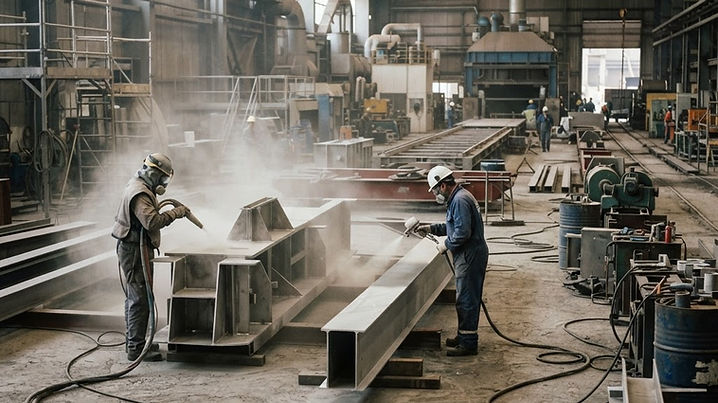
K999 Thailand carries out work of this kind through its abrasive blasting and protective coating team in Rayong.
Further reading
Follow the major European markets across the wider market on Project Atlas Intel.
How K999 can help
Material selection and surface protection
We fabricate in stainless, duplex, carbon steel and nickel alloys, and we finish those materials for the environment they will live in, from coastal yards to process plants.
Stainless steel fabrication- 01
Stainless and duplex fabrication with matched filler metals and controlled interpass temperature.
- 02
Abrasive blasting to the specified surface profile before protective coating application.
- 03
Rubber lining and hardfacing for abrasive slurries, chutes and wear plates.
More on Materials & Coatings
All articles


Request for quotation
Need fabricated steel to that standard?
Every enquiry is answered within 48 hours by our estimating team in Rayong. The priced quotation follows once drawings, quantities and standards are confirmed. Stainless steel fabrication, structural steel fabrication, pipe spooling, pressure vessels, steel tanks, mining equipment and conveyors, pig launchers, chutes and hoppers, send the package and we will price it.
Before you request a quotation
Steel fabrication quotation questions
What structural steel fabrication, pressure vessel and pipe spooling packages cost, what to send with an enquiry, and how delivery to site works.
Structural steel fabrication is priced from the section and plate tonnage, the detailing and drawing hours, welding and fitting manhours, NDT requirements, blast and coating system, packing and freight. Grade matters as much as weight: AS/NZS, ASTM, JIS and BS sections carry different mill prices, and heavy built up members take longer than rolled sections. Our Rayong workshop produces around 10,000 tonnes of structural steel fabrication a year, so a clear bill of materials is usually enough to price. Send the drawings and we answer within 48 hours; the priced quotation follows once quantities, standards and delivery dates are confirmed.
For steel fabrication work, send the drawings or IFC package, a bill of materials with material grades, the welding and NDT requirements, the coating specification, the delivery port and your site dates. Add the inspection and test plan, any third party inspection requirement, and whether trial assembly or match marking is needed. Where drawings are still in progress, a scope list with sizes, quantities and duty is enough to start, and the estimate is refined once the final package arrives. Every enquiry is answered within 48 hours, and the priced quotation is issued after scope, standards and quantities are confirmed.
Yes. Pressure vessel fabrication is carried out to ASME Section VIII Div. 1 under our ASME U stamp No. 43,462, or to AS/NZS and BS where the project specifies, covering separators, air receivers, water drums, waste heat recovery units and pig launchers. Steel tanks for fuel, biofuel, chemical, water and food duty are designed in house with our E Tank programme to API, ASME, BS and AS/NZS. Because structural steel, vessels, tanks and their supports are built in the same workshops, one enquiry can cover the vessel package, the tank package and the structural steel that carries them, with a single coating and documentation system and one shipment.
Steel fabrication Australia packages are scheduled from a 33,000 m2 Rayong yard with an 80,000 m2 assembly yard inside Sattahip port, so fabrication, trial assembly, blasting, coating and packing run in one place. Programme length depends on tonnage, material lead times, the coating system and inspection scope, and it is confirmed with the quotation. We quote FOB Laem Chabang, Map Ta Phut or Sattahip, or CIF and DAP to your Australian port, with packing lists, weights, lifting points and a data book per shipment. Staged deliveries can follow your site erection sequence instead of shipping everything at once.
There is no fixed minimum. Pipe spooling Australia packages run at up to 3,000 diameter inches per shift on SCH.40, from a single replacement spool to a full plant piping scope, with spools numbered, X rayed where specified and coated to match erection order. Mining equipment fabrication covers chutes, hoppers, ore bins, transfer towers and conveyor structures with Bisalloy, Hardox, rubber lining or hardfacing fitted in house, from one wear liner set to modules of up to 2,500 tonnes assembled at Sattahip. Send the scope list and we will tell you what the smallest sensible batch is for your programme.