


Fabrication
Applications of IoT in Laser Cutting
Connected laser cutters report consumption, nesting efficiency and machine health, turning cutting into a measurable production step.
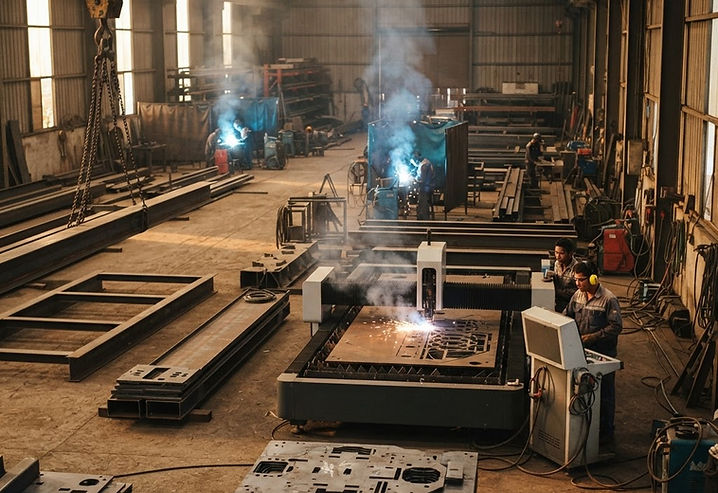
While laser cutting has many advantages, it can also be challenging to implement. High initial costs, safety concerns and the need for specialized training can stop manufacturers without the necessary funds and experience from capitalizing on its potential. Internet of Things (IoT) functionality in the laser cutting process can help businesses overcome those barriers. Smart home devices are some of the most familiar examples, but many industrial grade, manufacturing specific IoT solutions exist. This blog will look to highlight the applications of connecting IoT with laser cutters and how it can benefit manufacturers.
Improved Safety
One of the most significant advantages of IoT connectivity in the laser cutting process is its impact on safety. Lasers can be dangerous, causing safety hazards such as amputations and even death when employees get in their way. This equipment can also emit hazardous fumes, presenting less noticeable but still serious risks. The IoT helps by creating distance between employees and these metal fabrication safety hazards. Workers can operate IoT enabled laser cutters remotely without losing any precision. Consequently, they can run this equipment continuously without worrying about amputation or fume related risks. Protecting employees’ well being is enough to warrant these safety improvements on its own, but they also have tangible business benefits. Fewer injuries mean less unexpected downtime and fewer losses from workers’ compensation payments. Those savings can justify the higher costs of implementing IoT connected laser cutting equipment.
Real Time Operating Data

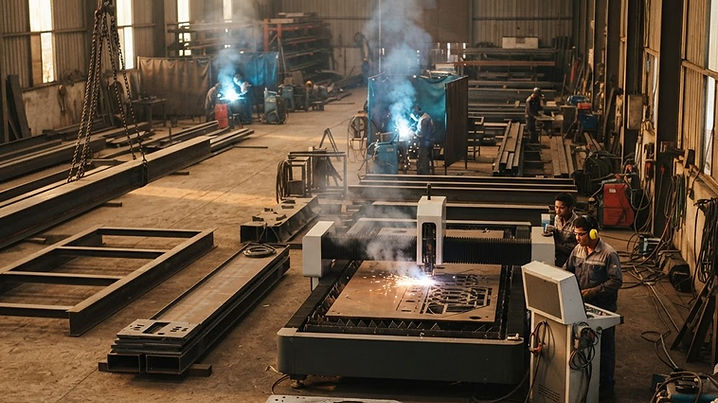
IoT in laser cutting also lets mining plant and equipment Australia operators capitalize on real time data. Connected sensors can gather data on operational factors like temperatures, cutting speed, material thickness, beam power and more and transmit it to workers in real time. This insight enables more effective control. Data standardization is key to maximizing manufacturing efficiency, but businesses must realize that some manufacturing data issues are inevitable. In light of that unpredictability, employees must be able to adjust to these changes, which the IoT’s visibility enables. When laser operators can see changing conditions in real time, they can adapt to them to maintain productivity and accuracy. An IoT sensor may reveal that a laser is not cutting material as quickly as it should, informing the operator to temporarily dial up the beam’s length, temperature, or pulse rate. Alternatively, warnings about warping or excessive temperatures can tell employees to dial these factors back. By adapting to these changes, workers prevent errors and maximize productivity.
Flexible Automation
IoT connectivity can also enable flexible automation in laser cutting. Automated cutting processes are more efficient but can be challenging to implement effectively because they often mean sacrificing adaptability. The IoT provides a solution by letting automated systems respond to real time data from upstream processes. IoT connected automated laser cutters can communicate with other IoT equipment earlier in the manufacturing process. They can then receive data on any unexpected delays, material irregularities or other disruptions and adjust accordingly to compensate for these unusual situations. That way, variability elsewhere in the production line will not disrupt automated laser cutting processes.
Enhanced Inventory Management
Laser cutting can also benefit from IoT implementation outside of the laser cutter itself. Inventory management IoT solutions are an excellent example. By boosting inventory visibility and efficiency through the IoT and ensuring efficient communication, manufacturers can ensure a smoother laser cutting workflow. IoT tracking solutions in material inventories can provide real time updates on things like upcoming parts’ composition, thickness and other factors that impact cutting. With this information in hand, laser cutter operators or automated systems can adjust ahead of time to account for any irregularities or changes. That way, they can ensure they cut the material as quickly, safely, and accurately as possible. Adapting to unique material qualities can significantly impact productivity.
Final Thoughts
The above mentioned four benefits make the laser cutting process safer, more accurate, reliable, efficient, and cost effective. Those improvements make laser cutting a better investment, even for steel fabrication Australia companies who previously could not justify its expense or necessary training. In turn, more facilities can experience the speed and accuracy of laser cutters in their production lines. Like with laser cutters themselves, implementing IoT systems can take time and money. However, as these advantages highlight, the results will compensate for those disruptions over time. As the industry becomes increasingly competitive and demands rise, manufacturers cannot afford to overlook IoT’s benefits.
K999 Thailand carries out work of this kind through its laser cutting and profile cutting team in Rayong.
Further reading
Follow industrial project intelligence across the wider market on Project Atlas Intel.
How K999 can help
Fabrication capacity behind the article
Articles in this section describe work we run every week in Rayong: cutting, forming, welding and assembly, under cover and in the yard, with the documentation that goes with it.
Structural steel fabrication- 01
Two workshops totalling more than 33,000 m² plus an 80,000 m² assembly yard at Sattahip.
- 02
Structural steel fabrication to 10,000 tonnes a year, with the largest single module built at 2,500 tonnes.
- 03
Blast, prime and paint before dispatch, with dimensional reports issued against the approved drawings.
More on Fabrication
All articles


Request for quotation
Need fabricated steel to that standard?
Every enquiry is answered within 48 hours by our estimating team in Rayong. The priced quotation follows once drawings, quantities and standards are confirmed. Stainless steel fabrication, structural steel fabrication, pipe spooling, pressure vessels, steel tanks, mining equipment and conveyors, pig launchers, chutes and hoppers, send the package and we will price it.
Before you request a quotation
Steel fabrication quotation questions
What structural steel fabrication, pressure vessel and pipe spooling packages cost, what to send with an enquiry, and how delivery to site works.
Structural steel fabrication is priced from the section and plate tonnage, the detailing and drawing hours, welding and fitting manhours, NDT requirements, blast and coating system, packing and freight. Grade matters as much as weight: AS/NZS, ASTM, JIS and BS sections carry different mill prices, and heavy built up members take longer than rolled sections. Our Rayong workshop produces around 10,000 tonnes of structural steel fabrication a year, so a clear bill of materials is usually enough to price. Send the drawings and we answer within 48 hours; the priced quotation follows once quantities, standards and delivery dates are confirmed.
For steel fabrication work, send the drawings or IFC package, a bill of materials with material grades, the welding and NDT requirements, the coating specification, the delivery port and your site dates. Add the inspection and test plan, any third party inspection requirement, and whether trial assembly or match marking is needed. Where drawings are still in progress, a scope list with sizes, quantities and duty is enough to start, and the estimate is refined once the final package arrives. Every enquiry is answered within 48 hours, and the priced quotation is issued after scope, standards and quantities are confirmed.
Yes. Pressure vessel fabrication is carried out to ASME Section VIII Div. 1 under our ASME U stamp No. 43,462, or to AS/NZS and BS where the project specifies, covering separators, air receivers, water drums, waste heat recovery units and pig launchers. Steel tanks for fuel, biofuel, chemical, water and food duty are designed in house with our E Tank programme to API, ASME, BS and AS/NZS. Because structural steel, vessels, tanks and their supports are built in the same workshops, one enquiry can cover the vessel package, the tank package and the structural steel that carries them, with a single coating and documentation system and one shipment.
Steel fabrication Australia packages are scheduled from a 33,000 m2 Rayong yard with an 80,000 m2 assembly yard inside Sattahip port, so fabrication, trial assembly, blasting, coating and packing run in one place. Programme length depends on tonnage, material lead times, the coating system and inspection scope, and it is confirmed with the quotation. We quote FOB Laem Chabang, Map Ta Phut or Sattahip, or CIF and DAP to your Australian port, with packing lists, weights, lifting points and a data book per shipment. Staged deliveries can follow your site erection sequence instead of shipping everything at once.
There is no fixed minimum. Pipe spooling Australia packages run at up to 3,000 diameter inches per shift on SCH.40, from a single replacement spool to a full plant piping scope, with spools numbered, X rayed where specified and coated to match erection order. Mining equipment fabrication covers chutes, hoppers, ore bins, transfer towers and conveyor structures with Bisalloy, Hardox, rubber lining or hardfacing fitted in house, from one wear liner set to modules of up to 2,500 tonnes assembled at Sattahip. Send the scope list and we will tell you what the smallest sensible batch is for your programme.