


Fabrication
Automation - Disruption in the Metal Fabrication Industry
Robotic welding, automated cutting and nesting software are changing how fabrication shops price and schedule work.
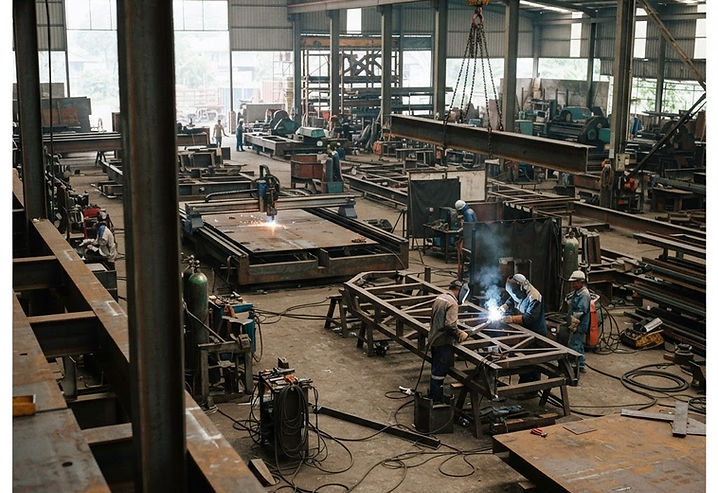
The manifold benefits of automation technologies on different industrial sectors have been well documented. Robotics has helped to increase production and improve quality while working round the clock ( robotics in oil and gas is an example), thus providing an edge over work done by human personnel, especially for manual, repetitive and volume based jobs. The same holds true for fabrication where automation is expected to increase its footprint in a big way over the next few years. So, what are the ways in which this disruptive technology enhances the metal and steel fabrication sector? This blog will look to explore this topic in more detail.
Increasing productivity is one of the most important ways automated technologies improves structural steel fabrication results. This is due to the fact that fabricators have more time to work on other projects, resulting in faster project completion timeframes. In most cases, the amount of time required to accomplish work is reduced by up to two or three times. Also, automation allows fabricators to handle several projects at once, whether they’refor the same client or different ones. Beamline technology is an example, where rather than having fabrication specialists measure, cut and drill steel beams by hand, the technology automates this laborious and time consuming procedure. In addition, beamlines also reduce the risk of injury to employees since the steel beam does not have to be moved as often.
The metal fabrication industry is facing many challenges and, with the use of automated fabrication technologies and machines, it is possible to regulate the fabrication process and generate more predictable life cycles. Some heavy steel fabrication companies can deliver completed projects on time and correctly schedule fabrication personnel because of a more predictable life cycle. Some manufacturing processes that are regulated and automated include high precision machining and fittings and cladding. Fabrication plant managers are able to better plan life cycles this way, which enhances the flow of projects, schedules, and precision.

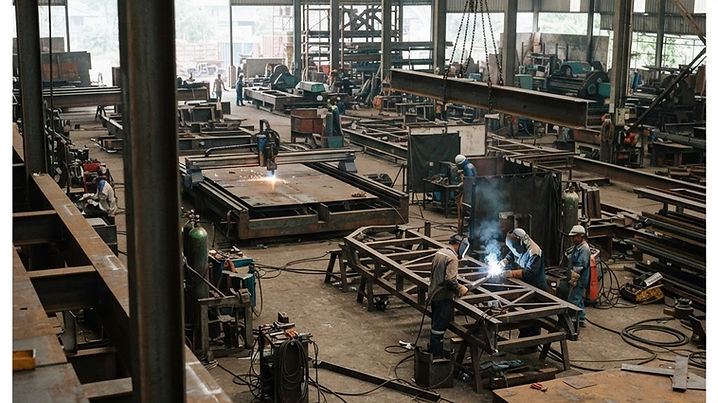
To discover weldment errors and collect vital data for future reporting, automated fabrication equipment and software must be coupled with each other. As a result of the use of this data, metal fabrication businesses will be able to provide more accurate scheduling bids to their customers. To avoid costly rework and longer project completion times, this data may help detect quality control concerns ahead of time and reduce them before an inspection arrives.
Automated manufacturing processes are not susceptible to human mistake, which may slow down output due to rework, since they are machine run. The fabrication techniques and robotic technology have the potential to improve worker safety. Since big constructed modules don’t have to be moved by hand as often, there are less opportunities for human mistake to cause safety issues. With the aid of automated technology, the necessity for experienced fabricators is not decreasing. When it comes to specialized, repetitive activities such as heat inducted bending and cutting using robotic welding equipment, welders and fitters are still in demand. At a rate of roughly 6% each year, there is an increasing need for welding expertise in the industrial fabrication business.
Welding efficiency in the industrial fabrication sector is being improved by the use of automated welding technologies and skilled welders. After years of hand fabrication, the sector has now moved on to full scale automation. Big labor savings and a massive boost in production have been achieved, and technology will keep the sector moving ahead.
While the applications of robotics and automation in fabrication are increasing, the importance of having people able to properly manage the technology and correctly interpret data is increasing. Quality is paramount when automation is involved and When fabrication projects are completed to the highest standards, the risk of having to conduct rework is reduced, which is both expensive and time consuming. At the end of the day, streamlining is the way to go, and automation is there to lend a helping hand!
Further reading
Follow prequalification openings in the Middle East across the wider market on Project Atlas Intel.
Calculation tool
Run the numbers for this yourself with the free welding engineering articles from Engineering Toolbox Australia. Treat the result as a first check, then confirm the final design with your engineer.
How K999 can help
Fabrication capacity behind the article
Articles in this section describe work we run every week in Rayong: cutting, forming, welding and assembly, under cover and in the yard, with the documentation that goes with it.
Structural steel fabrication- 01
Two workshops totalling more than 33,000 m² plus an 80,000 m² assembly yard at Sattahip.
- 02
Structural steel fabrication to 10,000 tonnes a year, with the largest single module built at 2,500 tonnes.
- 03
Blast, prime and paint before dispatch, with dimensional reports issued against the approved drawings.
More on Fabrication
All articles


Request for quotation
Need fabricated steel to that standard?
Every enquiry is answered within 48 hours by our estimating team in Rayong. The priced quotation follows once drawings, quantities and standards are confirmed. Stainless steel fabrication, structural steel fabrication, pipe spooling, pressure vessels, steel tanks, mining equipment and conveyors, pig launchers, chutes and hoppers, send the package and we will price it.
Before you request a quotation
Steel fabrication quotation questions
What structural steel fabrication, pressure vessel and pipe spooling packages cost, what to send with an enquiry, and how delivery to site works.
Structural steel fabrication is priced from the section and plate tonnage, the detailing and drawing hours, welding and fitting manhours, NDT requirements, blast and coating system, packing and freight. Grade matters as much as weight: AS/NZS, ASTM, JIS and BS sections carry different mill prices, and heavy built up members take longer than rolled sections. Our Rayong workshop produces around 10,000 tonnes of structural steel fabrication a year, so a clear bill of materials is usually enough to price. Send the drawings and we answer within 48 hours; the priced quotation follows once quantities, standards and delivery dates are confirmed.
For steel fabrication work, send the drawings or IFC package, a bill of materials with material grades, the welding and NDT requirements, the coating specification, the delivery port and your site dates. Add the inspection and test plan, any third party inspection requirement, and whether trial assembly or match marking is needed. Where drawings are still in progress, a scope list with sizes, quantities and duty is enough to start, and the estimate is refined once the final package arrives. Every enquiry is answered within 48 hours, and the priced quotation is issued after scope, standards and quantities are confirmed.
Yes. Pressure vessel fabrication is carried out to ASME Section VIII Div. 1 under our ASME U stamp No. 43,462, or to AS/NZS and BS where the project specifies, covering separators, air receivers, water drums, waste heat recovery units and pig launchers. Steel tanks for fuel, biofuel, chemical, water and food duty are designed in house with our E Tank programme to API, ASME, BS and AS/NZS. Because structural steel, vessels, tanks and their supports are built in the same workshops, one enquiry can cover the vessel package, the tank package and the structural steel that carries them, with a single coating and documentation system and one shipment.
Steel fabrication Australia packages are scheduled from a 33,000 m2 Rayong yard with an 80,000 m2 assembly yard inside Sattahip port, so fabrication, trial assembly, blasting, coating and packing run in one place. Programme length depends on tonnage, material lead times, the coating system and inspection scope, and it is confirmed with the quotation. We quote FOB Laem Chabang, Map Ta Phut or Sattahip, or CIF and DAP to your Australian port, with packing lists, weights, lifting points and a data book per shipment. Staged deliveries can follow your site erection sequence instead of shipping everything at once.
There is no fixed minimum. Pipe spooling Australia packages run at up to 3,000 diameter inches per shift on SCH.40, from a single replacement spool to a full plant piping scope, with spools numbered, X rayed where specified and coated to match erection order. Mining equipment fabrication covers chutes, hoppers, ore bins, transfer towers and conveyor structures with Bisalloy, Hardox, rubber lining or hardfacing fitted in house, from one wear liner set to modules of up to 2,500 tonnes assembled at Sattahip. Send the scope list and we will tell you what the smallest sensible batch is for your programme.