


Manufacturing & Technology
Benefits of Product Management Software
Structured product data links drawings, bills of material and revisions, preventing build errors at the work face.
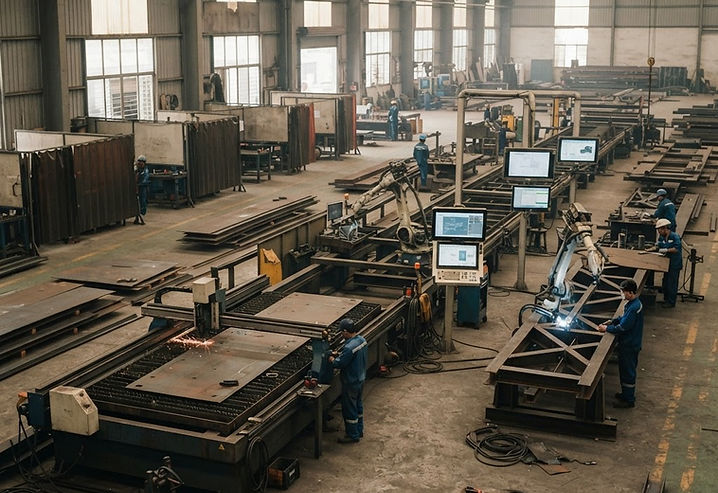
Developing a product from its initial concept to a fully realized consumable is no small feat. Product development can be a prolonged and iterative process with multiple iterations, bottlenecks, and challenges at every step of the development process. To maximize efficiency, product managers must have a clear sense of the challenges they face and the potential for product roadmap management software to help address them. So, what are the challenges encountered during product development and how does product management software help to mitigate these? Let us deep dive into this topic.
Common Challenges Faced
Complex Supply Chains, Manufacturing even a relatively simple product may require numerous suppliers, components, and materials. Each point along the supply chain must be harmonized with the broader product development roadmap.
Varying Product Lifecycle Phases, Different products or components can be at various stages of development, production, or even retirement, which can be challenging to manage. Often, product managers must contend with different iterations of the same basic product or juggle the demands of various items within the product portfolio.
Regulatory Compliance, While steel manufacturing companies have a strong impact on global trade and industry, they are often subject to stringent regulatory requirements that change over time and vary by region. Product development must always be coordinated with legal compliance, encompassing everything from consumer safety to environmental stewardship.
Cross Functional Collaboration, Effective product development never happens in silos. Instead, it requires multidisciplinary teams of designers, engineers, and testers to work together in tandem. Ultimately, bringing the product to store shelves requires collaboration with sales and marketing professionals.

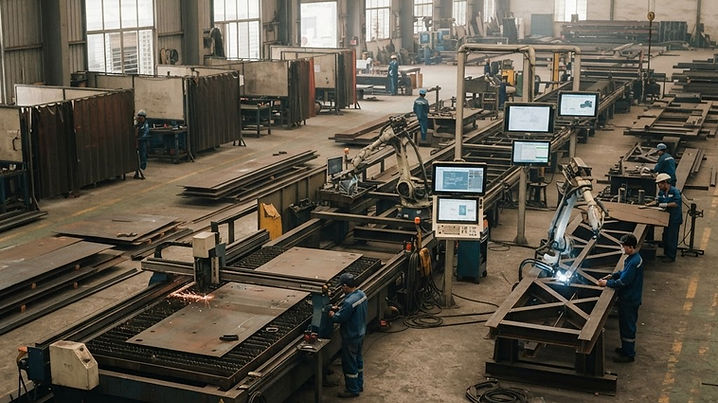
Resource Allocation, Another challenge manufacturers face is ensuring their resources are allocated as effectively as possible. This includes manpower, mining plant and equipment, and raw materials. Ineffective resource allocation can yield a number of issues, including production bottlenecks that can bring the entire product development process to a standstill.
How Product Roadmap Management Software Can Help
Visibility Across Supply Chains, Roadmap software allows teams to visualize end to end logistics, identifying potential bottlenecks or areas of concern as part of efforts to future proof supply chains. This perspective can enable product managers to source new vendors or to make necessary changes to the production timeline.
Lifecycle Management, With roadmap software, teams can track products at every stage of their lifecycle, ensuring no phase is overlooked. In other words, the right software solutions can ensure that product development teams pay an appropriate level of attention to products that are new to market (e.g., pressure vessels ) and those that are close to being sunset, offering adequate support to the entire pool of customers.
Compliance Tracking, Additionally, product software solutions can be used to track regulatory changes and ensure products remain compliant throughout their lifecycle. This is an invaluable way to alleviate some of the regulatory burdens that product managers feel.
Enhanced Collaboration, Product roadmaps dismantle siloes and improves collaboration among product team members. A centralized dashboard fosters better communication among departments, ensuring everyone is on the same page.
Optimized Resource Allocation, Roadmap software can help identify underutilized assets or overburdened teams by providing a visual representation of resource allocation.
Final Thoughts
It should be understood that product development is a multistep process involving many variables and countless potential hurdles. Product managers have their work cut out for them as they seek to clear those hurdles, but product roadmap management software can be an invaluable asset. Indeed, the right road mapping tools allow for improved visibility, collaboration, agility, cost control, and more. As such, these software solutions can be the “secret sauce” in successfully realizing the manufacturer’s vision of getting a product from its initial sketch to the marketplace!
K999 Thailand carries out work of this kind through its steel fabrication capability team in Rayong.
Further reading
Follow gigafactory projects in the US across the wider market on Project Atlas Intel.
How K999 can help
How we apply the technology
Faster quoting, cleaner detailing and fewer site surprises come from the tools we use before the first cut, and the articles here explain how those tools change the work.
3D modelling and detailing- 01
3D modelling and shop detailing that resolves clashes before fabrication starts.
- 02
Fibre laser cutting for plate profiles, with nesting planned around the rolling schedule.
- 03
Project management that reports progress against the same model the client approved.
More on Manufacturing & Technology
All articles

Request for quotation
Need fabricated steel to that standard?
Every enquiry is answered within 48 hours by our estimating team in Rayong. The priced quotation follows once drawings, quantities and standards are confirmed. Stainless steel fabrication, structural steel fabrication, pipe spooling, pressure vessels, steel tanks, mining equipment and conveyors, pig launchers, chutes and hoppers, send the package and we will price it.
Before you request a quotation
Steel fabrication quotation questions
What structural steel fabrication, pressure vessel and pipe spooling packages cost, what to send with an enquiry, and how delivery to site works.
Structural steel fabrication is priced from the section and plate tonnage, the detailing and drawing hours, welding and fitting manhours, NDT requirements, blast and coating system, packing and freight. Grade matters as much as weight: AS/NZS, ASTM, JIS and BS sections carry different mill prices, and heavy built up members take longer than rolled sections. Our Rayong workshop produces around 10,000 tonnes of structural steel fabrication a year, so a clear bill of materials is usually enough to price. Send the drawings and we answer within 48 hours; the priced quotation follows once quantities, standards and delivery dates are confirmed.
For steel fabrication work, send the drawings or IFC package, a bill of materials with material grades, the welding and NDT requirements, the coating specification, the delivery port and your site dates. Add the inspection and test plan, any third party inspection requirement, and whether trial assembly or match marking is needed. Where drawings are still in progress, a scope list with sizes, quantities and duty is enough to start, and the estimate is refined once the final package arrives. Every enquiry is answered within 48 hours, and the priced quotation is issued after scope, standards and quantities are confirmed.
Yes. Pressure vessel fabrication is carried out to ASME Section VIII Div. 1 under our ASME U stamp No. 43,462, or to AS/NZS and BS where the project specifies, covering separators, air receivers, water drums, waste heat recovery units and pig launchers. Steel tanks for fuel, biofuel, chemical, water and food duty are designed in house with our E Tank programme to API, ASME, BS and AS/NZS. Because structural steel, vessels, tanks and their supports are built in the same workshops, one enquiry can cover the vessel package, the tank package and the structural steel that carries them, with a single coating and documentation system and one shipment.
Steel fabrication Australia packages are scheduled from a 33,000 m2 Rayong yard with an 80,000 m2 assembly yard inside Sattahip port, so fabrication, trial assembly, blasting, coating and packing run in one place. Programme length depends on tonnage, material lead times, the coating system and inspection scope, and it is confirmed with the quotation. We quote FOB Laem Chabang, Map Ta Phut or Sattahip, or CIF and DAP to your Australian port, with packing lists, weights, lifting points and a data book per shipment. Staged deliveries can follow your site erection sequence instead of shipping everything at once.
There is no fixed minimum. Pipe spooling Australia packages run at up to 3,000 diameter inches per shift on SCH.40, from a single replacement spool to a full plant piping scope, with spools numbered, X rayed where specified and coated to match erection order. Mining equipment fabrication covers chutes, hoppers, ore bins, transfer towers and conveyor structures with Bisalloy, Hardox, rubber lining or hardfacing fitted in house, from one wear liner set to modules of up to 2,500 tonnes assembled at Sattahip. Send the scope list and we will tell you what the smallest sensible batch is for your programme.