


Industry News
Business Process Integration in Metal Fabrication
Connecting estimating, purchasing, production and despatch removes the rekeying that slows fabrication programmes.
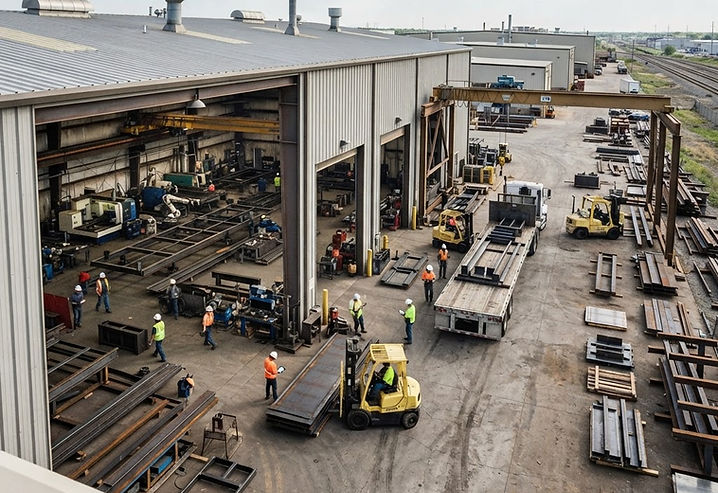
The metal fabrication industry manages intricate production processes and diverse material requirements, and it services customers with high expectations of suppliers. Manufacturers grapple with unique challenges but they can also seize the potential for remarkable improvements through enhanced integration of business processes. The sector is ever more challenging with rising energy, mining plant and equipment costs, workforce shortages and ongoing logistics challenges from almost three years of pandemic disruptions. However, with the right approach and investment, these challenges are not insurmountable. Integrating business processes to elevate the visibility of management information would empower more informed decisions, which are crucial for businesses to thrive. Let us dive deeper into this topic in this blog.
Optimization using ERP and Automation
To confront these challenges head on, fabricated metals manufacturers should consider implementing a modern enterprise resource planning (ERP) system tailored to their industry’s needs. Generic ERP solutions often need more industry specific features and functions to support nuanced requirements. ERP systems designed exclusively for manufacturers can streamline processes across the postpandemic fabrication supply chain. This includes order management, production planning, inventory control, and quality assurance. Such an integrated solution seamlessly coordinates operations and offers real time visibility into processes, leading to enhanced collaboration, data driven decision making, more efficient scheduling, and better shop floor control.
There is an unmistakable shift towards automation in modern metals manufacturing, particularly in operations. This reflects a broader industry trend to optimise efficiency and resource allocation using techniques such as AI video surveillance on the shop floor. As automation takes over repetitive processes, human resources are freed up to focus on managing the more intricate aspects of manufacturing operations. This strategic realignment of human capital enables companies to tap into the full potential of workforces.
MOM, The Operations Bulwark
A pivotal component of this approach is integrating sophisticated systems such as manufacturing operations management (MOM) within an ERP solution. MOM is a cornerstone in providing invaluable support throughout the manufacturing lifecycle, ensuring that precision and consistency are upheld in the most complex manufacturing environments. With MOM’s integration with ERP and its capacity to collect data from the shop floor, manufacturers can achieve consistency and precision that goes beyond what human centric processes can offer. This integration minimises the margin for error and safeguards the quality and reliability of the product, thereby bolstering overall operational excellence.

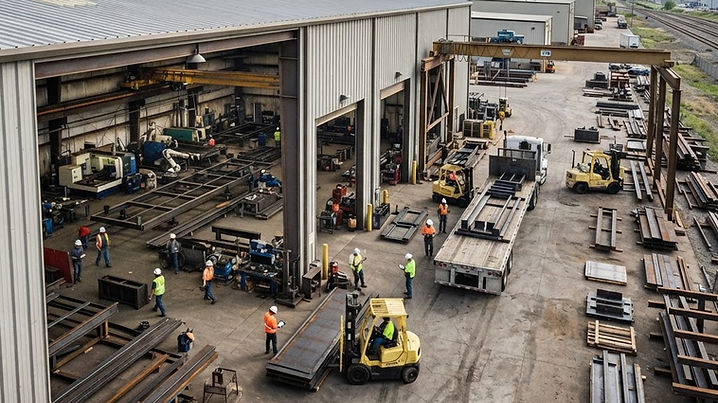
Integrating MOM With ERP
Some operational benefits of an ERP system with MOM for fabricated metals manufacturers are:
Advanced scheduling, Advanced scheduling leverages algorithms and optimisation techniques to create optimal schedules, considering machine capabilities, material availability, labour capacity and delivery deadlines. It balances workloads, minimises idle time and enhances productivity.
Streamlining processes, Implementing an ERP system fundamentally centralises and streamlines critical processes across the supply chain from managing the customer order through to delivery and servicing, creating a unified and synchronised operational framework. The newfound efficiency reduces operational redundancies and fosters better decision making through real time data access.
Administrative efficiency enhancement, With the adoption of ERP, companies can dramatically reduce administrative overheads by automating tasks such as pipe spool fabrication that were once manual and time consuming. This boosts efficiency and frees up resources for more strategic and value added activities.
Visibility informs decision making, One of the most profound benefits of ERP implementation is its granular insight into production data and key performance indicators. Data driven insight equips management with the tools for strategic decision making, driving efficiency and profitability to new heights.
Key Takeaways
In a market characterised by rapid change, manufacturers may not have control over external forces but they can leverage technology to optimise their operations. ERP solutions tailored for manufacturers offer metal fabricators the tools needed to integrate their processes seamlessly, improve the visibility of management information and proactively confront challenges. The path to success in the fabricated metals industry is unequivocal: embrace integration, harness the capabilities of ERP systems designed for manufacturers and use data driven insights that drive efficiency, profitability, and sustainable growth.
K999 Thailand carries out work of this kind through its structural steel fabrication team in Rayong.
Further reading
Follow Mineral Processing across the wider market on Project Atlas Intel.
How K999 can help
Where we fit the story
Trade policy, commodity cycles and energy markets decide when projects move, and they decide what gets fabricated. These articles collect the changes we track for our clients.
See our projects- 01
Work delivered for mining, energy, processing and manufacturing clients across Australia and Southeast Asia.
- 02
Fabrication in Rayong with assembly at Sattahip, shipping from Laem Chabang and Map Ta Phut.
- 03
Enquiries answered within 48 hours by our estimating team.
More on Industry News
All articles


Request for quotation
Need fabricated steel to that standard?
Every enquiry is answered within 48 hours by our estimating team in Rayong. The priced quotation follows once drawings, quantities and standards are confirmed. Stainless steel fabrication, structural steel fabrication, pipe spooling, pressure vessels, steel tanks, mining equipment and conveyors, pig launchers, chutes and hoppers, send the package and we will price it.
Before you request a quotation
Steel fabrication quotation questions
What structural steel fabrication, pressure vessel and pipe spooling packages cost, what to send with an enquiry, and how delivery to site works.
Structural steel fabrication is priced from the section and plate tonnage, the detailing and drawing hours, welding and fitting manhours, NDT requirements, blast and coating system, packing and freight. Grade matters as much as weight: AS/NZS, ASTM, JIS and BS sections carry different mill prices, and heavy built up members take longer than rolled sections. Our Rayong workshop produces around 10,000 tonnes of structural steel fabrication a year, so a clear bill of materials is usually enough to price. Send the drawings and we answer within 48 hours; the priced quotation follows once quantities, standards and delivery dates are confirmed.
For steel fabrication work, send the drawings or IFC package, a bill of materials with material grades, the welding and NDT requirements, the coating specification, the delivery port and your site dates. Add the inspection and test plan, any third party inspection requirement, and whether trial assembly or match marking is needed. Where drawings are still in progress, a scope list with sizes, quantities and duty is enough to start, and the estimate is refined once the final package arrives. Every enquiry is answered within 48 hours, and the priced quotation is issued after scope, standards and quantities are confirmed.
Yes. Pressure vessel fabrication is carried out to ASME Section VIII Div. 1 under our ASME U stamp No. 43,462, or to AS/NZS and BS where the project specifies, covering separators, air receivers, water drums, waste heat recovery units and pig launchers. Steel tanks for fuel, biofuel, chemical, water and food duty are designed in house with our E Tank programme to API, ASME, BS and AS/NZS. Because structural steel, vessels, tanks and their supports are built in the same workshops, one enquiry can cover the vessel package, the tank package and the structural steel that carries them, with a single coating and documentation system and one shipment.
Steel fabrication Australia packages are scheduled from a 33,000 m2 Rayong yard with an 80,000 m2 assembly yard inside Sattahip port, so fabrication, trial assembly, blasting, coating and packing run in one place. Programme length depends on tonnage, material lead times, the coating system and inspection scope, and it is confirmed with the quotation. We quote FOB Laem Chabang, Map Ta Phut or Sattahip, or CIF and DAP to your Australian port, with packing lists, weights, lifting points and a data book per shipment. Staged deliveries can follow your site erection sequence instead of shipping everything at once.
There is no fixed minimum. Pipe spooling Australia packages run at up to 3,000 diameter inches per shift on SCH.40, from a single replacement spool to a full plant piping scope, with spools numbered, X rayed where specified and coated to match erection order. Mining equipment fabrication covers chutes, hoppers, ore bins, transfer towers and conveyor structures with Bisalloy, Hardox, rubber lining or hardfacing fitted in house, from one wear liner set to modules of up to 2,500 tonnes assembled at Sattahip. Send the scope list and we will tell you what the smallest sensible batch is for your programme.