


Mining & Resources
Can Australia Become a Critical Minerals 'Superpower'?
Downstream processing, permitting and skills stand between Australia's mineral reserves and a critical minerals supply chain.
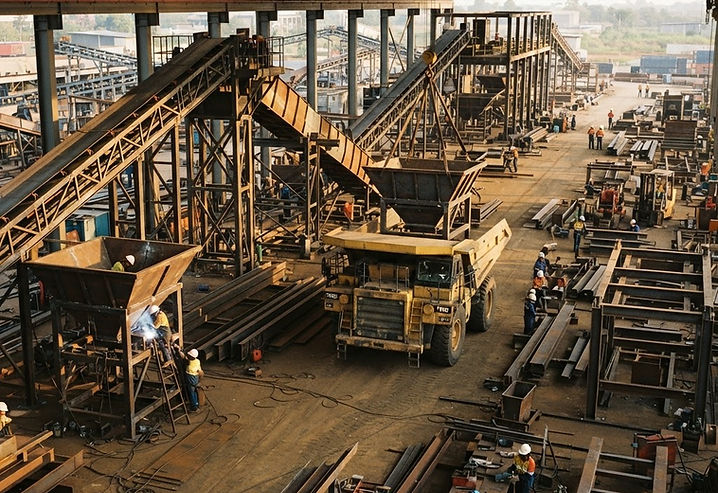
Australia is often called the “lucky country” for its vast natural resources, but when it comes to critical minerals, luck is only part of the story. With surging global demand for lithium, rare earths, nickel, cobalt, and other inputs essential to batteries, wind turbines, EVs, and defence technologies, Australia finds itself at the centre of the clean energy supply chain. The big question is: can Australia turn this natural advantage into true superpower status ?
Australia’s Starting Point: Rich Resources, Strong Foundations
Few countries can match Australia’s combination of world class geology and stable regulatory environment. Already, Australia is the world’s leading exporter of lithium, with significant reserves of rare earths, nickel, and vanadium. In 2023, the federal government released the Critical Minerals Strategy 2023 to 2030, laying out a plan to scale the sector, move beyond raw exports, and capture more value at home.
Key moves include:
A 10% Critical Minerals Production Tax Incentive (from 2027 to 2040) to encourage refining and processing.
Major loans and funding through the Northern Australia Infrastructure Facility and the National Reconstruction Fund.
Strategic partnerships with allies like the US, EU, Japan, and Korea to secure long term supply agreements.
Building the Midstream: From “Dig and Ship” to “Refine and Manufacture”
Historically, Australia’s role has been to dig up ore and ship it overseas, mostly to China, for processing. That model leaves much of the value offshore. The new push is about building midstream and downstream capacity:
Rare earths: Iluka’s $1.65 billion Eneabba refinery and Lynas’s Kalgoorlie plant are set to process and separate rare earths locally, cutting reliance on China.
Lithium: Kwinana and Kemerton hydroxide refineries are moving beyond spodumene exports to produce battery ready materials.
New projects: Arafura’s Nolans project in the NT and Liontown’s Kathleen Valley lithium mine are evidence of an expanding domestic supply chain.

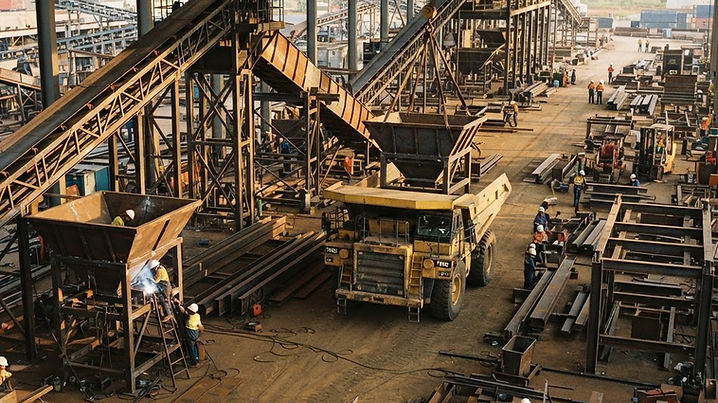
These projects are the first steps towards a full value chain that could include magnets, cathodes, and even recycling facilities.
The Challenges: Volatility, Competition, and Costs
The opportunity is massive, but so are the risks.
Price swings: Lithium and nickel prices have slumped recently, testing the financial resilience of projects requiring stainless steel fabrication.
Competition: Indonesia has rapidly expanded nickel refining with heavy subsidies, undercutting Australian producers.
High costs: Refining critical minerals requires cheap, clean energy, skilled workers, water, and chemicals, factors where Australia still faces bottlenecks.
Timing: Many incentives don’t kick in until 2027, leaving a funding gap for projects under development today.
What It Takes to Become a Superpower
For Australia to achieve critical minerals “superpower” status, it will need to:
Scale midstream processing quickly and keep utilisation rates high.
Secure long term offtake agreements with allies to de risk projects.
Invest in infrastructure and clean energy to bring down refining costs.
Move up the value chain into magnets, battery components, and recycling.
Balance growth with ESG standards, including strong engagement with First Nations communities.
The Bottom Line
Australia has the rocks, the rules, and now the policy support to become a critical minerals superpower. Progress in rare earths and lithium is already visible, but staying ahead will require more than just mining it’s about building a full, resilient supply chain. If Australia can bridge today’s challenges and seize the 2027 to 2040 incentive window, it won’t just be the lucky country it could be the critical minerals powerhouse of the clean energy era.
K999 Thailand carries out work of this kind through its mining equipment fabrication team in Rayong.
Further reading
Follow contract award tracking across the wider market on Project Atlas Intel.
How K999 can help
Equipment built for the pit
Mining work is where wear life decides the maintenance budget, so the articles in this section feed directly into how we detail chutes, hoppers, conveyors and wear parts.
Mining equipment and conveyors- 01
Mining equipment and conveyor fabrication with replaceable wear liners and hardfaced contact surfaces.
- 02
Chutes, hoppers and transfer structures detailed for access, lifting and shutdown windows.
- 03
Site assembly planning from the Sattahip yard for modules that ship by sea.
More on Mining & Resources
All articles
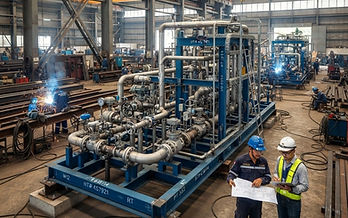

Request for quotation
Need fabricated steel to that standard?
Every enquiry is answered within 48 hours by our estimating team in Rayong. The priced quotation follows once drawings, quantities and standards are confirmed. Stainless steel fabrication, structural steel fabrication, pipe spooling, pressure vessels, steel tanks, mining equipment and conveyors, pig launchers, chutes and hoppers, send the package and we will price it.
Before you request a quotation
Steel fabrication quotation questions
What structural steel fabrication, pressure vessel and pipe spooling packages cost, what to send with an enquiry, and how delivery to site works.
Structural steel fabrication is priced from the section and plate tonnage, the detailing and drawing hours, welding and fitting manhours, NDT requirements, blast and coating system, packing and freight. Grade matters as much as weight: AS/NZS, ASTM, JIS and BS sections carry different mill prices, and heavy built up members take longer than rolled sections. Our Rayong workshop produces around 10,000 tonnes of structural steel fabrication a year, so a clear bill of materials is usually enough to price. Send the drawings and we answer within 48 hours; the priced quotation follows once quantities, standards and delivery dates are confirmed.
For steel fabrication work, send the drawings or IFC package, a bill of materials with material grades, the welding and NDT requirements, the coating specification, the delivery port and your site dates. Add the inspection and test plan, any third party inspection requirement, and whether trial assembly or match marking is needed. Where drawings are still in progress, a scope list with sizes, quantities and duty is enough to start, and the estimate is refined once the final package arrives. Every enquiry is answered within 48 hours, and the priced quotation is issued after scope, standards and quantities are confirmed.
Yes. Pressure vessel fabrication is carried out to ASME Section VIII Div. 1 under our ASME U stamp No. 43,462, or to AS/NZS and BS where the project specifies, covering separators, air receivers, water drums, waste heat recovery units and pig launchers. Steel tanks for fuel, biofuel, chemical, water and food duty are designed in house with our E Tank programme to API, ASME, BS and AS/NZS. Because structural steel, vessels, tanks and their supports are built in the same workshops, one enquiry can cover the vessel package, the tank package and the structural steel that carries them, with a single coating and documentation system and one shipment.
Steel fabrication Australia packages are scheduled from a 33,000 m2 Rayong yard with an 80,000 m2 assembly yard inside Sattahip port, so fabrication, trial assembly, blasting, coating and packing run in one place. Programme length depends on tonnage, material lead times, the coating system and inspection scope, and it is confirmed with the quotation. We quote FOB Laem Chabang, Map Ta Phut or Sattahip, or CIF and DAP to your Australian port, with packing lists, weights, lifting points and a data book per shipment. Staged deliveries can follow your site erection sequence instead of shipping everything at once.
There is no fixed minimum. Pipe spooling Australia packages run at up to 3,000 diameter inches per shift on SCH.40, from a single replacement spool to a full plant piping scope, with spools numbered, X rayed where specified and coated to match erection order. Mining equipment fabrication covers chutes, hoppers, ore bins, transfer towers and conveyor structures with Bisalloy, Hardox, rubber lining or hardfacing fitted in house, from one wear liner set to modules of up to 2,500 tonnes assembled at Sattahip. Send the scope list and we will tell you what the smallest sensible batch is for your programme.