


Industry News
Challenges Facing Metal Fabrication Industry
Skills shortages, steel price volatility and energy costs are the recurring pressures on fabrication businesses.
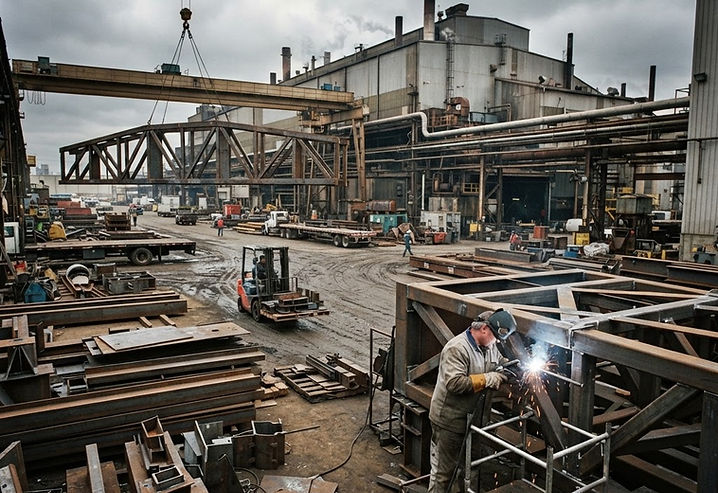
At any point in time, metal and steel fabrication work is ongoing with raw metal materials being cut, burned, welded, machined, formed or assembled by companies to meet industry requirements. Whether it is hardware, structural metal, or manufacturing products like hand tools or even handrails, companies in this industry play a significant role. That’s partially why the industry is steadily growing at about three percent annually. To know more about the applications of fabrication in the mining and oil and gas industries click here and here respectively. But even with steady growth, the metal fabrication industry is not without its challenges. This blog will discuss some of the major challenges facing this industry today.
Customers are living in a world where things happen on demand. Increasingly, they expect an expedited experience in an industrial setting as well. Customers want their products with best quality as soon as possible, at an affordable price, with insight into where things stand and when they’ll be delivered. Heavy steel fabrication companies would need to be competitive and meet quality expectations. Customers expect shorter lead times and more accurate job costing and estimating. Customers are also increasingly looking for product as a service options.
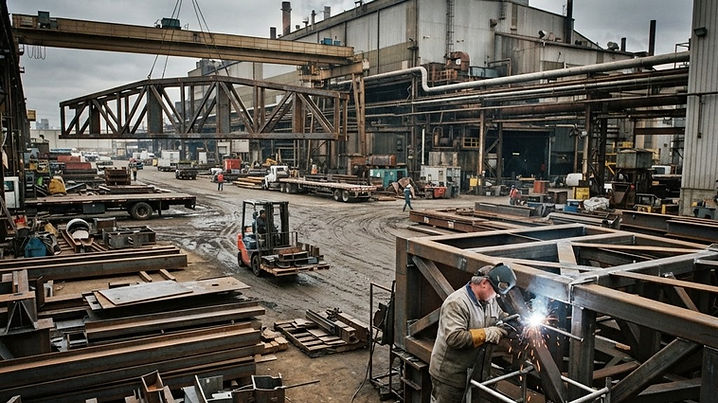
As operations grow in complexity, the supply chain becomes more complex, too. Like many other industries, metal fabrication is becoming increasingly outsourced which gives rise in the number of channels to bring a product to market. To save money and to meet increasing demand for a variety of products with shorter delivery times, many companies send some processes or components out to other plants or locations around the world. While this gets products (e.g. pressure vessels ) to the end stage faster and at a lower price, it also means businesses must work harder to synchronize their demand forecasts, supply capacity, and their inventory quantities.
A common challenge pertaining to metal fabrication is the rising costs of materials and capital projects, alongside inefficiency in operational standards and silo like decision making. With the increase in labor costs in the US, moving production offshore hasn’t always increased profits as transportation and quality assurance costs have also been on the rise. Global inflation is also presenting new difficulties to the manufacturing world. Tariffs and trade wars, as well as the intricacies of various economies, contribute to increased costs and diminished profits for the metal fabrication industry. Another major factor was the impact of the COVID 19 pandemic which disrupted the steel industry leading to rising raw material prices and decreased demand due to construction halts and high transportation costs of mining plant and equipment.
Manufacturing companies rely on a workforce that is declining. There tend to be misconceptions within the younger workforce that most manufacturing jobs lack competitiveness, higher wages, or clean and safe work environments. There are also many jobs available that require a specific skill set, such as that of a highly specialized civil engineer, which can lead to recruiting challenges. To attract new labor, companies need to communicate opportunities well, use intuitive, innovative, and enjoyable systems, and ensure that skillsets are a good fit for the company.
In an increasingly competitive market, it is anticipated that the right Operations Technology and Information Technology set ups would help metal fabricators stay ahead. Metal fabrication projects are also beginning to pick up in Asian countries like India, Vietnam, Thailand etc. and resolving the above challenges will be beneficial for the metal fabrication industry in the long run. At the end of the day, metal fabrication is held in high regard, however slight course corrections are required to ensure that headwinds are converted to tailwinds!
Further reading
Follow contract award tracking across the wider market on Project Atlas Intel.
How K999 can help
Where we fit the story
Trade policy, commodity cycles and energy markets decide when projects move, and they decide what gets fabricated. These articles collect the changes we track for our clients.
See our projects- 01
Work delivered for mining, energy, processing and manufacturing clients across Australia and Southeast Asia.
- 02
Fabrication in Rayong with assembly at Sattahip, shipping from Laem Chabang and Map Ta Phut.
- 03
Enquiries answered within 48 hours by our estimating team.
More on Industry News
All articles


Request for quotation
Need fabricated steel to that standard?
Every enquiry is answered within 48 hours by our estimating team in Rayong. The priced quotation follows once drawings, quantities and standards are confirmed. Stainless steel fabrication, structural steel fabrication, pipe spooling, pressure vessels, steel tanks, mining equipment and conveyors, pig launchers, chutes and hoppers, send the package and we will price it.
Before you request a quotation
Steel fabrication quotation questions
What structural steel fabrication, pressure vessel and pipe spooling packages cost, what to send with an enquiry, and how delivery to site works.
Structural steel fabrication is priced from the section and plate tonnage, the detailing and drawing hours, welding and fitting manhours, NDT requirements, blast and coating system, packing and freight. Grade matters as much as weight: AS/NZS, ASTM, JIS and BS sections carry different mill prices, and heavy built up members take longer than rolled sections. Our Rayong workshop produces around 10,000 tonnes of structural steel fabrication a year, so a clear bill of materials is usually enough to price. Send the drawings and we answer within 48 hours; the priced quotation follows once quantities, standards and delivery dates are confirmed.
For steel fabrication work, send the drawings or IFC package, a bill of materials with material grades, the welding and NDT requirements, the coating specification, the delivery port and your site dates. Add the inspection and test plan, any third party inspection requirement, and whether trial assembly or match marking is needed. Where drawings are still in progress, a scope list with sizes, quantities and duty is enough to start, and the estimate is refined once the final package arrives. Every enquiry is answered within 48 hours, and the priced quotation is issued after scope, standards and quantities are confirmed.
Yes. Pressure vessel fabrication is carried out to ASME Section VIII Div. 1 under our ASME U stamp No. 43,462, or to AS/NZS and BS where the project specifies, covering separators, air receivers, water drums, waste heat recovery units and pig launchers. Steel tanks for fuel, biofuel, chemical, water and food duty are designed in house with our E Tank programme to API, ASME, BS and AS/NZS. Because structural steel, vessels, tanks and their supports are built in the same workshops, one enquiry can cover the vessel package, the tank package and the structural steel that carries them, with a single coating and documentation system and one shipment.
Steel fabrication Australia packages are scheduled from a 33,000 m2 Rayong yard with an 80,000 m2 assembly yard inside Sattahip port, so fabrication, trial assembly, blasting, coating and packing run in one place. Programme length depends on tonnage, material lead times, the coating system and inspection scope, and it is confirmed with the quotation. We quote FOB Laem Chabang, Map Ta Phut or Sattahip, or CIF and DAP to your Australian port, with packing lists, weights, lifting points and a data book per shipment. Staged deliveries can follow your site erection sequence instead of shipping everything at once.
There is no fixed minimum. Pipe spooling Australia packages run at up to 3,000 diameter inches per shift on SCH.40, from a single replacement spool to a full plant piping scope, with spools numbered, X rayed where specified and coated to match erection order. Mining equipment fabrication covers chutes, hoppers, ore bins, transfer towers and conveyor structures with Bisalloy, Hardox, rubber lining or hardfacing fitted in house, from one wear liner set to modules of up to 2,500 tonnes assembled at Sattahip. Send the scope list and we will tell you what the smallest sensible batch is for your programme.