


Manufacturing & Technology
Charging The Battery Industry
The Australian government’s new National Battery Strategy aims to grow manufacturing capacity, strengthen supply chains, and decrease reliance on offshore products for energy essentials.
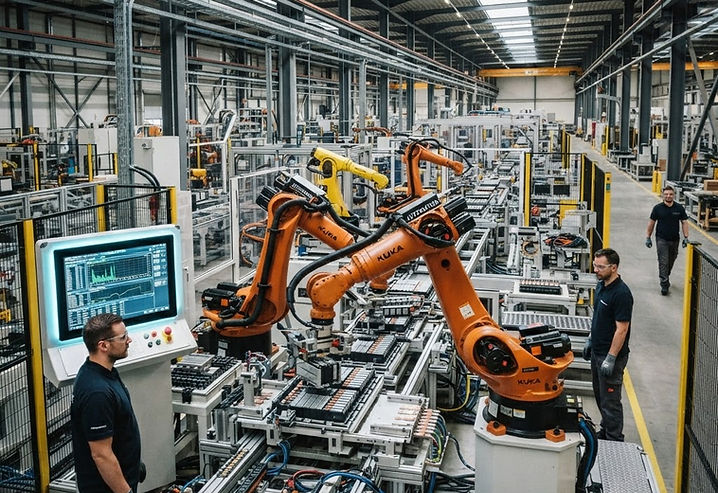
The Australian government’s new National Battery Strategy aims to grow manufacturing capacity, strengthen supply chains, and decrease reliance on offshore products for energy essentials. It dovetails with the government’s previously announced Critical Minerals Strategy to expand downstream processing and help meet future local global demand. Announcing the battery strategy on 23 May, Minister for Industry and Science Ed Husic told the media that while Australia supplied nearly half the world’s lithium (45%) last year, it made less than 1% of battery materials or components. He pointed out that while 3.7 million homes here have rooftop solar, only 250,000 have a battery to store it. Meanwhile, world demand for batteries is expected to quadruple by 2030 as demand increases for battery electric vehicles and the world moves to net zero.
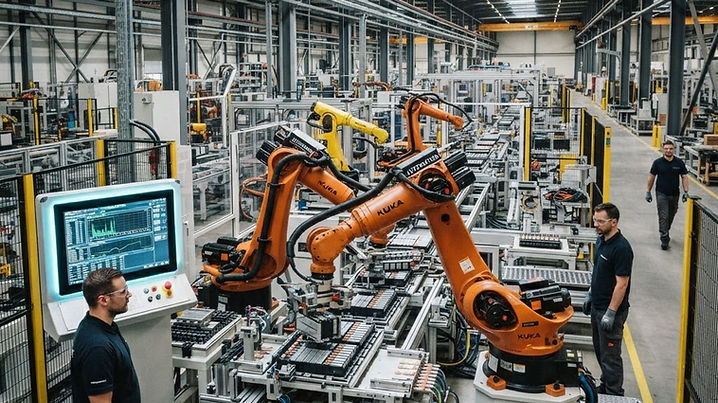
Asked by ABC Radio National whether Australia can compete with China, the biggest battery producer, Minister Husic said a lot of countries are recognising that their dependency on that concentrated supply chain is not in their national interest. “If there are disruptions to that supply, either accidental or otherwise, we are vulnerable. If you look at what we have announced in the Budget more broadly, for instance the critical minerals strategy is about increasing processing and developing pipe fabrication. We have looked at the whole value chain within this strategy and elsewhere and we are very good at mining and refining but a lot of the processing is done in China.” Husic said that once Australia adds more value by doing more onshore processing, Australia will be able to compete. “We can do more of this onshore … once that occurs … then we’rein a better space to do cell manufacture.”
Broadcaster Patricia Karvelas pointed out that both Treasury and the Productivity Commission have said Australia does not have the capacity to build sustainable battery manufacturing, views which Minister Husic dismissed as “economic orthodoxy”. “A lot of that is orthodox thinking, is about just relying on our comparative advantage and …. just maintaining the old dig and ship mentality. If you look at what the rest of the world is thinking about and the recognition of what we need to do to get to net zero and how to do it and setting up mechanisms, particularly in terms of in our space, which is a lot more of a demand of people to step forward with bids as to how they would be able to scale up production and making decisions on that basis. What we are trying to do is get the balance right between what we do with taxpayer funds, being able to increase our ability to do more onshore, and reduce dependency on [offshore] supply chains - which is an Australian manufacturing trend. And recognising that the world has turned on these issues because we have got the challenge of emissions reduction and getting to net zero.”
In his foreword to the battery strategy document, Husic hailed steel fabrication Australia’s “unmatched natural advantages” to create a battery industry: world leading renewable energy resources, critical minerals, skilled workers, robust mining plant and equipment, and a strong international trading reputation. Husic asserts the strategy is the latest milestone in Australia’s impressive history in battery advancement. “Australia has been at the forefront of the battery industry for decades, from pioneering the vanadium redox battery at the University of New South Wales to installing the world’s first big lithium battery in South Australia. Across Australia, businesses continue to innovate in the battery industry.”
K999 Thailand carries out work of this kind through its steel fabrication capability team in Rayong.
Further reading
Follow project intelligence platform across the wider market on Project Atlas Intel.
How K999 can help
How we apply the technology
Faster quoting, cleaner detailing and fewer site surprises come from the tools we use before the first cut, and the articles here explain how those tools change the work.
3D modelling and detailing- 01
3D modelling and shop detailing that resolves clashes before fabrication starts.
- 02
Fibre laser cutting for plate profiles, with nesting planned around the rolling schedule.
- 03
Project management that reports progress against the same model the client approved.
More on Manufacturing & Technology
All articles

Request for quotation
Need fabricated steel to that standard?
Every enquiry is answered within 48 hours by our estimating team in Rayong. The priced quotation follows once drawings, quantities and standards are confirmed. Stainless steel fabrication, structural steel fabrication, pipe spooling, pressure vessels, steel tanks, mining equipment and conveyors, pig launchers, chutes and hoppers, send the package and we will price it.
Before you request a quotation
Steel fabrication quotation questions
What structural steel fabrication, pressure vessel and pipe spooling packages cost, what to send with an enquiry, and how delivery to site works.
Structural steel fabrication is priced from the section and plate tonnage, the detailing and drawing hours, welding and fitting manhours, NDT requirements, blast and coating system, packing and freight. Grade matters as much as weight: AS/NZS, ASTM, JIS and BS sections carry different mill prices, and heavy built up members take longer than rolled sections. Our Rayong workshop produces around 10,000 tonnes of structural steel fabrication a year, so a clear bill of materials is usually enough to price. Send the drawings and we answer within 48 hours; the priced quotation follows once quantities, standards and delivery dates are confirmed.
For steel fabrication work, send the drawings or IFC package, a bill of materials with material grades, the welding and NDT requirements, the coating specification, the delivery port and your site dates. Add the inspection and test plan, any third party inspection requirement, and whether trial assembly or match marking is needed. Where drawings are still in progress, a scope list with sizes, quantities and duty is enough to start, and the estimate is refined once the final package arrives. Every enquiry is answered within 48 hours, and the priced quotation is issued after scope, standards and quantities are confirmed.
Yes. Pressure vessel fabrication is carried out to ASME Section VIII Div. 1 under our ASME U stamp No. 43,462, or to AS/NZS and BS where the project specifies, covering separators, air receivers, water drums, waste heat recovery units and pig launchers. Steel tanks for fuel, biofuel, chemical, water and food duty are designed in house with our E Tank programme to API, ASME, BS and AS/NZS. Because structural steel, vessels, tanks and their supports are built in the same workshops, one enquiry can cover the vessel package, the tank package and the structural steel that carries them, with a single coating and documentation system and one shipment.
Steel fabrication Australia packages are scheduled from a 33,000 m2 Rayong yard with an 80,000 m2 assembly yard inside Sattahip port, so fabrication, trial assembly, blasting, coating and packing run in one place. Programme length depends on tonnage, material lead times, the coating system and inspection scope, and it is confirmed with the quotation. We quote FOB Laem Chabang, Map Ta Phut or Sattahip, or CIF and DAP to your Australian port, with packing lists, weights, lifting points and a data book per shipment. Staged deliveries can follow your site erection sequence instead of shipping everything at once.
There is no fixed minimum. Pipe spooling Australia packages run at up to 3,000 diameter inches per shift on SCH.40, from a single replacement spool to a full plant piping scope, with spools numbered, X rayed where specified and coated to match erection order. Mining equipment fabrication covers chutes, hoppers, ore bins, transfer towers and conveyor structures with Bisalloy, Hardox, rubber lining or hardfacing fitted in house, from one wear liner set to modules of up to 2,500 tonnes assembled at Sattahip. Send the scope list and we will tell you what the smallest sensible batch is for your programme.