


Mining & Resources
Critical Minerals Funding and Australia’s Engineering Opportunity
The global race to secure critical minerals is accelerating rapidly, reshaping industrial investment priorities, supply chains, and infrastructure development.
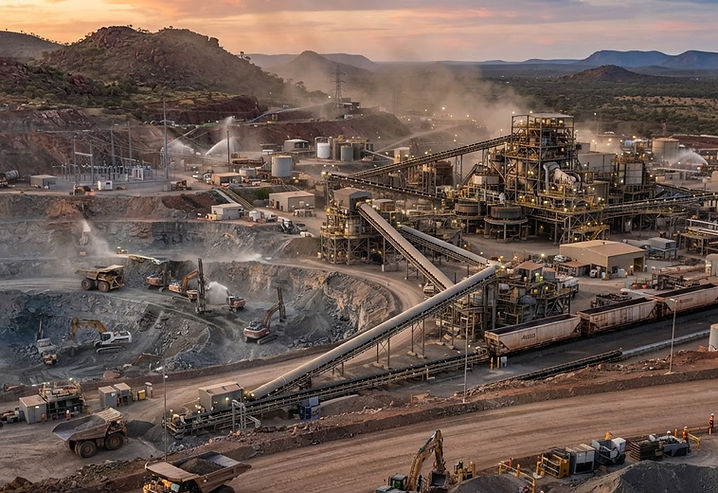
How Global Investment Trends Are Driving Demand for Fabrication and Industrial Infrastructure
The global race to secure critical minerals is accelerating rapidly, reshaping industrial investment priorities, supply chains, and infrastructure development. Governments, financial institutions, and private investors are committing billions of dollars to exploration, mining, processing, and logistics projects tied to minerals essential for clean energy, advanced manufacturing, and digital technologies.
For engineering and fabrication companies, particularly those supporting heavy industry, these funding trends represent significant opportunity. From stainless steel fabrication to structural steel fabrication Australia projects and pressure vessels Australia manufacturing, industrial capability will play a central role in enabling the next phase of mineral production and processing infrastructure.
This article explores the current global funding landscape and examines how Australia’s engineering sector can benefit from the expanding critical minerals ecosystem.
The Strategic Importance of Critical Minerals
Critical minerals such as lithium, cobalt, nickel, copper, graphite, and rare earth elements underpin modern industrial economies. They are essential inputs for:
Renewable energy systems
Battery storage and electric vehicles
Semiconductor manufacturing
Aerospace and defense technologies
Telecommunications infrastructure
Demand projections show sustained long term growth as electrification and digitalization expand worldwide. However, supply chain concentration remains a key concern, with processing and refinement capacity heavily centralized in limited regions.
As a result, governments are investing heavily to diversify sourcing, localize processing, and strengthen industrial independence.
This shift is not only influencing mining activity, it is driving demand for engineered infrastructure, fabrication capacity, and specialized industrial equipment.
Government Funding Is Driving the Global Investment Wave
Public sector capital has become a major catalyst for mineral development projects.
Across Europe, strategic raw material initiatives are supporting dozens of mining and processing developments backed by tens of billions of euros in capital. These programs aim to reduce import reliance and strengthen domestic industrial resilience.
North America is similarly investing through federal strategies and cross border partnerships designed to enhance extraction, processing capability, and supply chain stability. Funding support often includes infrastructure development, innovation grants, and regional industrial investment incentives.
International collaboration agreements are also expanding, connecting resource rich regions with manufacturing economies seeking long term mineral security.
The result is a structural transformation, critical minerals development is now embedded within national industrial policy rather than purely driven by market forces.
Emerging Regional Investment Hotspots
Funding flows continue to reshape global resource development geography. Investment activity has increased across:
Southeast Asia
Latin America
Africa
Australia
Indonesia’s expansion into mineral processing and rare earth development, for example, highlights how governments are positioning themselves to capture greater value from resource extraction.
Africa remains a key destination for exploration investment due to extensive untapped reserves, while Latin America continues attracting capital into lithium and copper production.
Australia, however, holds a uniquely advantageous position due to:
Stable regulatory frameworks
Established mining infrastructure
Skilled engineering workforce
Proximity to Asian manufacturing markets
These factors make the country a major destination for both domestic and international funding tied to critical mineral supply chain expansion.
Australia’s Industrial and Engineering Advantage
Australia’s role in the critical minerals value chain extends beyond extraction. Engineering capability and fabrication infrastructure are critical enablers of project delivery.

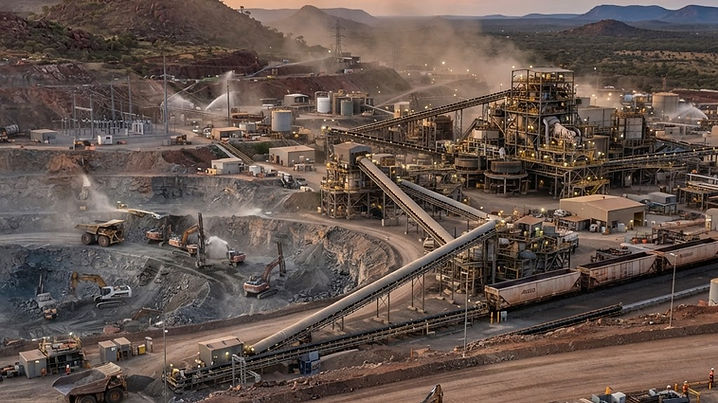
Mining and processing facilities rely heavily on:
Structural steel fabrication Australia providers for plant construction
Stainless steel fabrication for corrosion resistant processing systems
Pressure vessels Australia manufacturers for refining and chemical processing
Material handling systems
Storage tanks and containment systems
Transport and logistics infrastructure
Local fabrication capacity improves project timelines, reduces risk, and supports national value capture from resource development.
As funding accelerates, engineering contractors capable of delivering integrated fabrication solutions are positioned to capture increasing project scope.
Infrastructure Demand from Processing Expansion
A key trend shaping funding deployment is the push toward domestic processing and refining capacity.
Historically, raw mineral export dominated supply chains. Today, policy frameworks encourage downstream processing to:
Create jobs
Increase industrial capability
Capture greater economic value
Improve supply chain security
Processing facilities require highly specialized fabrication, particularly in high stress or chemically aggressive environments. This drives demand for:
High grade stainless assemblies
Heavy structural frameworks
Custom pressure containment systems
Modular plant fabrication
Engineering providers with experience across these areas become critical partners in mineral infrastructure development.
Investment Risks and Market Volatility
Despite strong funding momentum, the critical minerals sector presents challenges.
Commodity price volatility can affect project feasibility, while geopolitical tensions and export controls introduce supply uncertainty. Financing structures often need to account for shifting policy landscapes and long project timelines.
Engineering companies supporting these projects must therefore prioritize:
Flexible delivery capability
Risk aware planning
Quality assurance and compliance
Lifecycle cost optimization
Fabrication precision, reliability, and scalability increasingly influence project success and investor confidence.
Opportunities for Australian Fabrication Specialists
For industrial service providers, expanding global investment signals growing demand across multiple areas:
Mine construction support
Processing facility fabrication
Equipment manufacturing
Modular plant development
Maintenance and retrofit upgrades
Logistics infrastructure
Companies offering stainless steel fabrication, structural steel fabrication Australia, and pressure vessels Australia manufacturing services can play a critical role in supporting both domestic projects and international supply chains linked to Australian mineral output.
The integration of engineering expertise with fabrication capability creates a competitive advantage in an environment where project complexity continues to increase.
Conclusion
Global critical minerals funding is reshaping industrial development worldwide. Driven by energy transition priorities, geopolitical strategy, and technological expansion, investment flows are creating sustained demand for infrastructure, fabrication, and engineering expertise.
Australia stands well positioned to benefit from this transformation, not only as a resource supplier but as a provider of industrial capability supporting the entire value chain.
For engineering and fabrication firms, aligning with these investment trends represents an opportunity to participate in one of the most significant industrial growth cycles of the coming decades.
From stainless steel fabrication to structural steel fabrication Australia and pressure vessels Australia manufacturing, technical capability will remain central to delivering the infrastructure that powers global mineral supply security.
Further reading
Follow tender opportunities across the wider market on Project Atlas Intel.
Calculation tool
Run the numbers for this yourself with the free rectangular tank volume from Engineering Toolbox Australia. Treat the result as a first check, then confirm the final design with your engineer.
How K999 can help
Equipment built for the pit
Mining work is where wear life decides the maintenance budget, so the articles in this section feed directly into how we detail chutes, hoppers, conveyors and wear parts.
Mining equipment and conveyors- 01
Mining equipment and conveyor fabrication with replaceable wear liners and hardfaced contact surfaces.
- 02
Chutes, hoppers and transfer structures detailed for access, lifting and shutdown windows.
- 03
Site assembly planning from the Sattahip yard for modules that ship by sea.
More on Mining & Resources
All articles
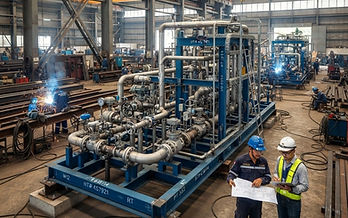


Request for quotation
Need fabricated steel to that standard?
Every enquiry is answered within 48 hours by our estimating team in Rayong. The priced quotation follows once drawings, quantities and standards are confirmed. Stainless steel fabrication, structural steel fabrication, pipe spooling, pressure vessels, steel tanks, mining equipment and conveyors, pig launchers, chutes and hoppers, send the package and we will price it.
Before you request a quotation
Steel fabrication quotation questions
What structural steel fabrication, pressure vessel and pipe spooling packages cost, what to send with an enquiry, and how delivery to site works.
Structural steel fabrication is priced from the section and plate tonnage, the detailing and drawing hours, welding and fitting manhours, NDT requirements, blast and coating system, packing and freight. Grade matters as much as weight: AS/NZS, ASTM, JIS and BS sections carry different mill prices, and heavy built up members take longer than rolled sections. Our Rayong workshop produces around 10,000 tonnes of structural steel fabrication a year, so a clear bill of materials is usually enough to price. Send the drawings and we answer within 48 hours; the priced quotation follows once quantities, standards and delivery dates are confirmed.
For steel fabrication work, send the drawings or IFC package, a bill of materials with material grades, the welding and NDT requirements, the coating specification, the delivery port and your site dates. Add the inspection and test plan, any third party inspection requirement, and whether trial assembly or match marking is needed. Where drawings are still in progress, a scope list with sizes, quantities and duty is enough to start, and the estimate is refined once the final package arrives. Every enquiry is answered within 48 hours, and the priced quotation is issued after scope, standards and quantities are confirmed.
Yes. Pressure vessel fabrication is carried out to ASME Section VIII Div. 1 under our ASME U stamp No. 43,462, or to AS/NZS and BS where the project specifies, covering separators, air receivers, water drums, waste heat recovery units and pig launchers. Steel tanks for fuel, biofuel, chemical, water and food duty are designed in house with our E Tank programme to API, ASME, BS and AS/NZS. Because structural steel, vessels, tanks and their supports are built in the same workshops, one enquiry can cover the vessel package, the tank package and the structural steel that carries them, with a single coating and documentation system and one shipment.
Steel fabrication Australia packages are scheduled from a 33,000 m2 Rayong yard with an 80,000 m2 assembly yard inside Sattahip port, so fabrication, trial assembly, blasting, coating and packing run in one place. Programme length depends on tonnage, material lead times, the coating system and inspection scope, and it is confirmed with the quotation. We quote FOB Laem Chabang, Map Ta Phut or Sattahip, or CIF and DAP to your Australian port, with packing lists, weights, lifting points and a data book per shipment. Staged deliveries can follow your site erection sequence instead of shipping everything at once.
There is no fixed minimum. Pipe spooling Australia packages run at up to 3,000 diameter inches per shift on SCH.40, from a single replacement spool to a full plant piping scope, with spools numbered, X rayed where specified and coated to match erection order. Mining equipment fabrication covers chutes, hoppers, ore bins, transfer towers and conveyor structures with Bisalloy, Hardox, rubber lining or hardfacing fitted in house, from one wear liner set to modules of up to 2,500 tonnes assembled at Sattahip. Send the scope list and we will tell you what the smallest sensible batch is for your programme.