


Fabrication
Custom Metal Fabrication Techniques for Value Addition
How fabrication detail, finishes and assembly tolerances add value a client can see in service life and installation time.
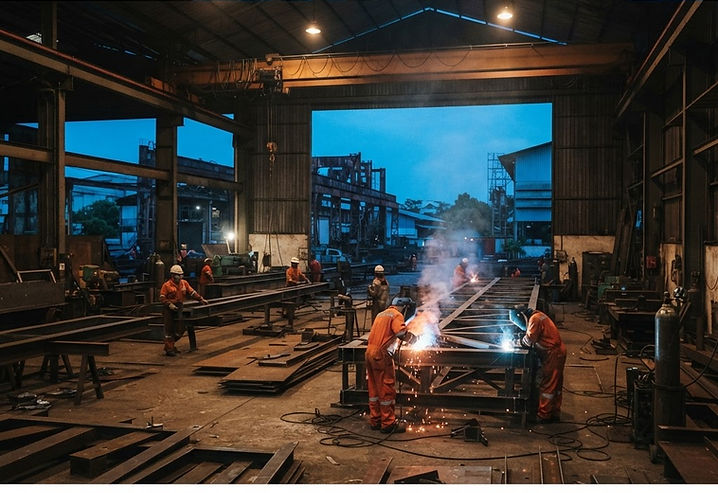
Standard fabrication projects are widely prevalent, however in many instances, metal fabrication projects are customized to increase the value of a solution. Every custom metal fabrication project inevitably begins with research, in order to assess the appropriate materials and methods to cost effectively produce each unique fabrication design. From design to delivery, the custom metal fabrication process is designed to produce more durable, quality results that deliver long term value, an example being fabrication of parts of battery electric vehicles. So, how is the customization achieved and what techniques are used to produce higher quality fabrications with long term value? This blog will look to delve deeper in this subject.
Establishing Design Intent
The design of a metal fabrication project is critical for reaching the desired outcome, which is added value. A full service fabricator can take a standard plan or an engineering drawing to flush out a detailed design that will accomplish the desired results for even the most complex project. This may require refining and testing the design per industry specific requirements or regulations and identifying all the required components to serve as the building blocks for the final project.
Metal Cutting and Forming

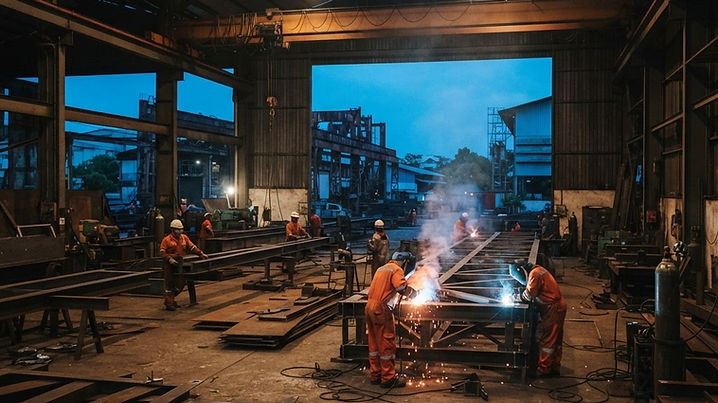
Prior to the start of the cutting process, the metal fabricator must assess what type of method is appropriate for the metal type and thickness. Laser cutting is an effective choice for delicate metal fabrications or for heavy steel plates that demand tight tolerances. On the other hand, lasers are not ideal for metal composites or materials that have impurities. Forming the metal may require different sheet metal fabrication techniques like bending, plate and angle rolling or punching. It is crucial to select the right machinery to deliver the desired result. Metal forming success is based on selecting the correct machinery to perform the task. A full service metal fabricator will likely have the necessary equipment in house, which can save both time and resources.
Custom Welding and Assembling
Custom welding and assembly techniques can guarantee that each project meets specific industry standards. A custom fabricator featuring certified welders and a strong quality control program is more likely to meet the industry requirements that add value. If you’reconsidering a partnership with heavy steel fabrication companies, be sure to ask for documentation of welder certifications. Beyond that, all assemblies and subassemblies should be tested together to ensure the final fabrication project functions as intended. Ideally, the entire assembly process should be documented as part of a fabricators structured quality control practices.
Expert Finishing
Finishing is the final step in preparing metal products for use, a crucial component for any metal fabrication project. Finishing helps to make products more resistant to corrosion, while providing higher electrical, chemical or tarnish resistance. Beyond that, finishing adds additional durability and makes metal surfaces look their best. For most projects, a product’s finish is determined by its intended use. Metal finishing encompasses more than one process, so it can be executed in multiple ways. Finishing would be dependent on alignment of process to product usage, cost effectiveness and suitability of project materials.
Finishing Touches
To ensure that customized fabrication does not adversely impact project timelines, fabrication components should be shipped in their most complete form possible, while larger projects should be shipped with large subassemblies that can be assembled quickly upon arrival. Products developed using customized fabrication are expected to increase in demand as part of more complex client requirements, for instance mining plant and equipment needs to be customized regularly. This would give opportunities for fabricators to put their creativity to good use, however providing value remains paramount and, since the customer is king, value should be at the forefront of all services in this regard!
Further reading
Follow project contacts directory across the wider market on Project Atlas Intel.
How K999 can help
Fabrication capacity behind the article
Articles in this section describe work we run every week in Rayong: cutting, forming, welding and assembly, under cover and in the yard, with the documentation that goes with it.
Structural steel fabrication- 01
Two workshops totalling more than 33,000 m² plus an 80,000 m² assembly yard at Sattahip.
- 02
Structural steel fabrication to 10,000 tonnes a year, with the largest single module built at 2,500 tonnes.
- 03
Blast, prime and paint before dispatch, with dimensional reports issued against the approved drawings.
More on Fabrication
All articles


Request for quotation
Need fabricated steel to that standard?
Every enquiry is answered within 48 hours by our estimating team in Rayong. The priced quotation follows once drawings, quantities and standards are confirmed. Stainless steel fabrication, structural steel fabrication, pipe spooling, pressure vessels, steel tanks, mining equipment and conveyors, pig launchers, chutes and hoppers, send the package and we will price it.
Before you request a quotation
Steel fabrication quotation questions
What structural steel fabrication, pressure vessel and pipe spooling packages cost, what to send with an enquiry, and how delivery to site works.
Structural steel fabrication is priced from the section and plate tonnage, the detailing and drawing hours, welding and fitting manhours, NDT requirements, blast and coating system, packing and freight. Grade matters as much as weight: AS/NZS, ASTM, JIS and BS sections carry different mill prices, and heavy built up members take longer than rolled sections. Our Rayong workshop produces around 10,000 tonnes of structural steel fabrication a year, so a clear bill of materials is usually enough to price. Send the drawings and we answer within 48 hours; the priced quotation follows once quantities, standards and delivery dates are confirmed.
For steel fabrication work, send the drawings or IFC package, a bill of materials with material grades, the welding and NDT requirements, the coating specification, the delivery port and your site dates. Add the inspection and test plan, any third party inspection requirement, and whether trial assembly or match marking is needed. Where drawings are still in progress, a scope list with sizes, quantities and duty is enough to start, and the estimate is refined once the final package arrives. Every enquiry is answered within 48 hours, and the priced quotation is issued after scope, standards and quantities are confirmed.
Yes. Pressure vessel fabrication is carried out to ASME Section VIII Div. 1 under our ASME U stamp No. 43,462, or to AS/NZS and BS where the project specifies, covering separators, air receivers, water drums, waste heat recovery units and pig launchers. Steel tanks for fuel, biofuel, chemical, water and food duty are designed in house with our E Tank programme to API, ASME, BS and AS/NZS. Because structural steel, vessels, tanks and their supports are built in the same workshops, one enquiry can cover the vessel package, the tank package and the structural steel that carries them, with a single coating and documentation system and one shipment.
Steel fabrication Australia packages are scheduled from a 33,000 m2 Rayong yard with an 80,000 m2 assembly yard inside Sattahip port, so fabrication, trial assembly, blasting, coating and packing run in one place. Programme length depends on tonnage, material lead times, the coating system and inspection scope, and it is confirmed with the quotation. We quote FOB Laem Chabang, Map Ta Phut or Sattahip, or CIF and DAP to your Australian port, with packing lists, weights, lifting points and a data book per shipment. Staged deliveries can follow your site erection sequence instead of shipping everything at once.
There is no fixed minimum. Pipe spooling Australia packages run at up to 3,000 diameter inches per shift on SCH.40, from a single replacement spool to a full plant piping scope, with spools numbered, X rayed where specified and coated to match erection order. Mining equipment fabrication covers chutes, hoppers, ore bins, transfer towers and conveyor structures with Bisalloy, Hardox, rubber lining or hardfacing fitted in house, from one wear liner set to modules of up to 2,500 tonnes assembled at Sattahip. Send the scope list and we will tell you what the smallest sensible batch is for your programme.