


Manufacturing & Technology
Decarbonising Manufacturing - A Long Term Game
Electrified process heat, renewable power contracts and scrap discipline are the levers on manufacturing emissions.
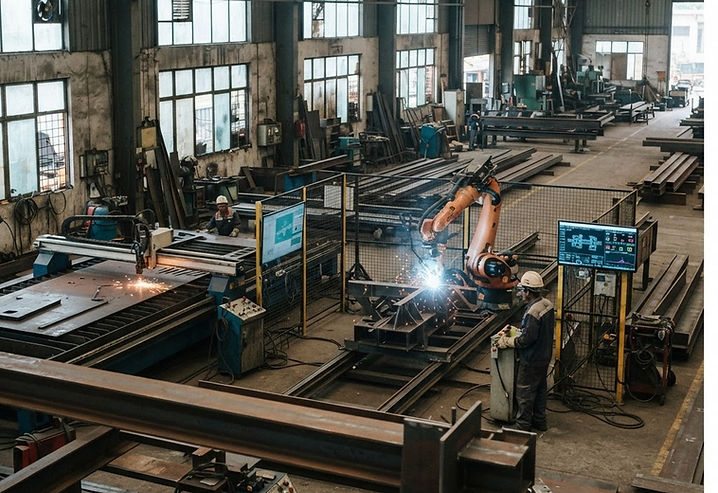
Manufacturing relies on processes requiring intense heat, the carbon intensive extraction and refinement of resources and huge power requirements to keep process lines humming. It is estimated that industrial processes, such as mining and manufacturing, consume 44% of Australia’s energy and 40% of electricity each year. While advances are being made, such as the development and use of green hydrogen and green ammonia, these are far off initiatives. Many manufacturers have completed the early stages of decarbonisation, the quick wins. These have shown the world, their investors, stakeholders, and employees they are doing everything in their power to decarbonise. The next stage of decarbonising is dubbed ‘hard to abate’ but it can be done.
Achievement of Quick Wins
Many manufacturers have declared their net zero intentions, as part of mandatory emissions reporting. It creates an impetus to ensure a declared public target is not another act of greenwashing. This external pressure is acting to push manufacturing companies to stay on track, either meeting or exceeding targets. While many have enacted meaningful change, they have done so at a smaller scale so that failures could be mitigated and isolated. For example, one global food and beverage manufacturer identified several pilot locations in each region with a good level of engagement and readiness from site level management, and used these to build a proof of concept for low carbon operations before scaling up across its global footprint. Additionally, many have either begun or completed the replacement of end of life equipment or mining plant and equipment with more energy efficient equivalents. These include implementing heat pumps, changing lighting from halogen to LED and switching to smart technologies which automatically power down equipment. NCI Packaging, for one, installed 500kW of rooftop solar at its site in Preston, Melbourne, reducing its energy consumption from the grid by 22%. While it may only decarbonise a production line or robotics, it is a key step towards decarbonisation as well as a proof of concept for future rollouts across the rest of its sites. Research reveals that 75% of organisations globally have achieved most of these quick wins. They are now tackling the harder to address challenges often associated with implementation.

Next Steps
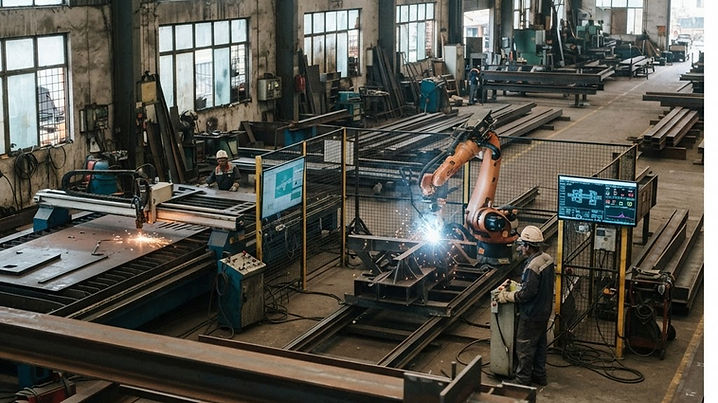
Manufacturing is hard to abate but it is incumbent on companies to achieve their targets, while remaining financially viable and competitive. Short term wins are great for the morale of the team, but projects with timelines stretching anywhere from 2 to 15 years make it harder to see the light at the end of the tunnel. Forward thinking heavy steel fabrication companies are embracing long term goals and those that are not risk falling behind. Furthermore, new technologies and advances such as green ammonia and green hydrogen are emerging and, while not yet mature, they should be part of any holistic decarbonisation strategy. One of the biggest aspects of net zero is something that seems out of control, but must be considered. Scope 3 emissions may fly under the radar for now, but there is a responsibility incumbent on organisations to begin aligning with suppliers focused on sustainable practices. Scope 3 emissions are set to increasingly make up a key pillar of decarbonisation reporting and research needs to be started on a sustainable postpandemic supply chain. Meanwhile, offsets should not be deployed in isolation to authentically reach net zero, but the use of offsets for residual hard to abate emissions can help organisations decarbonise around the edges.
Final Thoughts
It is acknowledged that manufacturing is a hard to abate sector due to its reliance on industrial processes and what is next beyond the quick wins is complex. But hard to abate does not mean impossible to abate and it is incumbent on organisations to ensure they do their utmost to meet their targets, both for the future of the planet and the future of their business.
K999 Thailand carries out work of this kind through its steel fabrication capability team in Rayong.
Further reading
Follow LNG across the wider market on Project Atlas Intel.
How K999 can help
How we apply the technology
Faster quoting, cleaner detailing and fewer site surprises come from the tools we use before the first cut, and the articles here explain how those tools change the work.
3D modelling and detailing- 01
3D modelling and shop detailing that resolves clashes before fabrication starts.
- 02
Fibre laser cutting for plate profiles, with nesting planned around the rolling schedule.
- 03
Project management that reports progress against the same model the client approved.
More on Manufacturing & Technology
All articles

Request for quotation
Need fabricated steel to that standard?
Every enquiry is answered within 48 hours by our estimating team in Rayong. The priced quotation follows once drawings, quantities and standards are confirmed. Stainless steel fabrication, structural steel fabrication, pipe spooling, pressure vessels, steel tanks, mining equipment and conveyors, pig launchers, chutes and hoppers, send the package and we will price it.
Before you request a quotation
Steel fabrication quotation questions
What structural steel fabrication, pressure vessel and pipe spooling packages cost, what to send with an enquiry, and how delivery to site works.
Structural steel fabrication is priced from the section and plate tonnage, the detailing and drawing hours, welding and fitting manhours, NDT requirements, blast and coating system, packing and freight. Grade matters as much as weight: AS/NZS, ASTM, JIS and BS sections carry different mill prices, and heavy built up members take longer than rolled sections. Our Rayong workshop produces around 10,000 tonnes of structural steel fabrication a year, so a clear bill of materials is usually enough to price. Send the drawings and we answer within 48 hours; the priced quotation follows once quantities, standards and delivery dates are confirmed.
For steel fabrication work, send the drawings or IFC package, a bill of materials with material grades, the welding and NDT requirements, the coating specification, the delivery port and your site dates. Add the inspection and test plan, any third party inspection requirement, and whether trial assembly or match marking is needed. Where drawings are still in progress, a scope list with sizes, quantities and duty is enough to start, and the estimate is refined once the final package arrives. Every enquiry is answered within 48 hours, and the priced quotation is issued after scope, standards and quantities are confirmed.
Yes. Pressure vessel fabrication is carried out to ASME Section VIII Div. 1 under our ASME U stamp No. 43,462, or to AS/NZS and BS where the project specifies, covering separators, air receivers, water drums, waste heat recovery units and pig launchers. Steel tanks for fuel, biofuel, chemical, water and food duty are designed in house with our E Tank programme to API, ASME, BS and AS/NZS. Because structural steel, vessels, tanks and their supports are built in the same workshops, one enquiry can cover the vessel package, the tank package and the structural steel that carries them, with a single coating and documentation system and one shipment.
Steel fabrication Australia packages are scheduled from a 33,000 m2 Rayong yard with an 80,000 m2 assembly yard inside Sattahip port, so fabrication, trial assembly, blasting, coating and packing run in one place. Programme length depends on tonnage, material lead times, the coating system and inspection scope, and it is confirmed with the quotation. We quote FOB Laem Chabang, Map Ta Phut or Sattahip, or CIF and DAP to your Australian port, with packing lists, weights, lifting points and a data book per shipment. Staged deliveries can follow your site erection sequence instead of shipping everything at once.
There is no fixed minimum. Pipe spooling Australia packages run at up to 3,000 diameter inches per shift on SCH.40, from a single replacement spool to a full plant piping scope, with spools numbered, X rayed where specified and coated to match erection order. Mining equipment fabrication covers chutes, hoppers, ore bins, transfer towers and conveyor structures with Bisalloy, Hardox, rubber lining or hardfacing fitted in house, from one wear liner set to modules of up to 2,500 tonnes assembled at Sattahip. Send the scope list and we will tell you what the smallest sensible batch is for your programme.