


Manufacturing & Technology
Digitalising People Management in Manufacturing
Skills matrices and shift planning software connect welder qualifications to the jobs they are allowed to run.
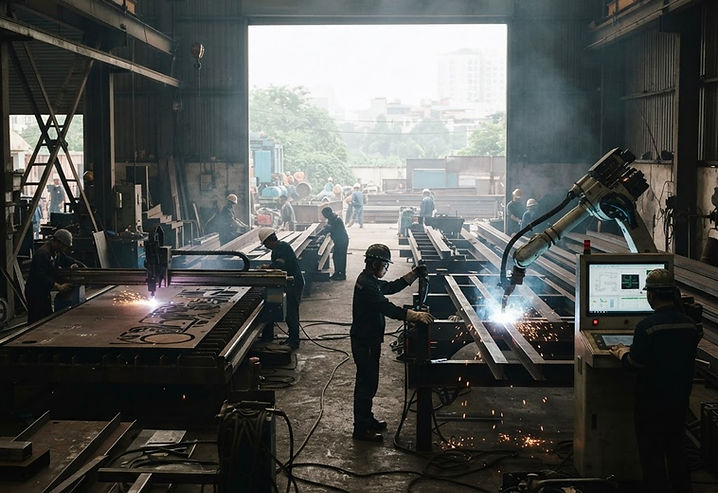
Manufacturing represents a significant pillar of the Australian economy. According to Australian Government jobs data, Australia’s manufacturing sector accounts for 6.5% of Australian employment. The manufacturing sector is on a path of progressive transformation. By embracing advanced technologies, manufacturers are making significant investments in enhancing operational efficiency, safety, sustainability, and decision making capabilities. The shift of manufacturing towards digitalisation holds immense potential for growth and improvement in the sector. This blog delves into how digitalisation holds the key for improved HR processes and people management in manufacturing.
Lagging Back Office Technologies
Despite the widespread adoption of advanced technologies for production and operational purposes, many sizable steel fabrication Australia companies are yet to fully digitalise their Human Resources (HR) processes. Traditional methods like paper based timesheets and spreadsheet driven shift scheduling are still prevalent, contrasting sharply with the industry’s otherwise forward looking technological stance. This inefficiency in HR processes is a clear indication of the need for change. The reluctance to digitalise HR functions in the manufacturing sector is a missed opportunity. Many manufacturers are yet to realise the potential benefits of identifying skills gaps and developing the workforce, reducing costs, and fostering a more sustainable business model. Transitioning to a digital first approach in people management is not just an investment in technology, but a fundamental shift in organisational culture that values digital transformation in all facets, including administrative and HR operations.
Digital Revolution in People Management

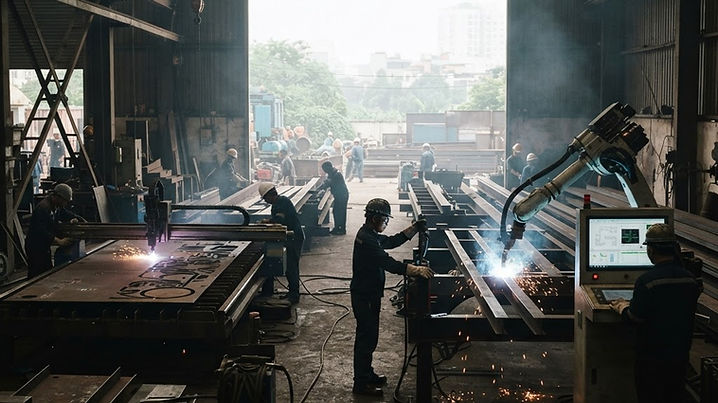
Digital workforce management solutions have transformed how manufacturers handle these tasks and enhanced strategies to reduce manufacturing cycle times. Time and attendance software automates tracking employee hours, reducing errors and freeing up valuable administrative time. Autorostering systems take this a step further by optimising shift schedules, ensuring that the right people are in the right place at the right time, thereby enhancing operational efficiency.
Enhancing Safety and Efficiency
One of the most significant benefits of digitalising people management is improving workplace safety. Autorostering systems can incorporate safety protocols into the scheduling process, ensuring that employees are not overworked and there are enough staff members with the necessary skills on each shift to handle emergencies. This proactive approach to safety can help prevent accidents and improve overall employee well being. Efficiency is another area where digital solutions shine. By automating routine tasks, manufacturers can reduce the time spent on administrative work. This allows managers to focus on strategic initiatives like process improvements and quality control. Additionally, with real time employee attendance and productivity data, managers can make informed decisions that boost operational efficiency. Digital workforce management systems generate a wealth of data that can be analysed to identify trends and areas for improvement. For example, analysing attendance patterns can reveal chronic understaffing during specific shifts, prompting a reevaluation of scheduling practices.
Employee Empowerment and Engagement
Digital solutions empower employees by giving them greater control over their schedules. Quality people management systems offer self service options that allow workers to request time off, swap shifts, and view their schedules from their mobile devices. This flexibility can lead to higher job satisfaction and engagement, as employees feel more valued and in control of their work life balance. For pressure vessel manufacturers, the key to successful digitalisation people management involves fostering a flexible, innovative, and well trained workforce that can adapt to new technologies. As technology advances, the potential for digital workforce management solutions to transform the manufacturing industry grows. Mobile devices can track employee movements and alert managers to potential safety risks on a real time basis.
Looking to the Future
The future of manufacturing lies in the ability to adapt and innovate. The ongoing reluctance to fully embrace digital HR processes is more than a missed opportunity; it is an oversight that can affect the competitiveness of Australia’s manufacturing industry. Manufacturers who commit to transforming their people management practices through digitalisation will lead the industry towards a more efficient, safe, and sustainable future. It is a pivotal moment for the sector to redefine its operations and culture, ensuring it remains at the forefront of global manufacturing excellence.
K999 Thailand carries out work of this kind through its steel fabrication capability team in Rayong.
Further reading
Follow Power Generation across the wider market on Project Atlas Intel.
Calculation tool
Run the numbers for this yourself with the free engineering standards explained from Engineering Toolbox Australia. Treat the result as a first check, then confirm the final design with your engineer.
How K999 can help
How we apply the technology
Faster quoting, cleaner detailing and fewer site surprises come from the tools we use before the first cut, and the articles here explain how those tools change the work.
3D modelling and detailing- 01
3D modelling and shop detailing that resolves clashes before fabrication starts.
- 02
Fibre laser cutting for plate profiles, with nesting planned around the rolling schedule.
- 03
Project management that reports progress against the same model the client approved.
More on Manufacturing & Technology
All articles

Request for quotation
Need fabricated steel to that standard?
Every enquiry is answered within 48 hours by our estimating team in Rayong. The priced quotation follows once drawings, quantities and standards are confirmed. Stainless steel fabrication, structural steel fabrication, pipe spooling, pressure vessels, steel tanks, mining equipment and conveyors, pig launchers, chutes and hoppers, send the package and we will price it.
Before you request a quotation
Steel fabrication quotation questions
What structural steel fabrication, pressure vessel and pipe spooling packages cost, what to send with an enquiry, and how delivery to site works.
Structural steel fabrication is priced from the section and plate tonnage, the detailing and drawing hours, welding and fitting manhours, NDT requirements, blast and coating system, packing and freight. Grade matters as much as weight: AS/NZS, ASTM, JIS and BS sections carry different mill prices, and heavy built up members take longer than rolled sections. Our Rayong workshop produces around 10,000 tonnes of structural steel fabrication a year, so a clear bill of materials is usually enough to price. Send the drawings and we answer within 48 hours; the priced quotation follows once quantities, standards and delivery dates are confirmed.
For steel fabrication work, send the drawings or IFC package, a bill of materials with material grades, the welding and NDT requirements, the coating specification, the delivery port and your site dates. Add the inspection and test plan, any third party inspection requirement, and whether trial assembly or match marking is needed. Where drawings are still in progress, a scope list with sizes, quantities and duty is enough to start, and the estimate is refined once the final package arrives. Every enquiry is answered within 48 hours, and the priced quotation is issued after scope, standards and quantities are confirmed.
Yes. Pressure vessel fabrication is carried out to ASME Section VIII Div. 1 under our ASME U stamp No. 43,462, or to AS/NZS and BS where the project specifies, covering separators, air receivers, water drums, waste heat recovery units and pig launchers. Steel tanks for fuel, biofuel, chemical, water and food duty are designed in house with our E Tank programme to API, ASME, BS and AS/NZS. Because structural steel, vessels, tanks and their supports are built in the same workshops, one enquiry can cover the vessel package, the tank package and the structural steel that carries them, with a single coating and documentation system and one shipment.
Steel fabrication Australia packages are scheduled from a 33,000 m2 Rayong yard with an 80,000 m2 assembly yard inside Sattahip port, so fabrication, trial assembly, blasting, coating and packing run in one place. Programme length depends on tonnage, material lead times, the coating system and inspection scope, and it is confirmed with the quotation. We quote FOB Laem Chabang, Map Ta Phut or Sattahip, or CIF and DAP to your Australian port, with packing lists, weights, lifting points and a data book per shipment. Staged deliveries can follow your site erection sequence instead of shipping everything at once.
There is no fixed minimum. Pipe spooling Australia packages run at up to 3,000 diameter inches per shift on SCH.40, from a single replacement spool to a full plant piping scope, with spools numbered, X rayed where specified and coated to match erection order. Mining equipment fabrication covers chutes, hoppers, ore bins, transfer towers and conveyor structures with Bisalloy, Hardox, rubber lining or hardfacing fitted in house, from one wear liner set to modules of up to 2,500 tonnes assembled at Sattahip. Send the scope list and we will tell you what the smallest sensible batch is for your programme.