


Fabrication
Digitization of Prefab Workflows
Model driven prefabrication links shop drawings, spool tags and site erection sequence so modules arrive in the right order.
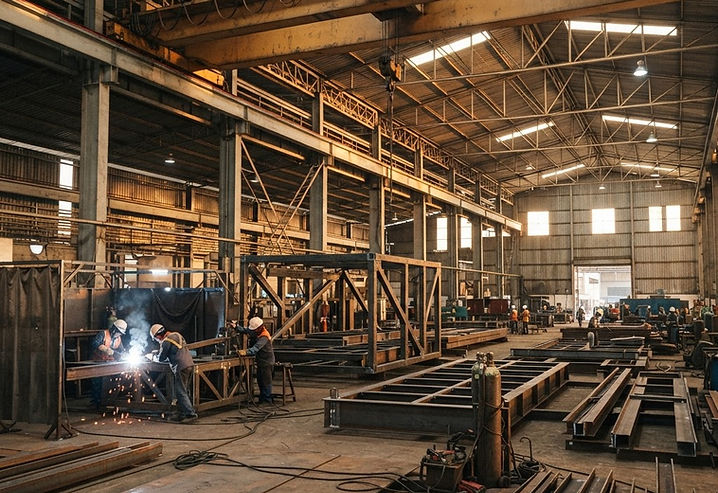
Prefab (prefabrication) construction has been a buzzword for a while; however, it has not been adopted on a wide scale within the construction industry. That is a potential missed opportunity since the positive impact these techniques can offer on project outcomes is well known among construction technologists. For instance, McKinsey reported in a May 2023 article that less than 4% of current US housing stock was built using modular techniques. However, their analysis suggested that modular techniques could “allow home builders to accelerate end to end project timelines by 20 to 50% while reducing costs by up to 20%,” while also making it “easier to execute on urban job sites since they require less space for the storage and preparation of pipe fabrication materials.” This article will discuss some workflows to build digitization into prefab operations.
Smart Tools
Smart tools offer many advantages to the operator and skilled trades that work within the shop to deliver customer project deliverables in a timely manner with exceeding attention to detail, craftsmanship, and quality:
Precision, fully customizable speed and torque settings for application specific repeatability and specification level verifiability, users can dial in settings based on their application, save modes to the cloud, and apply across entire equipment inventories.
Utilization data and reporting, in some cases, users can pull utilization data synced from events performed on tools and roll this data into customizable reports that provide proof of work and verify quality of workmanship and that manufacturers’ specification for critical fasteners (e.g., for water tanks ) were achieved.

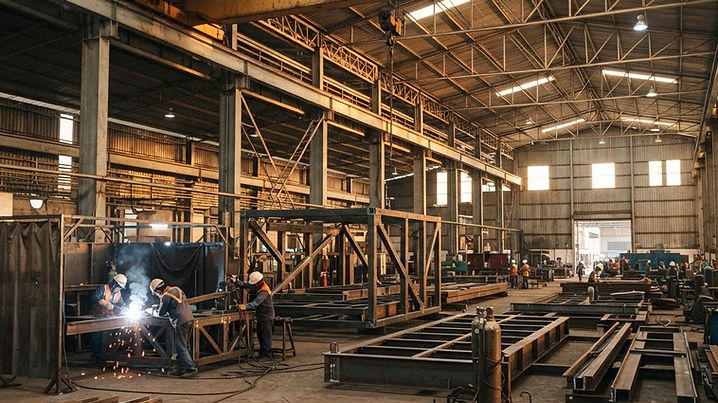
Safety and security, the same Bluetooth functionality that delivers the ability to customize these tools can be used to crowd source equipment locating around the shop or help find stolen tools in unfortunate theft situations; additionally, machine learning makes these tools safer, helping them achieve precise installations more accurately and with less risk to the operator.
Digital Twins and BIM
One of the 2023 trends in Australian manufacturing, a digital twin can help mirror shop systems across project lifecycle drawing on real time data, simulation, and machine learning to help drive smarter, data driven decisions. Digital twins can get as granular as “component twins,” helping diagnose malfunctioning parts through IoT sensors, and as macrolevel as process twins providing a view of how your systems work across the entire production facility, and helping you systematically synchronize and maintain peak production efficiency. Equipped with digital twin technology, manufacturing teams were able to reduce rework by 15 to 20%.
Building information modelling (BIM) has proven quite useful to mitigate risk and prevent expensive rework. But it can also be used to increase collaboration by supporting client engagement within offsite construction. BIM, too, should be integrated with critical team technical infrastructure, such as asset management, to reduce the need for manual reentry of project information, increase real time information sharing among team members, and improve project outcomes.
Inventory Management
Inventory management is a critical workflow in need of digitization in the prefab shop, with inventory representing $2,471.6 billion in the manufacturing industry. Aside from managing the sheer stock levels of raw materials needed in the shop to execute customer project deliverables, digital inventorying also includes keeping track of and maintaining equipment to prevent production halting equipment breakdowns. Digitization of the shop’s inventory operations can help integrate with smart tools to enhance labour utilization and improve quality, track levels of equipment and materials in inventory, monitor shop costs, and reduce manufacturing cycle times.
Closing Comments
While prefab and modular construction have not reached mass widespread adoption, they stand to solve some of the industry’s most challenging problems. In addition to the tremendous positive impacts prefab shops can offer projects from a productivity and quality standpoint, shop owners and teams digitizing their shop operations can provide an even more seamless experience for customers and team members, which can potentially move the prefab industry to new heights!
K999 Thailand carries out work of this kind through its structural steel fabrication team in Rayong.
Further reading
Follow Petrochemical across the wider market on Project Atlas Intel.
Calculation tool
Run the numbers for this yourself with the free free engineering calculators from Engineering Toolbox Australia. Treat the result as a first check, then confirm the final design with your engineer.
How K999 can help
Fabrication capacity behind the article
Articles in this section describe work we run every week in Rayong: cutting, forming, welding and assembly, under cover and in the yard, with the documentation that goes with it.
Structural steel fabrication- 01
Two workshops totalling more than 33,000 m² plus an 80,000 m² assembly yard at Sattahip.
- 02
Structural steel fabrication to 10,000 tonnes a year, with the largest single module built at 2,500 tonnes.
- 03
Blast, prime and paint before dispatch, with dimensional reports issued against the approved drawings.
More on Fabrication
All articles


Request for quotation
Need fabricated steel to that standard?
Every enquiry is answered within 48 hours by our estimating team in Rayong. The priced quotation follows once drawings, quantities and standards are confirmed. Stainless steel fabrication, structural steel fabrication, pipe spooling, pressure vessels, steel tanks, mining equipment and conveyors, pig launchers, chutes and hoppers, send the package and we will price it.
Before you request a quotation
Steel fabrication quotation questions
What structural steel fabrication, pressure vessel and pipe spooling packages cost, what to send with an enquiry, and how delivery to site works.
Structural steel fabrication is priced from the section and plate tonnage, the detailing and drawing hours, welding and fitting manhours, NDT requirements, blast and coating system, packing and freight. Grade matters as much as weight: AS/NZS, ASTM, JIS and BS sections carry different mill prices, and heavy built up members take longer than rolled sections. Our Rayong workshop produces around 10,000 tonnes of structural steel fabrication a year, so a clear bill of materials is usually enough to price. Send the drawings and we answer within 48 hours; the priced quotation follows once quantities, standards and delivery dates are confirmed.
For steel fabrication work, send the drawings or IFC package, a bill of materials with material grades, the welding and NDT requirements, the coating specification, the delivery port and your site dates. Add the inspection and test plan, any third party inspection requirement, and whether trial assembly or match marking is needed. Where drawings are still in progress, a scope list with sizes, quantities and duty is enough to start, and the estimate is refined once the final package arrives. Every enquiry is answered within 48 hours, and the priced quotation is issued after scope, standards and quantities are confirmed.
Yes. Pressure vessel fabrication is carried out to ASME Section VIII Div. 1 under our ASME U stamp No. 43,462, or to AS/NZS and BS where the project specifies, covering separators, air receivers, water drums, waste heat recovery units and pig launchers. Steel tanks for fuel, biofuel, chemical, water and food duty are designed in house with our E Tank programme to API, ASME, BS and AS/NZS. Because structural steel, vessels, tanks and their supports are built in the same workshops, one enquiry can cover the vessel package, the tank package and the structural steel that carries them, with a single coating and documentation system and one shipment.
Steel fabrication Australia packages are scheduled from a 33,000 m2 Rayong yard with an 80,000 m2 assembly yard inside Sattahip port, so fabrication, trial assembly, blasting, coating and packing run in one place. Programme length depends on tonnage, material lead times, the coating system and inspection scope, and it is confirmed with the quotation. We quote FOB Laem Chabang, Map Ta Phut or Sattahip, or CIF and DAP to your Australian port, with packing lists, weights, lifting points and a data book per shipment. Staged deliveries can follow your site erection sequence instead of shipping everything at once.
There is no fixed minimum. Pipe spooling Australia packages run at up to 3,000 diameter inches per shift on SCH.40, from a single replacement spool to a full plant piping scope, with spools numbered, X rayed where specified and coated to match erection order. Mining equipment fabrication covers chutes, hoppers, ore bins, transfer towers and conveyor structures with Bisalloy, Hardox, rubber lining or hardfacing fitted in house, from one wear liner set to modules of up to 2,500 tonnes assembled at Sattahip. Send the scope list and we will tell you what the smallest sensible batch is for your programme.