


Manufacturing & Technology
Electromechanical Cylinders - Trendsetter in Factory Automation
Electromechanical cylinders replace hydraulics on positioning duties, removing oil handling and improving repeatability.
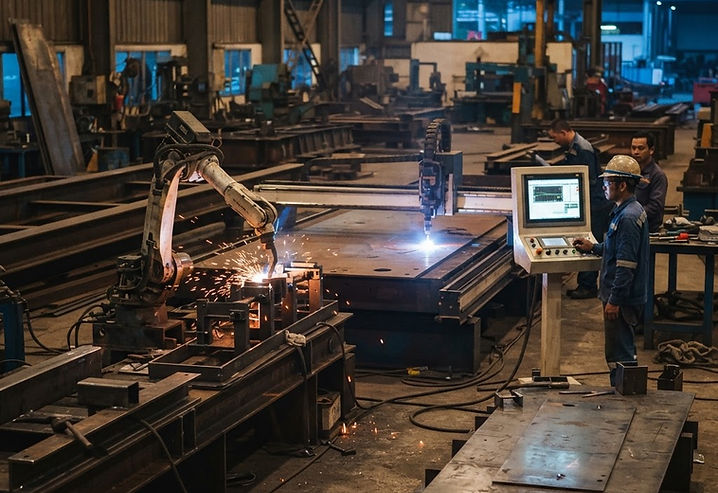
Factory automation is an ongoing process and, in this regard, electromechanical cylinders (EMCs) are one of the hidden gems. They can perform multiple functions, such as positioning, swiveling, lifting, pressing etc. EMCs convert motor torque directly into movement, they are particularly energy efficient and play an important role in climate protection. EMCs also offer great versatility and allow standardization, finely regulated processes, and resource saving in factory operations. So, what are the applications of EMCs which make them proven standard components and indispensable for factory automation? This blog will deep dive into this interesting topic and will look to provide further insights.
Increasing Standardization Potential
Sustainable manufacturing, stable processes, long service lives and great potential for standardization, these properties speak in favor of using electromechanical actuators as widely as possible. Thanks to ongoing development, applications now include pneumatic and fluid driven solutions. If additional complex solutions are replaced, this reduces not only complexity but also overall costs. Compared to compressed air, electromechanical systems can be better controlled for accuracy. The target sectors are equally broad and include semiconductor production, fast moving consumer goods (FMCG) and battery manufacturing.
Process Quality and Service Life

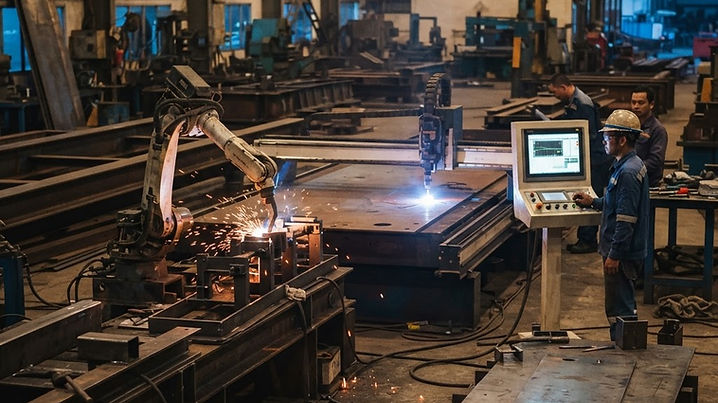
Quality control and management is essential to factory automation and one of the keys to the EMC’s efficiency lies hidden beneath its housing: the ball screw drive. In addition to the typical ball screw assembly for forces from 0.1 to about 30 kN, planetary screw drives are also used for heavy duty applications. The ball circulation screw for pressure vessels is the driving force for EMCs as it allows not only high load capacities but also particularly long lubrication intervals. The latest product generation achieves up to 200 million revolutions with the basic factory lubrication and this creates optimum conditions for minimizing operating costs and damage to the environment.
Next Level Engineering and Automation
There are multiple cylinder configurations, but new digital engineering tools now allow even inexperienced users to plan, detail and optimize their machine and system parts. This accelerates user speed and flexibility in the face of increasing time and cost pressures. With a level of user friendliness previously offered only by modern B2C (business to consumer) portals, these tools provide a glimpse into the future of online sales of complex industrial goods. The easy to use online tool shows the entire process on a single HTML page, including selection, ordering, and design and functionality characteristics. This enables engineering work to take minutes instead of hours.
Electromechanical cylinders that are configured with a motor can automatically parameterize themselves, like in the case of heat induction bending services. The necessary data for the drive controller is stored in the motor data memory at the factory and is loaded immediately after connection. There are Industry 4.0 processes, such as highly integrated and flexible subsystems for pressing and joining tasks, like the Smart Function Kit for Pressing. Quality monitoring and exchanging data for documenting processes can also be set up easily.
Conclusion
Due to their simple design, electromechanical cylinders have a lot to offer in factory automation. New digital engineering tools and convenient selectors along with ongoing improvements to the service life reduce overall costs, while intelligent subsystems pave the way to an automated Factory of the Future. EMC solutions with a high level of flexibility and integration allow for more efficiency during implementation and, when it comes to selecting a provider, it is worth reviewing the entire portfolio. Thus, it can be deduced that manufacturers that offer a broad, freely configurable range from a single source have an advantage in terms of future requirements such as climate protection, the shortage of skilled workers and flexible manufacturing.
K999 Thailand carries out work of this kind through its steel fabrication capability team in Rayong.
Further reading
Follow Hydrogen across the wider market on Project Atlas Intel.
How K999 can help
How we apply the technology
Faster quoting, cleaner detailing and fewer site surprises come from the tools we use before the first cut, and the articles here explain how those tools change the work.
3D modelling and detailing- 01
3D modelling and shop detailing that resolves clashes before fabrication starts.
- 02
Fibre laser cutting for plate profiles, with nesting planned around the rolling schedule.
- 03
Project management that reports progress against the same model the client approved.
More on Manufacturing & Technology
All articles

Request for quotation
Need fabricated steel to that standard?
Every enquiry is answered within 48 hours by our estimating team in Rayong. The priced quotation follows once drawings, quantities and standards are confirmed. Stainless steel fabrication, structural steel fabrication, pipe spooling, pressure vessels, steel tanks, mining equipment and conveyors, pig launchers, chutes and hoppers, send the package and we will price it.
Before you request a quotation
Steel fabrication quotation questions
What structural steel fabrication, pressure vessel and pipe spooling packages cost, what to send with an enquiry, and how delivery to site works.
Structural steel fabrication is priced from the section and plate tonnage, the detailing and drawing hours, welding and fitting manhours, NDT requirements, blast and coating system, packing and freight. Grade matters as much as weight: AS/NZS, ASTM, JIS and BS sections carry different mill prices, and heavy built up members take longer than rolled sections. Our Rayong workshop produces around 10,000 tonnes of structural steel fabrication a year, so a clear bill of materials is usually enough to price. Send the drawings and we answer within 48 hours; the priced quotation follows once quantities, standards and delivery dates are confirmed.
For steel fabrication work, send the drawings or IFC package, a bill of materials with material grades, the welding and NDT requirements, the coating specification, the delivery port and your site dates. Add the inspection and test plan, any third party inspection requirement, and whether trial assembly or match marking is needed. Where drawings are still in progress, a scope list with sizes, quantities and duty is enough to start, and the estimate is refined once the final package arrives. Every enquiry is answered within 48 hours, and the priced quotation is issued after scope, standards and quantities are confirmed.
Yes. Pressure vessel fabrication is carried out to ASME Section VIII Div. 1 under our ASME U stamp No. 43,462, or to AS/NZS and BS where the project specifies, covering separators, air receivers, water drums, waste heat recovery units and pig launchers. Steel tanks for fuel, biofuel, chemical, water and food duty are designed in house with our E Tank programme to API, ASME, BS and AS/NZS. Because structural steel, vessels, tanks and their supports are built in the same workshops, one enquiry can cover the vessel package, the tank package and the structural steel that carries them, with a single coating and documentation system and one shipment.
Steel fabrication Australia packages are scheduled from a 33,000 m2 Rayong yard with an 80,000 m2 assembly yard inside Sattahip port, so fabrication, trial assembly, blasting, coating and packing run in one place. Programme length depends on tonnage, material lead times, the coating system and inspection scope, and it is confirmed with the quotation. We quote FOB Laem Chabang, Map Ta Phut or Sattahip, or CIF and DAP to your Australian port, with packing lists, weights, lifting points and a data book per shipment. Staged deliveries can follow your site erection sequence instead of shipping everything at once.
There is no fixed minimum. Pipe spooling Australia packages run at up to 3,000 diameter inches per shift on SCH.40, from a single replacement spool to a full plant piping scope, with spools numbered, X rayed where specified and coated to match erection order. Mining equipment fabrication covers chutes, hoppers, ore bins, transfer towers and conveyor structures with Bisalloy, Hardox, rubber lining or hardfacing fitted in house, from one wear liner set to modules of up to 2,500 tonnes assembled at Sattahip. Send the scope list and we will tell you what the smallest sensible batch is for your programme.