


Manufacturing & Technology
Equispheres Develops Non Explosible Aluminum Feedstock
Canadian 3D printing powder developer Equispheres Inc. has developed a nonexplosible aluminum alloy feedstock for additive manufacturing that reduces the hazards associated with...
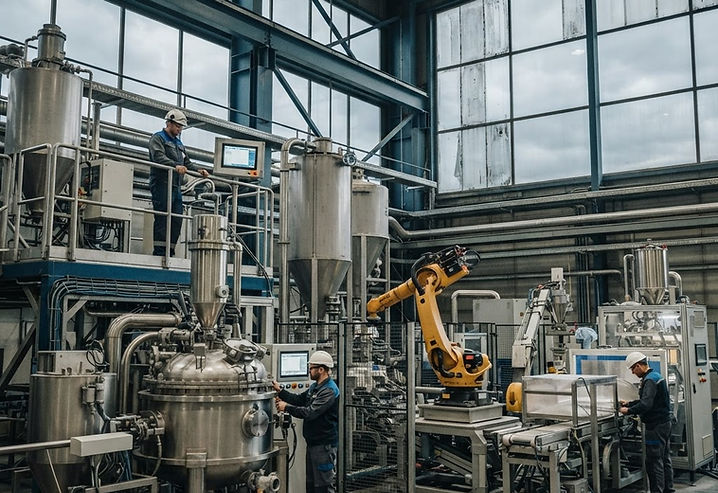
Canadian 3D printing powder developer Equispheres Inc. has developed a nonexplosible aluminum alloy feedstock for additive manufacturing that reduces the hazards associated with day to day handling of materials for 3D printing. Identified as NExP 1, the new material is specifically designed for production printing of aluminum parts. It maintains the ability to produce high quality prints at high throughput rates, but unlike other metal powders for AM, it is dust free and characterized as nonexplosible per ASTM E1226, Standard Test Method for Explosibility of Dust Clouds. The material is also noncombustible, per the UN Manual of Tests and Criteria, Part 3, Subsection 33.2.1. for flammable solids.
As metal 3D printer users will no doubt be aware, alloys like titanium and aluminum need to be handled carefully during heat induction bending, as they can combust extremely quickly when exposed to air in an enclosed space. This hazard is particularly pressing in 3D printing considering the dust often created during processing, hence powder management has become a critical (but sometimes laborious) part of users’ workflows. To help put such manufacturers at ease about the risks associated with handling aluminum, Equispheres has launched an innovative new nonexplosible AlSi10Mg material.
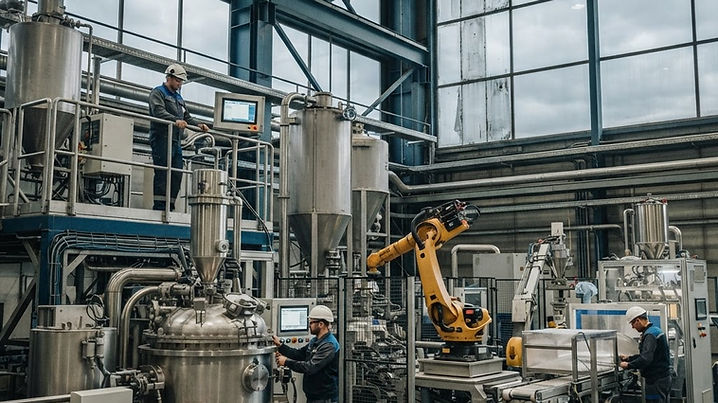
“We have achieved these key safety properties without altering the quality of our material nor the chemical composition. In printing, this material performs just as well as our other aluminum powders, but it has the added benefit of being nonexplosible and noncombustible,” says Evan Butler Jones, Vice President, Product & Strategy for Equispheres. Because this new, nonexplosible aluminum material significantly reduces the hazards of day to day handling without sacrificing the quality of the printed part, it could reduce the barriers to industrialization of 3D printing and make the process more easily integrated into manufacturing facilities of heavy steel fabrication companies.
“It would almost be inaccurate to even call this a powder,” Butler Jones continues. “It is almost totally free of dust; it flows like water and it is easy to clean off of equipment surfaces. It is a completely unique printing media for production additive manufacturing.” The material is currently available in AlSi10Mg. Equispheres has developed recommended parameters for printing the new material, targeting several end use applications. “We are applying our technology to empower innovation in additive manufacturing. We anticipate this new safer aluminum material will be embraced by companies using AM in a production setting,” says Kevin Nicholds, CEO of Equispheres. “This new breakthrough is a result of our ongoing efforts to make 3D printing and rapid prototyping more accessible and competitive with other manufacturing methods.”
With a core team of metallurgists actively engaged in R&D, Equispheres continues to develop processes and products to advance the technology of additive manufacturing. The company’s Performance and Precision lines of aluminum powder demonstrate marked improvement in print speed and part quality, resulting in lower per part costs. NExP 1, an addition to Equispheres’ Production product line relies on a technological breakthrough to address the handling properties of AM powders.
K999 Thailand carries out work of this kind through its steel fabrication capability team in Rayong.
Further reading
Follow Power Generation across the wider market on Project Atlas Intel.
How K999 can help
How we apply the technology
Faster quoting, cleaner detailing and fewer site surprises come from the tools we use before the first cut, and the articles here explain how those tools change the work.
3D modelling and detailing- 01
3D modelling and shop detailing that resolves clashes before fabrication starts.
- 02
Fibre laser cutting for plate profiles, with nesting planned around the rolling schedule.
- 03
Project management that reports progress against the same model the client approved.
More on Manufacturing & Technology
All articles

Request for quotation
Need fabricated steel to that standard?
Every enquiry is answered within 48 hours by our estimating team in Rayong. The priced quotation follows once drawings, quantities and standards are confirmed. Stainless steel fabrication, structural steel fabrication, pipe spooling, pressure vessels, steel tanks, mining equipment and conveyors, pig launchers, chutes and hoppers, send the package and we will price it.
Before you request a quotation
Steel fabrication quotation questions
What structural steel fabrication, pressure vessel and pipe spooling packages cost, what to send with an enquiry, and how delivery to site works.
Structural steel fabrication is priced from the section and plate tonnage, the detailing and drawing hours, welding and fitting manhours, NDT requirements, blast and coating system, packing and freight. Grade matters as much as weight: AS/NZS, ASTM, JIS and BS sections carry different mill prices, and heavy built up members take longer than rolled sections. Our Rayong workshop produces around 10,000 tonnes of structural steel fabrication a year, so a clear bill of materials is usually enough to price. Send the drawings and we answer within 48 hours; the priced quotation follows once quantities, standards and delivery dates are confirmed.
For steel fabrication work, send the drawings or IFC package, a bill of materials with material grades, the welding and NDT requirements, the coating specification, the delivery port and your site dates. Add the inspection and test plan, any third party inspection requirement, and whether trial assembly or match marking is needed. Where drawings are still in progress, a scope list with sizes, quantities and duty is enough to start, and the estimate is refined once the final package arrives. Every enquiry is answered within 48 hours, and the priced quotation is issued after scope, standards and quantities are confirmed.
Yes. Pressure vessel fabrication is carried out to ASME Section VIII Div. 1 under our ASME U stamp No. 43,462, or to AS/NZS and BS where the project specifies, covering separators, air receivers, water drums, waste heat recovery units and pig launchers. Steel tanks for fuel, biofuel, chemical, water and food duty are designed in house with our E Tank programme to API, ASME, BS and AS/NZS. Because structural steel, vessels, tanks and their supports are built in the same workshops, one enquiry can cover the vessel package, the tank package and the structural steel that carries them, with a single coating and documentation system and one shipment.
Steel fabrication Australia packages are scheduled from a 33,000 m2 Rayong yard with an 80,000 m2 assembly yard inside Sattahip port, so fabrication, trial assembly, blasting, coating and packing run in one place. Programme length depends on tonnage, material lead times, the coating system and inspection scope, and it is confirmed with the quotation. We quote FOB Laem Chabang, Map Ta Phut or Sattahip, or CIF and DAP to your Australian port, with packing lists, weights, lifting points and a data book per shipment. Staged deliveries can follow your site erection sequence instead of shipping everything at once.
There is no fixed minimum. Pipe spooling Australia packages run at up to 3,000 diameter inches per shift on SCH.40, from a single replacement spool to a full plant piping scope, with spools numbered, X rayed where specified and coated to match erection order. Mining equipment fabrication covers chutes, hoppers, ore bins, transfer towers and conveyor structures with Bisalloy, Hardox, rubber lining or hardfacing fitted in house, from one wear liner set to modules of up to 2,500 tonnes assembled at Sattahip. Send the scope list and we will tell you what the smallest sensible batch is for your programme.