


Fabrication
Essential Tips for Engineering Procurement Teams in Australia for Offshore Fabrication in Thailand
What Australian buyers should verify before placing fabrication in Thailand: code compliance, inspection rights, documentation and shipping envelopes.
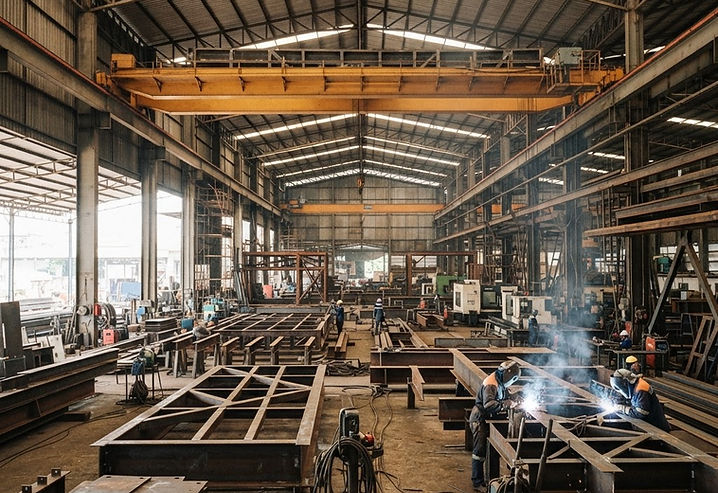
Understanding Offshore Fabrication: Advantages and Challenges
Offshore fabrication, particularly steel fabrication in Thailand, has gained significant traction among engineering procurement teams in Australia. One of the primary advantages of this approach lies in cost efficiency. By leveraging Thailand’s more competitive labor and operational costs, companies can reduce overhead expenses while maintaining production quality. This reduction in costs allows for reallocation of resources towards other critical areas, fostering innovation and improving overall project profitability.
In addition to cost benefits, access to skilled labor is another key advantage of offshore fabrication in Thailand. The country has cultivated a robust workforce adept in various fabrication techniques. Quality steel fabricators in Thailand are known for their expertise and craftsmanship, ensuring that projects meet international standards. This specialized knowledge can lead to enhanced product quality and reliability, essential in any engineering project.
Another noteworthy aspect is the capacity to scale production. As demand fluctuates, offshore fabrication facilities offer the flexibility to increase or decrease output, allowing procurement teams to respond adeptly to market changes. This scalability is particularly beneficial for large scale projects requiring significant manpower and resources without the need for substantial investments in local facilities.
However, understanding these advantages must be accompanied by an acknowledgment of the challenges that come with offshore fabrication. Quality control remains a pressing concern; procurement teams must develop stringent oversight processes to ensure that the finished products meet the required specifications. Additionally, logistics present a complex landscape, with transportation and customs processes needing careful navigation to prevent delays. Communication barriers, often exacerbated by language differences, can also hinder effective collaboration between teams in Australia and fabricators in Thailand. Addressing these challenges is essential for a successful offshore fabrication strategy.
Key Considerations When Selecting an Offshore Fabrication Partner
When selecting an offshore fabrication partner in Thailand, engineering procurement teams in Australia must carefully evaluate several critical criteria to ensure they are making an informed and strategic decision. One of the primary considerations involves assessing the supplier’s capabilities. This includes understanding their technical expertise, workforce skills, and the range of services they offer in steel fabrication. Engaging with quality steel fabricators in Thailand who possess advanced machinery and technology can greatly influence the outcome of any project.
Quality certifications are another essential factor. Partners that hold internationally recognized certifications, such as ISO, demonstrate their commitment to producing quality products. Confirming that the supplier adheres to strict quality control processes will help mitigate risks associated with project delivery. It is advisable to review documentation and performance history to gauge a partner’s reliability and consistency in delivering high quality steel fabrication results.
Additionally, past project experience should be examined to understand how the potential partner has handled previous work. Teams should consider reviewing case studies, testimonials, and client references to assess their performance under similar conditions. This insight can provide a clearer picture of the potential partner’s ability to meet specific project demands, timelines, and budgets.

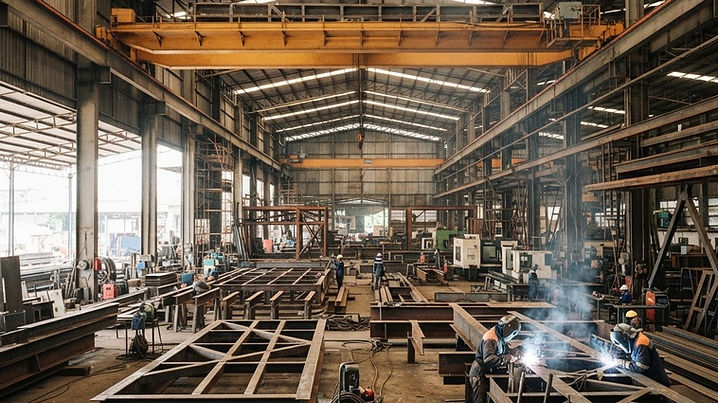
Financial stability is another crucial consideration, as a reliable partner should have sound financial health to avoid disruptions during production. Engaging with partners that have a proven track record of sound fiscal management will enhance project security and continuity.
Lastly, cultural compatibility and the potential for a long term partnership should not be overlooked. A successful collaboration often hinges on aligning business goals and operational practices. Establishing a solid relationship with a reputable offshore fabrication partner in Thailand can prove beneficial for future projects and foster an environment of mutual trust and understanding.
Effective Communication and Collaboration Strategies
Successful communication and collaboration are crucial for engineering procurement teams, particularly when engaging in offshore steel fabrication in Thailand. With a diverse range of cultural and linguistic nuances, Australian teams must adopt various strategies to ensure clarity and effectiveness in their interactions with Thai counterparts. One of the primary challenges faced in this context is the language barrier. To overcome this, organizations should consider employing bilingual team members or professional translators, who can facilitate more accurate exchanges. Additionally, ensuring that all team members have access to language training or resources can significantly enhance overall understanding.
Establishing clear expectations at the outset of any project is vital. This includes detailing project objectives, timelines, and deliverables. Procurement teams should embrace collaborative tools that allow for real time updates and shared documentation, facilitating transparent communication. Utilizing cloud based project management software can help bridge the gap between teams located in different regions, enabling both Australian and Thai partners to stay abreast of progress and changes.
The use of technology in virtual meetings also presents a significant opportunity to foster effective teamwork. Video conferencing tools can provide face to face interaction, which is essential for building relationships and trust between the teams, also saving companies costs on flights to Thailand. Australian procurement professionals should encourage open dialogues during these virtual meetings and leverage visual aids, such as diagrams and presentations, to enhance comprehension of complex steel fabrication processes in Thailand.
Fostering strong working relationships relies considerably on building trust and rapport. Taking the time to understand cultural differences and showing respect for Thai working practices can create a more harmonious working environment. Lessons learned from previous collaborations should be shared regularly, promoting a culture of continuous improvement and partnership between quality steel fabricators in Thailand and their Australian counterparts. In conclusion, implementing these strategic communication and collaboration approaches can lead to successful outcomes in offshore fabrication projects.
Navigating Legal and Regulatory Compliance in Thailand
When Australian procurement teams engage with offshore fabrication in Thailand, a comprehensive understanding of the legal and regulatory landscape is essential. Firstly, it is crucial to familiarize oneself with local labor laws. Thailand’s labor regulations are designed to protect workers’ rights, ensure fair wages, and maintain workplace safety. Therefore, procurement teams must select quality steel fabricators in Thailand who comply with these laws. This not only helps in fostering a positive working environment but also mitigates the risk of legal disputes which could delay fabrication timelines.
In addition to labor laws, environmental regulations play a significant role in the offshore fabrication process. Thailand has strict environmental protection laws that dictate how businesses can operate, particularly in the steel fabrication industry. Understanding these regulations will enable Australian teams to assess the environmental impact of their projects. By partnering with compliant steel fabrication companies in Thailand, procurement teams can not only adhere to these laws but also contribute to sustainability efforts in the region.
Moreover, import/export requirements are another critical aspect that needs careful navigation. Any goods entering or leaving Thailand are subject to customs regulations, which include tariffs and documentation. Hence, Australian procurement teams must ensure that their suppliers in Thailand manage these requirements efficiently. This involves verifying that all necessary permits and licenses are in place, thus avoiding unexpected costs and project delays due to regulatory oversight.
Lastly, staying informed about any changes in Thailand’s legal framework is vital. Regular engagement with legal advisors who specialize in international trade and local laws can provide valuable insights and updates. By proactively addressing these legal and regulatory issues, procurement teams can streamline the offshore fabrication process in Thailand, ensuring that projects remain on track and within budget.
Further reading
Follow procurement opportunities across the wider market on Project Atlas Intel.
Calculation tool
Run the numbers for this yourself with the free engineering standards explained from Engineering Toolbox Australia. Treat the result as a first check, then confirm the final design with your engineer.
How K999 can help
Fabrication capacity behind the article
Articles in this section describe work we run every week in Rayong: cutting, forming, welding and assembly, under cover and in the yard, with the documentation that goes with it.
Structural steel fabrication- 01
Two workshops totalling more than 33,000 m² plus an 80,000 m² assembly yard at Sattahip.
- 02
Structural steel fabrication to 10,000 tonnes a year, with the largest single module built at 2,500 tonnes.
- 03
Blast, prime and paint before dispatch, with dimensional reports issued against the approved drawings.
More on Fabrication
All articles


Request for quotation
Need fabricated steel to that standard?
Every enquiry is answered within 48 hours by our estimating team in Rayong. The priced quotation follows once drawings, quantities and standards are confirmed. Stainless steel fabrication, structural steel fabrication, pipe spooling, pressure vessels, steel tanks, mining equipment and conveyors, pig launchers, chutes and hoppers, send the package and we will price it.
Before you request a quotation
Steel fabrication quotation questions
What structural steel fabrication, pressure vessel and pipe spooling packages cost, what to send with an enquiry, and how delivery to site works.
Structural steel fabrication is priced from the section and plate tonnage, the detailing and drawing hours, welding and fitting manhours, NDT requirements, blast and coating system, packing and freight. Grade matters as much as weight: AS/NZS, ASTM, JIS and BS sections carry different mill prices, and heavy built up members take longer than rolled sections. Our Rayong workshop produces around 10,000 tonnes of structural steel fabrication a year, so a clear bill of materials is usually enough to price. Send the drawings and we answer within 48 hours; the priced quotation follows once quantities, standards and delivery dates are confirmed.
For steel fabrication work, send the drawings or IFC package, a bill of materials with material grades, the welding and NDT requirements, the coating specification, the delivery port and your site dates. Add the inspection and test plan, any third party inspection requirement, and whether trial assembly or match marking is needed. Where drawings are still in progress, a scope list with sizes, quantities and duty is enough to start, and the estimate is refined once the final package arrives. Every enquiry is answered within 48 hours, and the priced quotation is issued after scope, standards and quantities are confirmed.
Yes. Pressure vessel fabrication is carried out to ASME Section VIII Div. 1 under our ASME U stamp No. 43,462, or to AS/NZS and BS where the project specifies, covering separators, air receivers, water drums, waste heat recovery units and pig launchers. Steel tanks for fuel, biofuel, chemical, water and food duty are designed in house with our E Tank programme to API, ASME, BS and AS/NZS. Because structural steel, vessels, tanks and their supports are built in the same workshops, one enquiry can cover the vessel package, the tank package and the structural steel that carries them, with a single coating and documentation system and one shipment.
Steel fabrication Australia packages are scheduled from a 33,000 m2 Rayong yard with an 80,000 m2 assembly yard inside Sattahip port, so fabrication, trial assembly, blasting, coating and packing run in one place. Programme length depends on tonnage, material lead times, the coating system and inspection scope, and it is confirmed with the quotation. We quote FOB Laem Chabang, Map Ta Phut or Sattahip, or CIF and DAP to your Australian port, with packing lists, weights, lifting points and a data book per shipment. Staged deliveries can follow your site erection sequence instead of shipping everything at once.
There is no fixed minimum. Pipe spooling Australia packages run at up to 3,000 diameter inches per shift on SCH.40, from a single replacement spool to a full plant piping scope, with spools numbered, X rayed where specified and coated to match erection order. Mining equipment fabrication covers chutes, hoppers, ore bins, transfer towers and conveyor structures with Bisalloy, Hardox, rubber lining or hardfacing fitted in house, from one wear liner set to modules of up to 2,500 tonnes assembled at Sattahip. Send the scope list and we will tell you what the smallest sensible batch is for your programme.