


Fabrication
Exploring Australia's Cutting Edge Fabrication Advancements
Automation, digital traceability and high definition cutting are reshaping Australian fabrication shops and their supply chains.
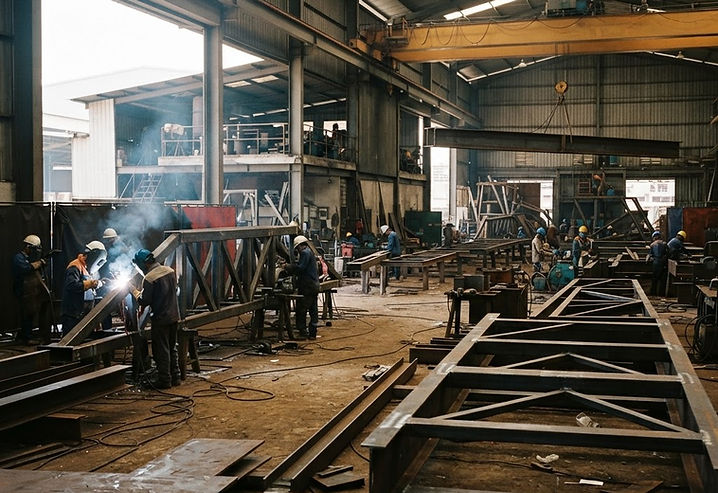
Australia’s metal fabrication industry stands as a testament to innovation, blending traditional craftsmanship with modern technology to create world class solutions. From towering architectural marvels to intricate industrial components, the nation’s fabricators continue to push boundaries and redefine possibilities. This blog delves into the dynamic landscape of metal fabrication innovation in Australia, showcasing ground breaking advancements, sustainable practices, and the collaborative spirit driving the industry forward.
The Rise of Advanced Materials
Australia’s metal fabrication sector embraces a diverse range of materials, from steel and aluminum to titanium and advanced alloys. Innovations in metallurgy and material science have paved the way for lighter, stronger, and more corrosion resistant options, expanding the scope of possibilities for fabricators. With a focus on durability and performance, Australian fabricators are at the forefront of integrating these advanced materials into their projects, catering to diverse industries such as aerospace, automotive, and mining plant and equipment.
Technology Driving Precision and Efficiency
In the realm of metal fabrication, precision is paramount. Australian fabricators harness state of the art technology, including CNC machining, laser cutting, and 3D printing, to achieve unparalleled accuracy and efficiency. Advanced software solutions enable intricate designs to come to life with precision, while robotics and automation streamline production processes, reducing lead times and enhancing productivity. With a commitment to innovation, Australian fabricators leverage cutting edge technology to deliver solutions that exceed expectations.

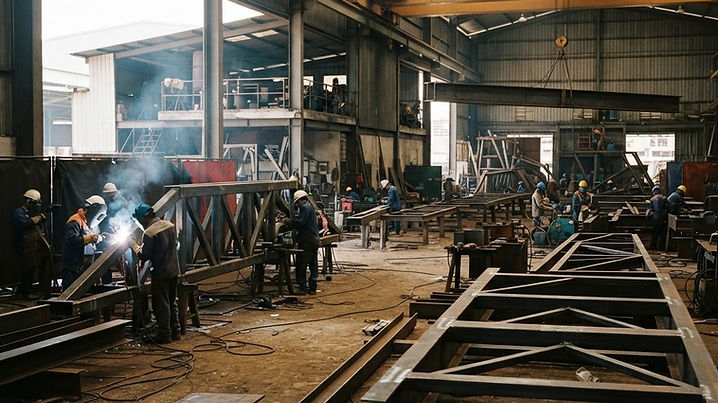
Sustainable Practices and Collaborative Ecosystem
In an era of increasing environmental consciousness, sustainability is a cornerstone of metal fabrication innovation in Australia. Fabricators prioritize eco friendly practices, from sourcing materials responsibly to implementing energy efficient processes and reducing scrap metal. By embracing renewable energy sources and optimizing resource utilization, Australian fabricators minimize their environmental footprint while delivering sustainable solutions to clients. Additionally, the adoption of digital modeling and simulation tools allows fabricators to optimize material usage and minimize waste, further contributing to a greener future.
One of the key drivers of innovation in steel fabrication Australia is its collaborative ecosystem. Fabricators, engineers, designers, and researchers come together to share knowledge, expertise, and resources, fostering a culture of innovation and continuous improvement. Collaborative partnerships between industry and academia drive research and development initiatives, leading to breakthroughs in materials, processes, and technology. By embracing a spirit of collaboration, the metal fabrication sector in Australia remains agile and responsive to evolving challenges and opportunities.
Case Studies in Innovation
Innovation is the lifeblood of Australia’s metal fabrication industry, driving progress and shaping the landscape of possibilities. Through the convergence of advanced materials, technology, sustainability, and collaboration, Australian fabricators continue to push boundaries, delivering solutions that are both cutting edge and sustainable. Highlighting real world examples, case studies offer insights into the innovative prowess of Australian fabricators. From iconic architectural landmarks to cutting edge industrial applications, these projects demonstrate the ingenuity and expertise of Australian fabricators. Whether it’s the fabrication of intricate facades using advanced composite materials or the development of bespoke components for aerospace applications, these case studies showcase the versatility and capabilities of the Australian metal fabrication industry.
Looking Ahead
As Australia’s metal fabrication industry continues to evolve, the future holds immense promise. With ongoing investments in research, technology, and skills development, fabricators are poised to tackle new challenges and capitalize on emerging opportunities. From the adoption of additive manufacturing to the integration of Internet of Things (IoT) solutions, the journey of innovation in metal fabrication in Australia is far from over. By staying at the forefront of technological advancements and embracing sustainable practices, Australian fabricators are set to shape the future of metal fabrication on a global scale.
Further reading
Follow public procurement tenders in Europe across the wider market on Project Atlas Intel.
Calculation tool
Run the numbers for this yourself with the free metric to imperial converter from Engineering Toolbox Australia. Treat the result as a first check, then confirm the final design with your engineer.
How K999 can help
Fabrication capacity behind the article
Articles in this section describe work we run every week in Rayong: cutting, forming, welding and assembly, under cover and in the yard, with the documentation that goes with it.
Structural steel fabrication- 01
Two workshops totalling more than 33,000 m² plus an 80,000 m² assembly yard at Sattahip.
- 02
Structural steel fabrication to 10,000 tonnes a year, with the largest single module built at 2,500 tonnes.
- 03
Blast, prime and paint before dispatch, with dimensional reports issued against the approved drawings.
More on Fabrication
All articles


Request for quotation
Need fabricated steel to that standard?
Every enquiry is answered within 48 hours by our estimating team in Rayong. The priced quotation follows once drawings, quantities and standards are confirmed. Stainless steel fabrication, structural steel fabrication, pipe spooling, pressure vessels, steel tanks, mining equipment and conveyors, pig launchers, chutes and hoppers, send the package and we will price it.
Before you request a quotation
Steel fabrication quotation questions
What structural steel fabrication, pressure vessel and pipe spooling packages cost, what to send with an enquiry, and how delivery to site works.
Structural steel fabrication is priced from the section and plate tonnage, the detailing and drawing hours, welding and fitting manhours, NDT requirements, blast and coating system, packing and freight. Grade matters as much as weight: AS/NZS, ASTM, JIS and BS sections carry different mill prices, and heavy built up members take longer than rolled sections. Our Rayong workshop produces around 10,000 tonnes of structural steel fabrication a year, so a clear bill of materials is usually enough to price. Send the drawings and we answer within 48 hours; the priced quotation follows once quantities, standards and delivery dates are confirmed.
For steel fabrication work, send the drawings or IFC package, a bill of materials with material grades, the welding and NDT requirements, the coating specification, the delivery port and your site dates. Add the inspection and test plan, any third party inspection requirement, and whether trial assembly or match marking is needed. Where drawings are still in progress, a scope list with sizes, quantities and duty is enough to start, and the estimate is refined once the final package arrives. Every enquiry is answered within 48 hours, and the priced quotation is issued after scope, standards and quantities are confirmed.
Yes. Pressure vessel fabrication is carried out to ASME Section VIII Div. 1 under our ASME U stamp No. 43,462, or to AS/NZS and BS where the project specifies, covering separators, air receivers, water drums, waste heat recovery units and pig launchers. Steel tanks for fuel, biofuel, chemical, water and food duty are designed in house with our E Tank programme to API, ASME, BS and AS/NZS. Because structural steel, vessels, tanks and their supports are built in the same workshops, one enquiry can cover the vessel package, the tank package and the structural steel that carries them, with a single coating and documentation system and one shipment.
Steel fabrication Australia packages are scheduled from a 33,000 m2 Rayong yard with an 80,000 m2 assembly yard inside Sattahip port, so fabrication, trial assembly, blasting, coating and packing run in one place. Programme length depends on tonnage, material lead times, the coating system and inspection scope, and it is confirmed with the quotation. We quote FOB Laem Chabang, Map Ta Phut or Sattahip, or CIF and DAP to your Australian port, with packing lists, weights, lifting points and a data book per shipment. Staged deliveries can follow your site erection sequence instead of shipping everything at once.
There is no fixed minimum. Pipe spooling Australia packages run at up to 3,000 diameter inches per shift on SCH.40, from a single replacement spool to a full plant piping scope, with spools numbered, X rayed where specified and coated to match erection order. Mining equipment fabrication covers chutes, hoppers, ore bins, transfer towers and conveyor structures with Bisalloy, Hardox, rubber lining or hardfacing fitted in house, from one wear liner set to modules of up to 2,500 tonnes assembled at Sattahip. Send the scope list and we will tell you what the smallest sensible batch is for your programme.