


Fabrication
Exploring Heat Induction Bending Services in Steel Fabrication
Induction bending produces smooth swept bends in pipe and tube, reducing elbows, welds and pressure drop across a fabricated spool.
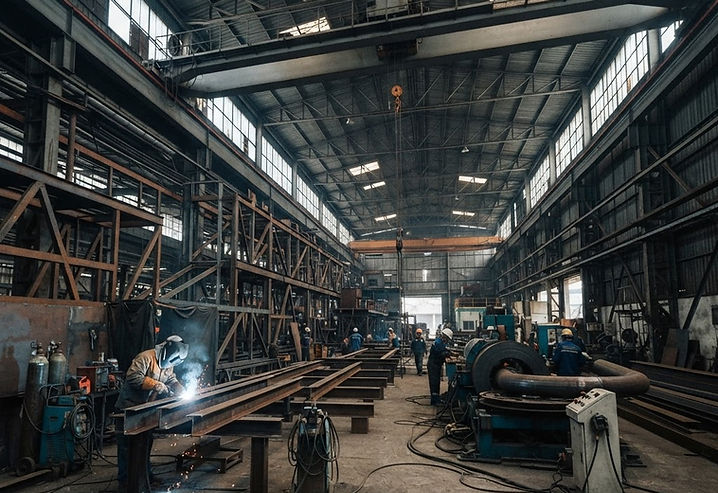
In the realm of steel fabrication, precision and efficiency are paramount. Engineers and fabricators constantly seek innovative methods to manipulate steel into complex shapes while maintaining its structural integrity. One such revolutionary technique that has transformed the industry is heat induction bending. Heat induction bending is a process that utilizes localized heat to soften specific sections of steel, allowing them to be bent into desired shapes. Unlike traditional cold bending methods that can weaken the material, heat induction bending minimizes structural stress and maintains the steel’s strength.
The Process Unveiled
The process begins with the selection of the steel profile, whether it is a beam, tube, or pipe. An induction coil is then positioned around the section of the steel that requires bending. The coil generates a high frequency alternating current, creating an electromagnetic field that induces electrical currents, known as eddy currents, within the metal. These eddy currents generate heat due to resistance, heating the targeted area to a precise temperature range that softens the steel without affecting its overall structure. This localized heating ensures that only the intended section becomes malleable, while the rest of the steel remains unaffected. Once the steel reaches the optimal temperature, it is carefully bent to the desired radius or angle using hydraulic or mechanical force. The controlled application of pressure ensures that the steel conforms accurately to the specified shape. After bending, the component may undergo cooling processes such as air cooling or water quenching to restore its mechanical properties.
Advantages of Heat Induction Bending
Precision and Consistency: Heat induction bending allows for precise control over the bending process, ensuring consistent results without deformation or irregularities.
Strength Retention: Unlike cold bending methods that can weaken the steel through work hardening, heat induction bending preserves the structural integrity and mechanical properties of the material.

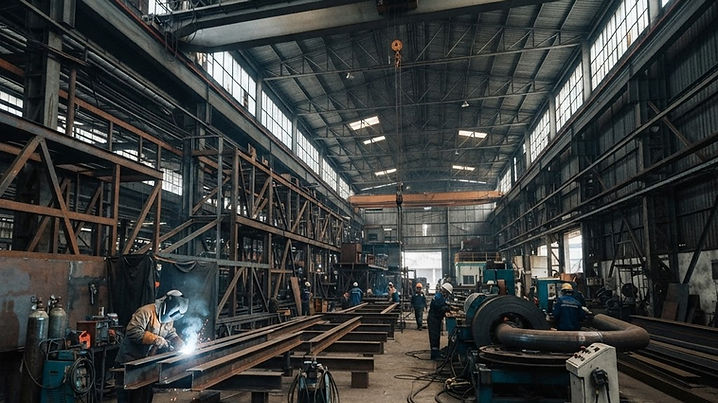
Versatility: This technique can be applied to a wide range of steel profiles, from pipe fabrication Australia to large structural beams, making it suitable for diverse applications across various industries.
Efficiency: Heat induction bending is energy efficient compared to traditional heating methods that require heating entire sections of steel.
Applications in Industries
The versatility of heat induction bending makes it invaluable across numerous industries:
Construction: Used in the fabrication of curved steel beams such as I beams and columns for architectural structures, bridges, and stadiums where aesthetic appeal and structural strength are critical.
Oil and Gas: Essential for bending pipes and tubes used in pipelines and structural components for offshore platforms, ensuring durability and efficient fluid flow.
Manufacturing: Applied in the production of components for machinery, vehicles, and aerospace structures where precise bending is essential for performance and functionality.
Concluding Statement
Heat induction bending services represent a significant advancement in steel fabrication Australia technology, offering unparalleled precision, strength retention, and versatility. As industries continue to evolve and demand more complex and efficient fabrication techniques, heat induction bending stands out as a reliable solution for achieving superior results in metal shaping. By harnessing the power of heat and advanced engineering principles, heat induction bending not only meets but exceeds expectations in terms of form, function, and durability. In conclusion, heat induction bending is more than just a method, it is a testament to human ingenuity and the relentless pursuit of excellence in engineering. As we look to resolve the challenges facing metal fabrication, it is clear that technologies like heat induction bending will play a crucial role in shaping the world around us, one precise bend at a time.
K999 Thailand carries out work of this kind through its heat induction pipe bending team in Rayong.
Further reading
Follow offshore wind projects in Europe across the wider market on Project Atlas Intel.
How K999 can help
Fabrication capacity behind the article
Articles in this section describe work we run every week in Rayong: cutting, forming, welding and assembly, under cover and in the yard, with the documentation that goes with it.
Structural steel fabrication- 01
Two workshops totalling more than 33,000 m² plus an 80,000 m² assembly yard at Sattahip.
- 02
Structural steel fabrication to 10,000 tonnes a year, with the largest single module built at 2,500 tonnes.
- 03
Blast, prime and paint before dispatch, with dimensional reports issued against the approved drawings.
More on Fabrication
All articles


Request for quotation
Need fabricated steel to that standard?
Every enquiry is answered within 48 hours by our estimating team in Rayong. The priced quotation follows once drawings, quantities and standards are confirmed. Stainless steel fabrication, structural steel fabrication, pipe spooling, pressure vessels, steel tanks, mining equipment and conveyors, pig launchers, chutes and hoppers, send the package and we will price it.
Before you request a quotation
Steel fabrication quotation questions
What structural steel fabrication, pressure vessel and pipe spooling packages cost, what to send with an enquiry, and how delivery to site works.
Structural steel fabrication is priced from the section and plate tonnage, the detailing and drawing hours, welding and fitting manhours, NDT requirements, blast and coating system, packing and freight. Grade matters as much as weight: AS/NZS, ASTM, JIS and BS sections carry different mill prices, and heavy built up members take longer than rolled sections. Our Rayong workshop produces around 10,000 tonnes of structural steel fabrication a year, so a clear bill of materials is usually enough to price. Send the drawings and we answer within 48 hours; the priced quotation follows once quantities, standards and delivery dates are confirmed.
For steel fabrication work, send the drawings or IFC package, a bill of materials with material grades, the welding and NDT requirements, the coating specification, the delivery port and your site dates. Add the inspection and test plan, any third party inspection requirement, and whether trial assembly or match marking is needed. Where drawings are still in progress, a scope list with sizes, quantities and duty is enough to start, and the estimate is refined once the final package arrives. Every enquiry is answered within 48 hours, and the priced quotation is issued after scope, standards and quantities are confirmed.
Yes. Pressure vessel fabrication is carried out to ASME Section VIII Div. 1 under our ASME U stamp No. 43,462, or to AS/NZS and BS where the project specifies, covering separators, air receivers, water drums, waste heat recovery units and pig launchers. Steel tanks for fuel, biofuel, chemical, water and food duty are designed in house with our E Tank programme to API, ASME, BS and AS/NZS. Because structural steel, vessels, tanks and their supports are built in the same workshops, one enquiry can cover the vessel package, the tank package and the structural steel that carries them, with a single coating and documentation system and one shipment.
Steel fabrication Australia packages are scheduled from a 33,000 m2 Rayong yard with an 80,000 m2 assembly yard inside Sattahip port, so fabrication, trial assembly, blasting, coating and packing run in one place. Programme length depends on tonnage, material lead times, the coating system and inspection scope, and it is confirmed with the quotation. We quote FOB Laem Chabang, Map Ta Phut or Sattahip, or CIF and DAP to your Australian port, with packing lists, weights, lifting points and a data book per shipment. Staged deliveries can follow your site erection sequence instead of shipping everything at once.
There is no fixed minimum. Pipe spooling Australia packages run at up to 3,000 diameter inches per shift on SCH.40, from a single replacement spool to a full plant piping scope, with spools numbered, X rayed where specified and coated to match erection order. Mining equipment fabrication covers chutes, hoppers, ore bins, transfer towers and conveyor structures with Bisalloy, Hardox, rubber lining or hardfacing fitted in house, from one wear liner set to modules of up to 2,500 tonnes assembled at Sattahip. Send the scope list and we will tell you what the smallest sensible batch is for your programme.