


Industry News
Failure of Grease (and the Oil in it)
Oxidation, contamination and overgreasing destroy bearings, and understanding grease chemistry prevents repeat failures.
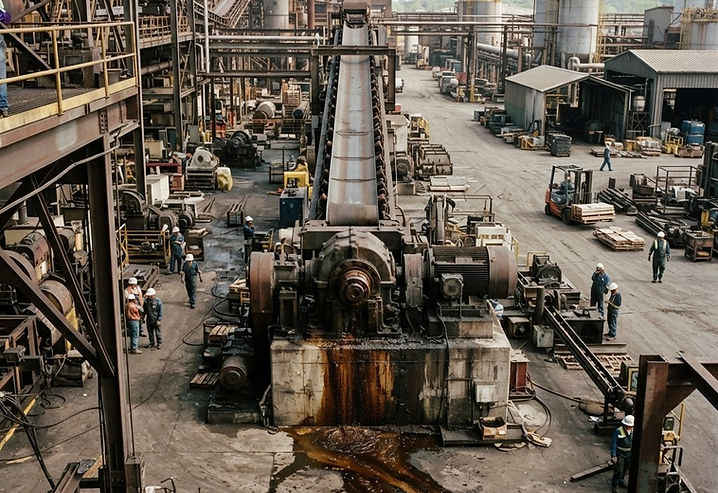
Greasing is an age old practice of lubricating machinery (usually made from metal) with oil. The oil is a thickener which acts much like a sponge. The purpose of greasing is to ensure that metal parts do not rust and that they operate smoothly in different weather conditions. However, greasing is not a foolproof method of lubrication and it may fail in certain cases. This is mostly due to the build up of contaminants in grease which will hinder proper functioning of machinery. This will also lead to degraded quality of products, increased operational costs and a greater rate of depreciation of plant and machinery. So, how does grease and the oil fail? Let us explore further in this blog.
Oil Oxidation
Oil degradation caused by oxidation, which results in a permanent change to the oil molecules, will mean more frequent relubrication is required to replace both the degraded grease and any contaminants which the oxidation has created. The main cause of oxidation is elevated temperatures. Generally, the rate of oil oxidation doubles for every 150C above 700C. Therefore, the life of the oil (and hence the grease) is halved for every 150C rise above 700C. Degraded oils break down into by products of the reaction that are harmful to bearings in steel fabrication. These include carboxylic acids which will corrode surfaces if left in the system and sludge and varnish will form over time. Higher temperatures also increase the rate of oil evaporation and bleeding from the thickener, which reduces the lubrication properties of the grease.
Additive Loss And Other Reasons
Metal fabrication has application in multiple industries, including oil and gas where lubricants are used. Additives that enhance the lubrication properties of the oil such as friction modifiers, corrosion inhibitors, antiwear agents, oxidation inhibitors, EP improvers and adhesion improvers have a finite life and become depleted in use. Once this occurs the grease and the oil in it can no longer perform to its original specification. Other factors which reduce the grease and oil life and therefore the relubrication interval is:,
Dust.

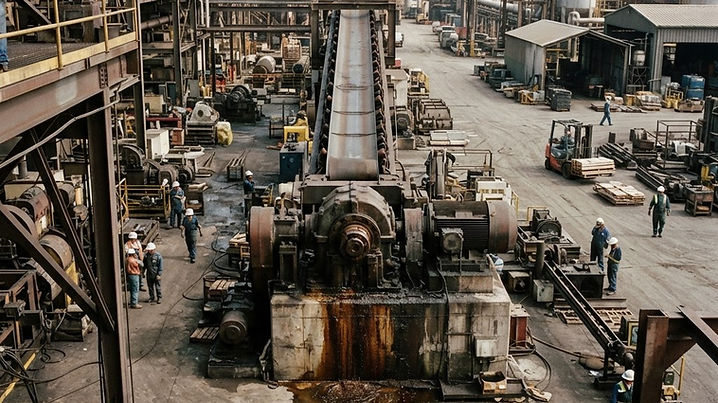
Materials and by products created by wear and lubricant degradation.
Humidity and condensation (daily or operational temperature cycles will cause the air trapped in the housing to become a condensate), an example is mining and plant equipment which is exposed to a humid environment.
Water and process related liquids, The limit for the absolute water content in mineral oil, the lubrication component of most greases, above which problems will occur, is 200 ppm.
Vibration, high vibration will cause the grease to churn which will cause a grease life reduction. Vibration will also cause the grease to bleed more than normally, resulting in an increase in the hardness of the grease, limiting its ability to correctly lubricate rolling contact bearings.
Strong air flow or reduced air flow through the bearing (drying of grease, oxidation, removal of microscopic oil droplets).
The above factors will each cause a grease life reduction factor of between 0.4 to 0.7 times the normal grease life in a single row spherical roller bearing. The reductions are cumulative for each cause and are in addition to the effect of temperature on the grease.
Final Thoughts
There are ways and means to protect against the reduction of grease and oil life. Continuous lubrication is the best preventative method to protect against the build up of contaminated or degraded grease. If contaminants have built up in the housing, then to fully remove them the housing must be opened and the bearings and housing thoroughly cleaned. An alternative is to purge the housing however whilst that may remove most of the contaminants it is unlikely to fully remove them all. If the contaminants are not removed then the bearing life will be decreased, hence it is essential that the road to operational efficiency is “well greased”!
Further reading
Follow offshore wind projects in Europe across the wider market on Project Atlas Intel.
Calculation tool
Run the numbers for this yourself with the free piping engineering articles from Engineering Toolbox Australia. Treat the result as a first check, then confirm the final design with your engineer.
How K999 can help
Where we fit the story
Trade policy, commodity cycles and energy markets decide when projects move, and they decide what gets fabricated. These articles collect the changes we track for our clients.
See our projects- 01
Work delivered for mining, energy, processing and manufacturing clients across Australia and Southeast Asia.
- 02
Fabrication in Rayong with assembly at Sattahip, shipping from Laem Chabang and Map Ta Phut.
- 03
Enquiries answered within 48 hours by our estimating team.
More on Industry News
All articles


Request for quotation
Need fabricated steel to that standard?
Every enquiry is answered within 48 hours by our estimating team in Rayong. The priced quotation follows once drawings, quantities and standards are confirmed. Stainless steel fabrication, structural steel fabrication, pipe spooling, pressure vessels, steel tanks, mining equipment and conveyors, pig launchers, chutes and hoppers, send the package and we will price it.
Before you request a quotation
Steel fabrication quotation questions
What structural steel fabrication, pressure vessel and pipe spooling packages cost, what to send with an enquiry, and how delivery to site works.
Structural steel fabrication is priced from the section and plate tonnage, the detailing and drawing hours, welding and fitting manhours, NDT requirements, blast and coating system, packing and freight. Grade matters as much as weight: AS/NZS, ASTM, JIS and BS sections carry different mill prices, and heavy built up members take longer than rolled sections. Our Rayong workshop produces around 10,000 tonnes of structural steel fabrication a year, so a clear bill of materials is usually enough to price. Send the drawings and we answer within 48 hours; the priced quotation follows once quantities, standards and delivery dates are confirmed.
For steel fabrication work, send the drawings or IFC package, a bill of materials with material grades, the welding and NDT requirements, the coating specification, the delivery port and your site dates. Add the inspection and test plan, any third party inspection requirement, and whether trial assembly or match marking is needed. Where drawings are still in progress, a scope list with sizes, quantities and duty is enough to start, and the estimate is refined once the final package arrives. Every enquiry is answered within 48 hours, and the priced quotation is issued after scope, standards and quantities are confirmed.
Yes. Pressure vessel fabrication is carried out to ASME Section VIII Div. 1 under our ASME U stamp No. 43,462, or to AS/NZS and BS where the project specifies, covering separators, air receivers, water drums, waste heat recovery units and pig launchers. Steel tanks for fuel, biofuel, chemical, water and food duty are designed in house with our E Tank programme to API, ASME, BS and AS/NZS. Because structural steel, vessels, tanks and their supports are built in the same workshops, one enquiry can cover the vessel package, the tank package and the structural steel that carries them, with a single coating and documentation system and one shipment.
Steel fabrication Australia packages are scheduled from a 33,000 m2 Rayong yard with an 80,000 m2 assembly yard inside Sattahip port, so fabrication, trial assembly, blasting, coating and packing run in one place. Programme length depends on tonnage, material lead times, the coating system and inspection scope, and it is confirmed with the quotation. We quote FOB Laem Chabang, Map Ta Phut or Sattahip, or CIF and DAP to your Australian port, with packing lists, weights, lifting points and a data book per shipment. Staged deliveries can follow your site erection sequence instead of shipping everything at once.
There is no fixed minimum. Pipe spooling Australia packages run at up to 3,000 diameter inches per shift on SCH.40, from a single replacement spool to a full plant piping scope, with spools numbered, X rayed where specified and coated to match erection order. Mining equipment fabrication covers chutes, hoppers, ore bins, transfer towers and conveyor structures with Bisalloy, Hardox, rubber lining or hardfacing fitted in house, from one wear liner set to modules of up to 2,500 tonnes assembled at Sattahip. Send the scope list and we will tell you what the smallest sensible batch is for your programme.