


Industry News
Financing for Manufacturing Growth
Equipment finance, progress payments and invoice discounting fund fabrication capacity without straining working capital.
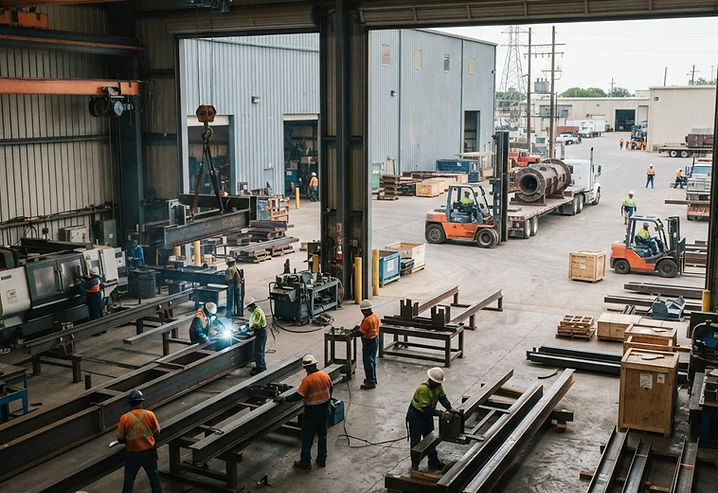
Many Australian manufacturers seeking growth in their manufacturing businesses look towards business financing. There are multiple financing option and suitability is determined by considering stage of business and trajectory, industry sector, business model, macroeconomic variables, and cost effective automation requirements. Today, the owners of manufacturing firms can no longer be unacquainted with terms like financial modeling, projections, cash flow and leverage since these factors provide a view towards the firm’s future roadmap. So, what are the various funding options available to manufacturers? Let’s find out more in this blog.
Lender Based Financing
Financing through a bank lender: Bank lenders rely on the ‘five Cs’ of Credit (capital, capacity, collateral, character, and conditions) to determine if a potential borrower is capable of servicing and repaying a loan.
Financing through a nonbank lender: These lenders tend to be more specialized, flexible, and willing to take on different levels of risk. They also tend to finance for certain specified requirements, such as invoice finance, trade finance, and equipment finance.
Financing from savings, mortgage extension or loans: Financing through personal savings, a mortgage extension or a loan allows the business to avoid the complexities that come with spending other people’s money and allows the owner to retain equity. Also, a personal loan will probably come with a lower interest rate, as it’s likely the bank will secure the lending against the owner’s personal assets.

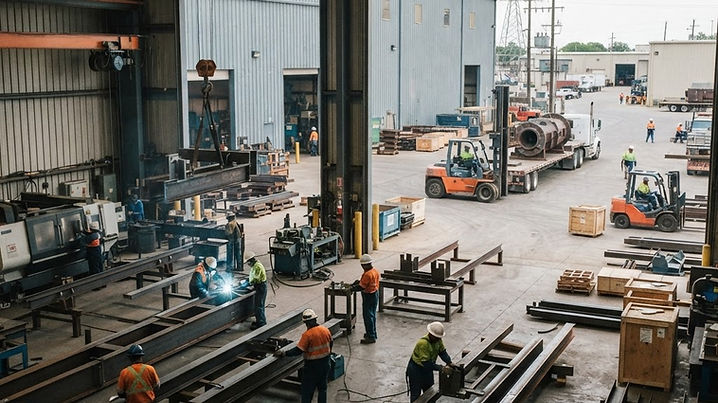
Investor Based and Public Financing
Financing provided by investors: These may include ‘angel’ investors, private equity, or venture capital. Angel investors typically assume a greater risk than other funders, with the expectation of a high return. Private equity investors actively seek to enhance a business’s profitability and operations and seek a profitable exit through either a sale or public listing. Venture capital investors provide private equity funding together with a strategic focus to the business.
Crowd sourced funding: Crowdfunding or crowd sourced funding, where a heavy steel fabrication company raises money from a crowd of investors through a licensed online platform, is popular in certain sectors such as technology. The most common model is equity based, crowd sourced funding through which a company issues shares to a crowd of investors in exchange for their funds and in return, the investors gain some part ownership of the manufacturing business.
Employee buy in: Allowing an employee or employees to buy into the manufacturing business could be part of an effective succession plan. It is important to consider whether the owner can work effectively with these employees as part of a team. Unwinding this arrangement can be difficult and unsettling for the firm.
Grants and incentives: This includes grants available from government agencies that could fund growth, exporting or research and development. With the benefits of using local Australian steel companies becoming more apparent, financing should grow at a similar rate. The application process can be time consuming and competitive and professional assistance may come in handy when getting approvals for grants.
Closing Words
Ensuring the growth of a manufacturing firm into diverse areas such as pipe fabrication is the owner’s responsibility and this includes financial stability. Juggling the demand of business stakeholders while putting the firm on a road towards expansion is a tough role to play, however the owners of Australian manufacturing firms’ need to be able to adapt themselves to the ever changing market conditions. In recent times, financial advisory services have been playing an increasingly important part in providing insights into various funding streams available to manufacturers. However, it is essential for the owners to be empowered to make important decisions in this regard, after all, success usually comes to those who are too busy to be looking for it!
Further reading
Follow EPC procurement across the wider market on Project Atlas Intel.
Calculation tool
Run the numbers for this yourself with the free engineering calculations explained from Engineering Toolbox Australia. Treat the result as a first check, then confirm the final design with your engineer.
How K999 can help
Where we fit the story
Trade policy, commodity cycles and energy markets decide when projects move, and they decide what gets fabricated. These articles collect the changes we track for our clients.
See our projects- 01
Work delivered for mining, energy, processing and manufacturing clients across Australia and Southeast Asia.
- 02
Fabrication in Rayong with assembly at Sattahip, shipping from Laem Chabang and Map Ta Phut.
- 03
Enquiries answered within 48 hours by our estimating team.
More on Industry News
All articles


Request for quotation
Need fabricated steel to that standard?
Every enquiry is answered within 48 hours by our estimating team in Rayong. The priced quotation follows once drawings, quantities and standards are confirmed. Stainless steel fabrication, structural steel fabrication, pipe spooling, pressure vessels, steel tanks, mining equipment and conveyors, pig launchers, chutes and hoppers, send the package and we will price it.
Before you request a quotation
Steel fabrication quotation questions
What structural steel fabrication, pressure vessel and pipe spooling packages cost, what to send with an enquiry, and how delivery to site works.
Structural steel fabrication is priced from the section and plate tonnage, the detailing and drawing hours, welding and fitting manhours, NDT requirements, blast and coating system, packing and freight. Grade matters as much as weight: AS/NZS, ASTM, JIS and BS sections carry different mill prices, and heavy built up members take longer than rolled sections. Our Rayong workshop produces around 10,000 tonnes of structural steel fabrication a year, so a clear bill of materials is usually enough to price. Send the drawings and we answer within 48 hours; the priced quotation follows once quantities, standards and delivery dates are confirmed.
For steel fabrication work, send the drawings or IFC package, a bill of materials with material grades, the welding and NDT requirements, the coating specification, the delivery port and your site dates. Add the inspection and test plan, any third party inspection requirement, and whether trial assembly or match marking is needed. Where drawings are still in progress, a scope list with sizes, quantities and duty is enough to start, and the estimate is refined once the final package arrives. Every enquiry is answered within 48 hours, and the priced quotation is issued after scope, standards and quantities are confirmed.
Yes. Pressure vessel fabrication is carried out to ASME Section VIII Div. 1 under our ASME U stamp No. 43,462, or to AS/NZS and BS where the project specifies, covering separators, air receivers, water drums, waste heat recovery units and pig launchers. Steel tanks for fuel, biofuel, chemical, water and food duty are designed in house with our E Tank programme to API, ASME, BS and AS/NZS. Because structural steel, vessels, tanks and their supports are built in the same workshops, one enquiry can cover the vessel package, the tank package and the structural steel that carries them, with a single coating and documentation system and one shipment.
Steel fabrication Australia packages are scheduled from a 33,000 m2 Rayong yard with an 80,000 m2 assembly yard inside Sattahip port, so fabrication, trial assembly, blasting, coating and packing run in one place. Programme length depends on tonnage, material lead times, the coating system and inspection scope, and it is confirmed with the quotation. We quote FOB Laem Chabang, Map Ta Phut or Sattahip, or CIF and DAP to your Australian port, with packing lists, weights, lifting points and a data book per shipment. Staged deliveries can follow your site erection sequence instead of shipping everything at once.
There is no fixed minimum. Pipe spooling Australia packages run at up to 3,000 diameter inches per shift on SCH.40, from a single replacement spool to a full plant piping scope, with spools numbered, X rayed where specified and coated to match erection order. Mining equipment fabrication covers chutes, hoppers, ore bins, transfer towers and conveyor structures with Bisalloy, Hardox, rubber lining or hardfacing fitted in house, from one wear liner set to modules of up to 2,500 tonnes assembled at Sattahip. Send the scope list and we will tell you what the smallest sensible batch is for your programme.