


Materials & Coatings
Finishing Touch: Powder Coating or Galvanizing?
Powder coating for appearance and colour, hot dip galvanizing for sacrificial protection, and where each suits fabricated steel.
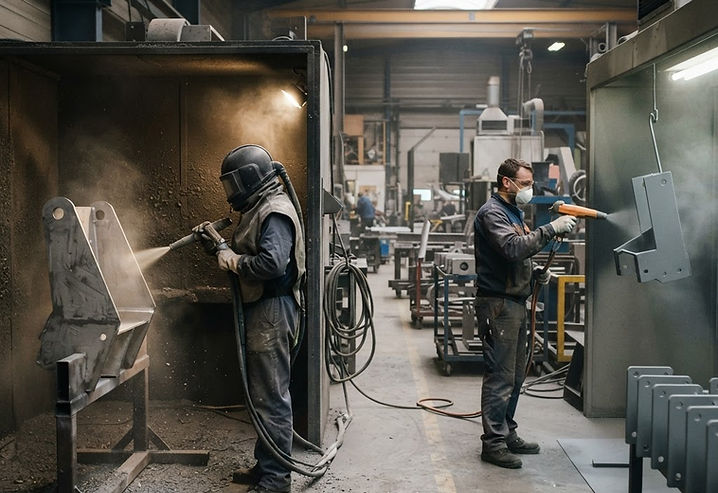
As part of the fabrication process followed by heavy steel fabrication companies, applying a correct finish to the end product is a necessary step. Finishing ensures that products like structural steel I beams, columns or channels have a visually aesthetic appearance while improving the durability and weather resistance of the metal by reducing the risk of rust developing on the surface. The two most common steel finishes are powder coating and galvanizing. Multiple factors are involved in the decision to have steel sections galvanized or powder coated, including the intended use of the steel fabrication product. This blog will outline the advantages and disadvantages of these two finishing techniques.
Definitions of Powder Coating and Galvanizing
Powder coating is a dry process which requires an electrostatic charge in the metal to allow the powder to bind to the surface of the metal. The metal then undergoes a heat induction process; the heat enables the powder to complete the binding process, forming a protective layer to shield the steel from the elements. Galvanizing is a process in which the steel is submerged in a bath of molten zinc. The zinc creates a thick layer around the steel, preventing corrosion such as rust from damaging the product’s structural integrity.
Benefits and Drawbacks

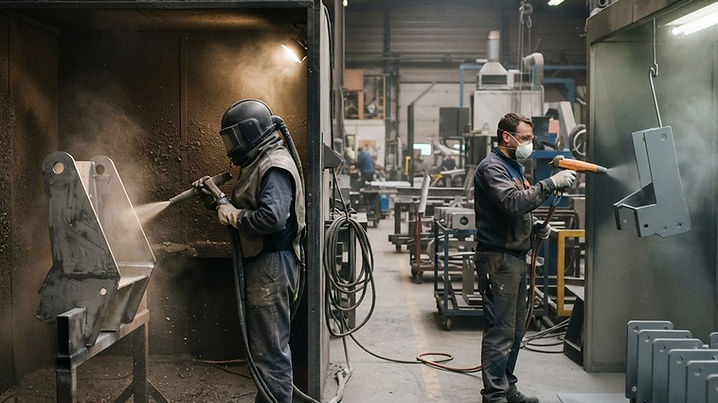
Galvanizing and powder coating are two very distinct processes. However, both are great at protecting the structural steel beams and columns from succumbing to corrosion. A key difference between these two is that while galvanizing alone can only provide a metallic silver finish, powder coatings come in a variety of stock colours. Differences based on a few other metrics are detailed as follows:,
Initial Cost, The upfront price of galvanizing steel is, on average, higher than that of powder coating. However, the cost of galvanizing has been steadily decreasing, as technological improvements have made the galvanizing process easier and more cost effective.
Ongoing Maintenance Cost, Whilst the initial cost of powder coating may be lower, it is unlikely to match the 80+ years that galvanized steel regularly lasts, lasting only 20 years on average. The shorter lifespan of a powder coated structural steel section means it’s going to need more frequent and thorough maintenance, which can significantly increase the ongoing costs compared to galvanized steel.
Both of these processes create an extremely durable steel beam that can take a heavy amount of use and wear in all settings, including large scale industrial use. However, a powder finish is prone to chipping and cracking if not given due care and attention during the steel fabrication process, leaving the underlying steel exposed to the moisture in the environment, eventually leading to rust. Galvanization, however, creates a thick zinc coating around the steel, protecting it through some of the toughest wear you can throw at it. You won’t have to worry about chips or cracks damaging the protective layer with galvanized steel.
The environmental impact of powder coating on a steel product is low because a dry powder is used, containing no solvents. Dry powder coating emits zero or negligible amounts of volatile organic compounds (VOCs). VOCs are harmful to both the environment and human health and are against the current trend of sustainability in steel manufacturing. There is little to no environmental impact when it comes to galvanization; this is because the zinc used in the coating is a reusable material. Additionally, because there is very little waste involved, any solution that falls off the steel remains in the bath to coat the next product.
Closing Remarks
It can be observed that powder coating and galvanizing have their pros and cons. While galvanization is more resistant to corrosion over time, powder coating provides a superior texture and finish. It is also possible to powder coat on top of already galvanized steel, providing exceptional protection against both the environment and wear. Thus, while a steel fabrication job can be expertly performed, the finishing touch is important, and these approaches help in finishing up in style!
K999 Thailand carries out work of this kind through its abrasive blasting and protective coating team in Rayong.
Further reading
Follow hydrogen projects in Europe across the wider market on Project Atlas Intel.
Calculation tool
Run the numbers for this yourself with the free tank volume calculator from Engineering Toolbox Australia. Treat the result as a first check, then confirm the final design with your engineer.
How K999 can help
Material selection and surface protection
We fabricate in stainless, duplex, carbon steel and nickel alloys, and we finish those materials for the environment they will live in, from coastal yards to process plants.
Stainless steel fabrication- 01
Stainless and duplex fabrication with matched filler metals and controlled interpass temperature.
- 02
Abrasive blasting to the specified surface profile before protective coating application.
- 03
Rubber lining and hardfacing for abrasive slurries, chutes and wear plates.
More on Materials & Coatings
All articles


Request for quotation
Need fabricated steel to that standard?
Every enquiry is answered within 48 hours by our estimating team in Rayong. The priced quotation follows once drawings, quantities and standards are confirmed. Stainless steel fabrication, structural steel fabrication, pipe spooling, pressure vessels, steel tanks, mining equipment and conveyors, pig launchers, chutes and hoppers, send the package and we will price it.
Before you request a quotation
Steel fabrication quotation questions
What structural steel fabrication, pressure vessel and pipe spooling packages cost, what to send with an enquiry, and how delivery to site works.
Structural steel fabrication is priced from the section and plate tonnage, the detailing and drawing hours, welding and fitting manhours, NDT requirements, blast and coating system, packing and freight. Grade matters as much as weight: AS/NZS, ASTM, JIS and BS sections carry different mill prices, and heavy built up members take longer than rolled sections. Our Rayong workshop produces around 10,000 tonnes of structural steel fabrication a year, so a clear bill of materials is usually enough to price. Send the drawings and we answer within 48 hours; the priced quotation follows once quantities, standards and delivery dates are confirmed.
For steel fabrication work, send the drawings or IFC package, a bill of materials with material grades, the welding and NDT requirements, the coating specification, the delivery port and your site dates. Add the inspection and test plan, any third party inspection requirement, and whether trial assembly or match marking is needed. Where drawings are still in progress, a scope list with sizes, quantities and duty is enough to start, and the estimate is refined once the final package arrives. Every enquiry is answered within 48 hours, and the priced quotation is issued after scope, standards and quantities are confirmed.
Yes. Pressure vessel fabrication is carried out to ASME Section VIII Div. 1 under our ASME U stamp No. 43,462, or to AS/NZS and BS where the project specifies, covering separators, air receivers, water drums, waste heat recovery units and pig launchers. Steel tanks for fuel, biofuel, chemical, water and food duty are designed in house with our E Tank programme to API, ASME, BS and AS/NZS. Because structural steel, vessels, tanks and their supports are built in the same workshops, one enquiry can cover the vessel package, the tank package and the structural steel that carries them, with a single coating and documentation system and one shipment.
Steel fabrication Australia packages are scheduled from a 33,000 m2 Rayong yard with an 80,000 m2 assembly yard inside Sattahip port, so fabrication, trial assembly, blasting, coating and packing run in one place. Programme length depends on tonnage, material lead times, the coating system and inspection scope, and it is confirmed with the quotation. We quote FOB Laem Chabang, Map Ta Phut or Sattahip, or CIF and DAP to your Australian port, with packing lists, weights, lifting points and a data book per shipment. Staged deliveries can follow your site erection sequence instead of shipping everything at once.
There is no fixed minimum. Pipe spooling Australia packages run at up to 3,000 diameter inches per shift on SCH.40, from a single replacement spool to a full plant piping scope, with spools numbered, X rayed where specified and coated to match erection order. Mining equipment fabrication covers chutes, hoppers, ore bins, transfer towers and conveyor structures with Bisalloy, Hardox, rubber lining or hardfacing fitted in house, from one wear liner set to modules of up to 2,500 tonnes assembled at Sattahip. Send the scope list and we will tell you what the smallest sensible batch is for your programme.