


Industry News
Fire Safety for Manufacturing Plants
Hot work permits, detection systems and combustible dust control are the core of manufacturing fire safety.
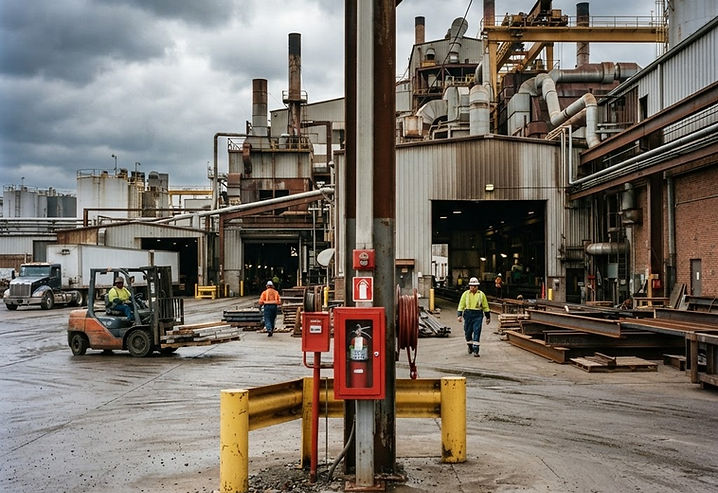
Any workplace must take special care when it comes to fire safety, since fire is one of the major safety hazards in metal fabrication and can be especially devastating. While accidents involving fire have occurred in utility, defence, agriculture, and mining environments, the most damaging fires have tended to take place in structures, and most of those structure fires occurred specifically in manufacturing properties. However, through the proper use of the right tools, technology, and training, manufacturing and industrial fires can be prevented. This blog will look to delve into fire prevention techniques in greater detail.
Industrial Fire Protection System
A manufacturing facility’s first defence against any fire is its fire protection system. From fire detection to suppression, a building has an entire system that is designed to protect the facility from fire. While it is always important to prevent fires in manufacturing facilities first, it is also essential that in the event of a fire, plant employees know how to respond safely. Every manufacturing and industrial facility should create a comprehensive fire evacuation plan. This plan should clearly detail how to leave the building safely in a fire. Once complete, the evacuation plan should be clearly communicated to all employees. The evacuation plan maps should be displayed on walls throughout the facility, so that employees always know how to exit safely in the event of a fire.
Special Hazard Fire Systems

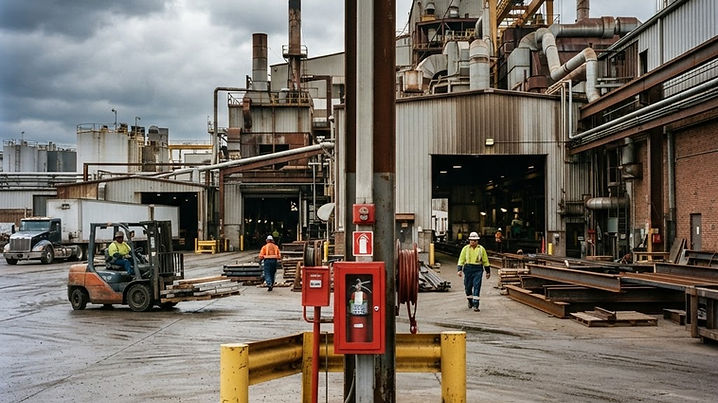
Large vehicles and heavy machinery are one of the top causes of manufacturing and industrial fires in the US. Many of these fires can be prevented with the implementation of special hazard fire protection systems. These fire systems are uniquely designed to protect high value and high risk equipment which use sheet metal fabrication techniques and include large agricultural vehicles, CNC machines, cutters, grinders, lathes etc. Because these machines often work in or create high temperature environments, and because they make use of highly flammable oil based lubricants and coolants, fires can start easily and quickly expand throughout the facility. For this reason, should manufacturing and industrial companies implement special hazard fire detection and suppression systems that can help minimize fire related damage related to heat induction bending services. Capable of detecting and stopping a machine fire in seconds, these special hazard solutions can help protect expensive machinery, while also preventing fires from spreading throughout the plant.
Fire Prevention Training
Fire safety training works to educate manufacturing facility employees of the fire hazards present in the workplace, and how best to avoid them. From hot work training to lockout tagout, there are several fire safety training courses that can help give plant employees the tools they need to stay safe at work and prevent fires. When it comes to fire response training, employees should understand the details of the evacuation plan, however they should also have hands on fire extinguisher training. Many heavy steel fabrication companies are required to provide hands on fire extinguisher training at least annually. That is because trained fire extinguisher operators are shown to use a fire extinguisher with four times more accuracy and capacity than a novice operator.
Final Word
Fire safety is essential to the productive, efficient operation of a manufacturing facility. Because industrial and manufacturing facilities work round the clock in such high risk environments, it is important to make sure that plant machinery, products, and people are as protected to the maximum. Additionally, there are fire safety inspection software solutions that can be used to manage an organization’s full range of fire and life safety inspections. So, manufacturers should never wait till things get on fire, literally and figuratively!
Further reading
Follow procurement opportunities across the wider market on Project Atlas Intel.
How K999 can help
Where we fit the story
Trade policy, commodity cycles and energy markets decide when projects move, and they decide what gets fabricated. These articles collect the changes we track for our clients.
See our projects- 01
Work delivered for mining, energy, processing and manufacturing clients across Australia and Southeast Asia.
- 02
Fabrication in Rayong with assembly at Sattahip, shipping from Laem Chabang and Map Ta Phut.
- 03
Enquiries answered within 48 hours by our estimating team.
More on Industry News
All articles


Request for quotation
Need fabricated steel to that standard?
Every enquiry is answered within 48 hours by our estimating team in Rayong. The priced quotation follows once drawings, quantities and standards are confirmed. Stainless steel fabrication, structural steel fabrication, pipe spooling, pressure vessels, steel tanks, mining equipment and conveyors, pig launchers, chutes and hoppers, send the package and we will price it.
Before you request a quotation
Steel fabrication quotation questions
What structural steel fabrication, pressure vessel and pipe spooling packages cost, what to send with an enquiry, and how delivery to site works.
Structural steel fabrication is priced from the section and plate tonnage, the detailing and drawing hours, welding and fitting manhours, NDT requirements, blast and coating system, packing and freight. Grade matters as much as weight: AS/NZS, ASTM, JIS and BS sections carry different mill prices, and heavy built up members take longer than rolled sections. Our Rayong workshop produces around 10,000 tonnes of structural steel fabrication a year, so a clear bill of materials is usually enough to price. Send the drawings and we answer within 48 hours; the priced quotation follows once quantities, standards and delivery dates are confirmed.
For steel fabrication work, send the drawings or IFC package, a bill of materials with material grades, the welding and NDT requirements, the coating specification, the delivery port and your site dates. Add the inspection and test plan, any third party inspection requirement, and whether trial assembly or match marking is needed. Where drawings are still in progress, a scope list with sizes, quantities and duty is enough to start, and the estimate is refined once the final package arrives. Every enquiry is answered within 48 hours, and the priced quotation is issued after scope, standards and quantities are confirmed.
Yes. Pressure vessel fabrication is carried out to ASME Section VIII Div. 1 under our ASME U stamp No. 43,462, or to AS/NZS and BS where the project specifies, covering separators, air receivers, water drums, waste heat recovery units and pig launchers. Steel tanks for fuel, biofuel, chemical, water and food duty are designed in house with our E Tank programme to API, ASME, BS and AS/NZS. Because structural steel, vessels, tanks and their supports are built in the same workshops, one enquiry can cover the vessel package, the tank package and the structural steel that carries them, with a single coating and documentation system and one shipment.
Steel fabrication Australia packages are scheduled from a 33,000 m2 Rayong yard with an 80,000 m2 assembly yard inside Sattahip port, so fabrication, trial assembly, blasting, coating and packing run in one place. Programme length depends on tonnage, material lead times, the coating system and inspection scope, and it is confirmed with the quotation. We quote FOB Laem Chabang, Map Ta Phut or Sattahip, or CIF and DAP to your Australian port, with packing lists, weights, lifting points and a data book per shipment. Staged deliveries can follow your site erection sequence instead of shipping everything at once.
There is no fixed minimum. Pipe spooling Australia packages run at up to 3,000 diameter inches per shift on SCH.40, from a single replacement spool to a full plant piping scope, with spools numbered, X rayed where specified and coated to match erection order. Mining equipment fabrication covers chutes, hoppers, ore bins, transfer towers and conveyor structures with Bisalloy, Hardox, rubber lining or hardfacing fitted in house, from one wear liner set to modules of up to 2,500 tonnes assembled at Sattahip. Send the scope list and we will tell you what the smallest sensible batch is for your programme.