


Manufacturing & Technology
Future of Compressed Air in Manufacturing
Compressed air is one of the largest plant utilities, and variable speed control plus leak management cut energy waste.
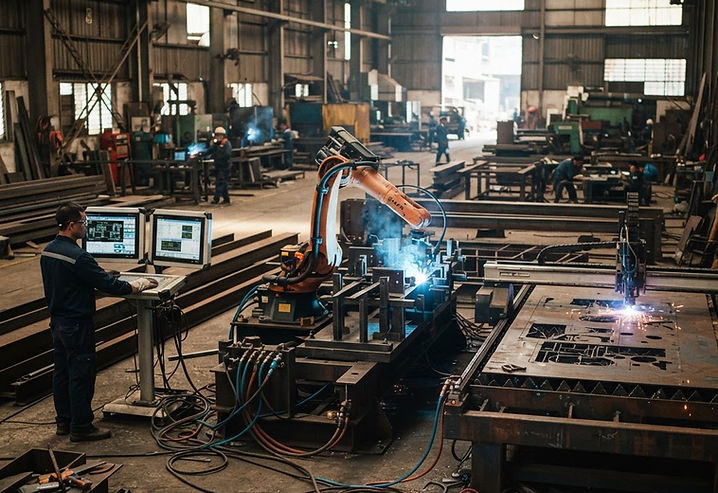
The world of compressed air has moved fast in recent years. The old piston type (reciprocating) compressors commonly used in workshops and other specialised products like pressure vessels have now been replaced with compact, plug in, integrated units utilising orbital scroll technology to produce cleaner, quieter air output at much lower running costs and much higher operating efficiency. These machines are also low maintenance and have a far longer working life. Higher energy efficiency, lower maintenance, portability, and smaller footprints must be the aim for future advancements in the smaller compressor arena. Let us discuss this subject further in this blog.
Drivers for Enhancements
The utilisation of these new age compressors is growing globally as industry strives to meet today and tomorrow’s economic and environmental demands. There are continued advances in this space like ELGi enhancing energy efficiency of air compressors, and there will be a substantial increase in the demand for high efficiency compressors for all types and sizes of industry. In addition, as more new technologies arise from natural gas exploration and contemporary designs from energy efficient engine drives, a significant focus on emission reduction will benefit from advances in compressed air system design and usage.
Practical Applications

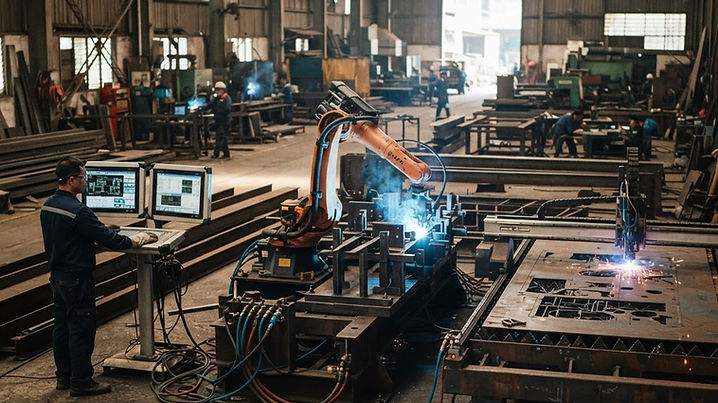
Indications are that demand for compressed air will gain in the future for a range of highly practical reasons. For example, compressed air can play an essential role in renewable and sustainable energy alternatives by reducing dependence on traditional forms of energy. Advanced air production, storage and distribution systems can drive new exploration, mining and industrial ventures of the future. Another trend that will significantly impact the use of compressed air is the growing interest in improving existing hybrid engine systems which will drive sustainable automanufacturing using 3D printing. By using oil free technology and more advanced designs, manufacturers can create new ways to improve engine performance. The benefits of this type of engine are quickly becoming evident as governments and consumers look to reduce their environmental footprint and boost energy efficiency.
The Air Contamination Factor
For specific applications including food and beverage processing, pharmaceutical manufacturing, electronics and packaging, chemical and petrochemical processing, air contamination is a critical factor. With limited access to clean fresh air, the provision of a contamination free air source is essential. Already some heavy steel fabrication companies have developed highly efficient, oil free, air cooled compressors which are used in all kinds of industries where air quality is paramount for the end product and production process. In these critical environments, contamination by even the smallest quantities of oil can result in costly production downtime and product spoilage.
Economics Involved
One factor that will significantly impact the use of compressed air is global economic growth. As economies worldwide recover and grow, businesses and consumers will always look for better ways to reduce costs and increase efficiency. By utilising the newest advances and innovations in compressor design, pipe fabrication Australia can improve process flow with an energy source that reduces waste and saves time and money. As developing nations become more industrialised, there will continue to be a growing demand for more efficient and specialised compressors. This also means more jobs in the manufacturing, research and development and servicing fields as engineers work to design new types of high efficiency technologies and technicians are educated to install, commission and service the new systems. With the ability to reduce greenhouse gas emissions, save money and improve efficiency, compressed air technology is sure to have a significant impact on the world economy.
Conclusion
Businesses and consumers will need to adapt over the coming years as we transition to more sustainable energy sources. Several factors will influence the demand for compressed air in the future. These include global economic growth, the increased need for energy efficiency and the trend toward more environmentally friendly technologies. Compressors will need to continue to develop to meet the growing demands of businesses and their applications in the years to come!
K999 Thailand carries out work of this kind through its steel fabrication capability team in Rayong.
Further reading
Follow EPC procurement across the wider market on Project Atlas Intel.
Calculation tool
Run the numbers for this yourself with the free engineering calculations explained from Engineering Toolbox Australia. Treat the result as a first check, then confirm the final design with your engineer.
How K999 can help
How we apply the technology
Faster quoting, cleaner detailing and fewer site surprises come from the tools we use before the first cut, and the articles here explain how those tools change the work.
3D modelling and detailing- 01
3D modelling and shop detailing that resolves clashes before fabrication starts.
- 02
Fibre laser cutting for plate profiles, with nesting planned around the rolling schedule.
- 03
Project management that reports progress against the same model the client approved.
More on Manufacturing & Technology
All articles

Request for quotation
Need fabricated steel to that standard?
Every enquiry is answered within 48 hours by our estimating team in Rayong. The priced quotation follows once drawings, quantities and standards are confirmed. Stainless steel fabrication, structural steel fabrication, pipe spooling, pressure vessels, steel tanks, mining equipment and conveyors, pig launchers, chutes and hoppers, send the package and we will price it.
Before you request a quotation
Steel fabrication quotation questions
What structural steel fabrication, pressure vessel and pipe spooling packages cost, what to send with an enquiry, and how delivery to site works.
Structural steel fabrication is priced from the section and plate tonnage, the detailing and drawing hours, welding and fitting manhours, NDT requirements, blast and coating system, packing and freight. Grade matters as much as weight: AS/NZS, ASTM, JIS and BS sections carry different mill prices, and heavy built up members take longer than rolled sections. Our Rayong workshop produces around 10,000 tonnes of structural steel fabrication a year, so a clear bill of materials is usually enough to price. Send the drawings and we answer within 48 hours; the priced quotation follows once quantities, standards and delivery dates are confirmed.
For steel fabrication work, send the drawings or IFC package, a bill of materials with material grades, the welding and NDT requirements, the coating specification, the delivery port and your site dates. Add the inspection and test plan, any third party inspection requirement, and whether trial assembly or match marking is needed. Where drawings are still in progress, a scope list with sizes, quantities and duty is enough to start, and the estimate is refined once the final package arrives. Every enquiry is answered within 48 hours, and the priced quotation is issued after scope, standards and quantities are confirmed.
Yes. Pressure vessel fabrication is carried out to ASME Section VIII Div. 1 under our ASME U stamp No. 43,462, or to AS/NZS and BS where the project specifies, covering separators, air receivers, water drums, waste heat recovery units and pig launchers. Steel tanks for fuel, biofuel, chemical, water and food duty are designed in house with our E Tank programme to API, ASME, BS and AS/NZS. Because structural steel, vessels, tanks and their supports are built in the same workshops, one enquiry can cover the vessel package, the tank package and the structural steel that carries them, with a single coating and documentation system and one shipment.
Steel fabrication Australia packages are scheduled from a 33,000 m2 Rayong yard with an 80,000 m2 assembly yard inside Sattahip port, so fabrication, trial assembly, blasting, coating and packing run in one place. Programme length depends on tonnage, material lead times, the coating system and inspection scope, and it is confirmed with the quotation. We quote FOB Laem Chabang, Map Ta Phut or Sattahip, or CIF and DAP to your Australian port, with packing lists, weights, lifting points and a data book per shipment. Staged deliveries can follow your site erection sequence instead of shipping everything at once.
There is no fixed minimum. Pipe spooling Australia packages run at up to 3,000 diameter inches per shift on SCH.40, from a single replacement spool to a full plant piping scope, with spools numbered, X rayed where specified and coated to match erection order. Mining equipment fabrication covers chutes, hoppers, ore bins, transfer towers and conveyor structures with Bisalloy, Hardox, rubber lining or hardfacing fitted in house, from one wear liner set to modules of up to 2,500 tonnes assembled at Sattahip. Send the scope list and we will tell you what the smallest sensible batch is for your programme.