


Manufacturing & Technology
Gen Z and Robotics
A generation raised on digital tools takes to robot programming quickly, changing how shops train new operators.
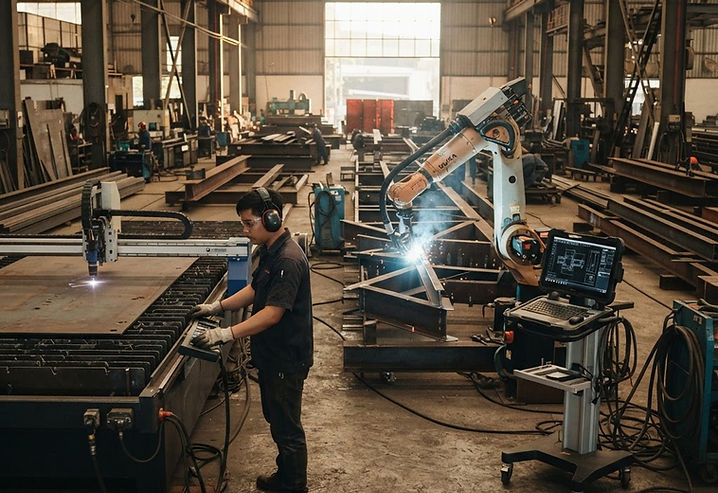
The manufacturing world is evolving rapidly, moving beyond traditional automation and assembly lines. As experienced workers retire and labour shortages persist, a new generation -Gen Z- is stepping up to reshape the often perceived static industry. Modern factory floors are slowly starting to become high tech environments where workers collaborate with advanced software and robotics. This integration of robotics and artificial intelligence (AI) represents an exciting convergence of digital skills and physical production, which offers the opportunity to attract Gen Z with advanced technologies to industries while enjoying job security and competitive wages. So, how is Gen Z talent being attracted and retained and what are the opportunities for them? This blog will discuss this topic in greater detail.
Attracting and Retaining Talent
AI has the potential to transform the manufacturing industry. To attract and retain Gen Z talent, manufacturers must address several key generational preferences:
Meaningful Work, Gen Z seeks roles where they can see the direct impact of their efforts. In manufacturing, the tangible nature of production naturally aligns with this desire.
Workplace Flexibility, While manufacturing often requires on site presence (such as mining operations leveraging mining plant and equipment Australia, some organizations are exploring ways to offer more flexible scheduling desired by younger generations and eliminate unnecessarily long shifts. With technology like remote monitoring, users can remotely operate and monitor industrial robots and react to events happening on factory floors in real time.
Career Development, The industry is investing in skills development programs combining hands on experience with digital learning methods to equip Gen Z for long term success.

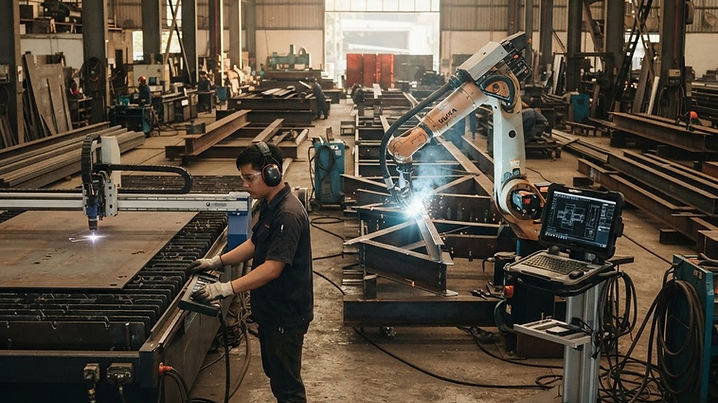
Collaborative Environment, Implementing advanced communications tools allows this next generation to have seamless interaction among all levels of the organization.
Sustainability and Purpose Driven Work, Gen Z is deeply concerned about environmental issues and seeks employers committed to sustainability. By addressing these preferences and emphasizing eco friendly practices, manufacturers can create a dynamic and efficient workplace that appeals to all employees, especially younger generations.
Embracing AI and Robotics
Gen Z’s enthusiasm for AI and robotics in manufacturing challenges the popular belief that these technologies deter young workers. Instead, they view these technologies as enhancing job security rather than threatening it. They see robots as collaborators that supplement their capabilities, not as replacements. This perspective is reshaping the narrative around manufacturing careers.
Challenges and Opportunities
The integration of robotics and the influx of Gen Z workers present opportunities and challenges. Manufacturers must bridge the skills gap between traditional manufacturing processes (e.g., development of pressure vessels ) and new technologies. They also need to address the expectations of young workers who might initially be unsure about long term commitments to manufacturing roles. Another crucial consideration is balancing the need for experienced workers with the desire to bring in fresh talent. Successfully navigating these challenges can lead to significant gains. The manufacturing industry’s embrace of robotics and advanced technologies aligns with Gen Z’s aspirations and skills. By offering high tech environments, meaningful work, and growth opportunities, the industry is positioning itself as an attractive career destination for young professionals.
Conclusion
The transformation of manufacturing and the influx of Gen Z talent is creating a dynamic, innovative industry poised for significant growth and technological advancement. As more young workers discover the opportunities in modern manufacturing, the sector is set to overcome its labour challenges and lead the next wave of modernization.
K999 Thailand carries out work of this kind through its steel fabrication capability team in Rayong.
Further reading
Follow hydrogen projects in Europe across the wider market on Project Atlas Intel.
How K999 can help
How we apply the technology
Faster quoting, cleaner detailing and fewer site surprises come from the tools we use before the first cut, and the articles here explain how those tools change the work.
3D modelling and detailing- 01
3D modelling and shop detailing that resolves clashes before fabrication starts.
- 02
Fibre laser cutting for plate profiles, with nesting planned around the rolling schedule.
- 03
Project management that reports progress against the same model the client approved.
More on Manufacturing & Technology
All articles

Request for quotation
Need fabricated steel to that standard?
Every enquiry is answered within 48 hours by our estimating team in Rayong. The priced quotation follows once drawings, quantities and standards are confirmed. Stainless steel fabrication, structural steel fabrication, pipe spooling, pressure vessels, steel tanks, mining equipment and conveyors, pig launchers, chutes and hoppers, send the package and we will price it.
Before you request a quotation
Steel fabrication quotation questions
What structural steel fabrication, pressure vessel and pipe spooling packages cost, what to send with an enquiry, and how delivery to site works.
Structural steel fabrication is priced from the section and plate tonnage, the detailing and drawing hours, welding and fitting manhours, NDT requirements, blast and coating system, packing and freight. Grade matters as much as weight: AS/NZS, ASTM, JIS and BS sections carry different mill prices, and heavy built up members take longer than rolled sections. Our Rayong workshop produces around 10,000 tonnes of structural steel fabrication a year, so a clear bill of materials is usually enough to price. Send the drawings and we answer within 48 hours; the priced quotation follows once quantities, standards and delivery dates are confirmed.
For steel fabrication work, send the drawings or IFC package, a bill of materials with material grades, the welding and NDT requirements, the coating specification, the delivery port and your site dates. Add the inspection and test plan, any third party inspection requirement, and whether trial assembly or match marking is needed. Where drawings are still in progress, a scope list with sizes, quantities and duty is enough to start, and the estimate is refined once the final package arrives. Every enquiry is answered within 48 hours, and the priced quotation is issued after scope, standards and quantities are confirmed.
Yes. Pressure vessel fabrication is carried out to ASME Section VIII Div. 1 under our ASME U stamp No. 43,462, or to AS/NZS and BS where the project specifies, covering separators, air receivers, water drums, waste heat recovery units and pig launchers. Steel tanks for fuel, biofuel, chemical, water and food duty are designed in house with our E Tank programme to API, ASME, BS and AS/NZS. Because structural steel, vessels, tanks and their supports are built in the same workshops, one enquiry can cover the vessel package, the tank package and the structural steel that carries them, with a single coating and documentation system and one shipment.
Steel fabrication Australia packages are scheduled from a 33,000 m2 Rayong yard with an 80,000 m2 assembly yard inside Sattahip port, so fabrication, trial assembly, blasting, coating and packing run in one place. Programme length depends on tonnage, material lead times, the coating system and inspection scope, and it is confirmed with the quotation. We quote FOB Laem Chabang, Map Ta Phut or Sattahip, or CIF and DAP to your Australian port, with packing lists, weights, lifting points and a data book per shipment. Staged deliveries can follow your site erection sequence instead of shipping everything at once.
There is no fixed minimum. Pipe spooling Australia packages run at up to 3,000 diameter inches per shift on SCH.40, from a single replacement spool to a full plant piping scope, with spools numbered, X rayed where specified and coated to match erection order. Mining equipment fabrication covers chutes, hoppers, ore bins, transfer towers and conveyor structures with Bisalloy, Hardox, rubber lining or hardfacing fitted in house, from one wear liner set to modules of up to 2,500 tonnes assembled at Sattahip. Send the scope list and we will tell you what the smallest sensible batch is for your programme.