


Fabrication
Global LNG Expansion Highlights Critical Need for Specialized Fabrication Capacity
Major LNG projects are increasingly relying on overseas modular fabrication due to a lack of domestic capacity for complex, large-scale units. Fabricators must prioritize specialized capabilities and tidewater access to remain competitive in the global energy infrastructure market.
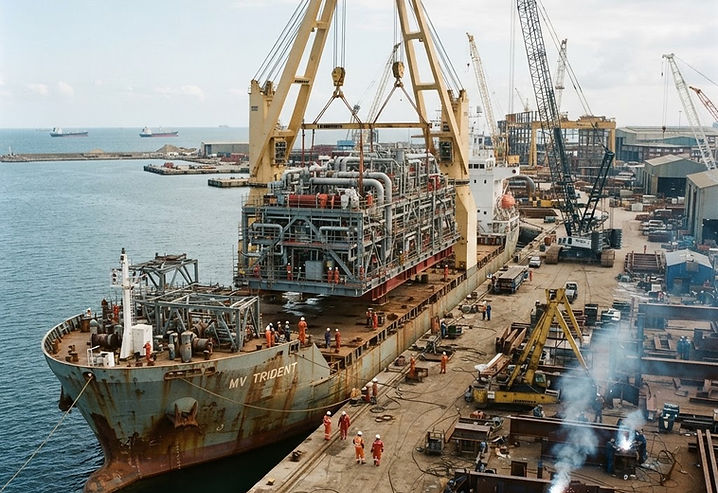
The global energy landscape is shifting as major LNG projects move into their next phases of development. Recent announcements regarding the Phase 2 expansion in Kitimat, British Columbia, underscore a persistent trend in the industry. Project owners are increasingly looking beyond local borders to secure the specialized fabrication capacity required for massive, complex modules. This reliance on international supply chains is driven by the technical demands of modern liquefaction trains rather than a simple preference for offshore sourcing.
Why is specialized fabrication capacity becoming the primary project constraint?
Modern LNG facilities require modular units that are too large for standard road transport. These modules must be built in facilities with direct access to deep-water ports to allow for sea-based logistics. When local yards lack the specific infrastructure, heavy-lift capabilities, or quality systems to handle these massive components, project owners are forced to look elsewhere. This reality creates a clear divide between general steel shops and those capable of high-end, complex industrial work.
For engineering contractors and project owners, the ability to deliver these modules on time is the most critical factor in maintaining project schedules. As seen in recent North American and Middle Eastern projects, supply chain disruptions can force companies to constantly reassess their logistics routes. Fabricators who can demonstrate consistent quality and reliable shipping access are becoming essential partners for global energy firms. This is particularly true for firms specializing in steel tank fabrication, where precision and material integrity are non-negotiable for cryogenic storage.
How should buyers of fabricated steel navigate these supply chain risks?
Buyers must recognize that the lowest bid is rarely the most cost-effective option when project timelines are at stake. Procurement teams should prioritize suppliers who have proven experience with large-scale modularization and international shipping requirements. It is also vital to verify that a fabricator has the necessary quality certifications and the physical space to manage multiple large-scale projects simultaneously. Relying on a single source for critical components is increasingly viewed as a high-risk strategy in the current geopolitical climate.
Project owners should also look for opportunities to balance their procurement strategies. While massive process modules may require specialized international yards, there is often significant room to source secondary steel, pipe racks, and smaller structural components from local or regional suppliers. This hybrid approach supports local economies while ensuring that the most complex parts of the project are handled by firms with the right technical expertise. By diversifying the supply chain, buyers can mitigate the impact of regional disruptions and ensure that their projects remain on track.
As the global demand for energy infrastructure continues to grow, the pressure on fabrication yards will only intensify. Fabricators who invest in their technical capabilities and logistics infrastructure will be best positioned to capture this demand. Meanwhile, project owners who plan their procurement with a clear understanding of regional capacity limitations will be better equipped to navigate the complexities of modern industrial construction.
More detail on how we deliver this work is on our steel tank fabrication page.
For the calculations behind this topic, the free pressure vessel articles from Engineering Toolbox Australia is a practical starting point.
Calculation tool
Run the numbers for this yourself with the free pressure vessel articles from Engineering Toolbox Australia. Treat the result as a first check, then confirm the final design with your engineer.
How K999 can help
Fabrication capacity behind the article
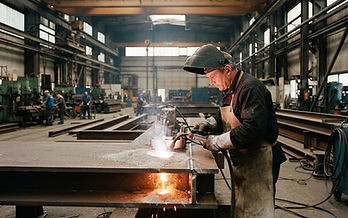
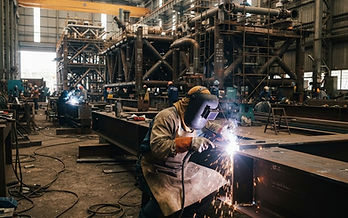
Articles in this section describe work we run every week in Rayong: cutting, forming, welding and assembly, under cover and in the yard, with the documentation that goes with it.
Structural steel fabrication- 01
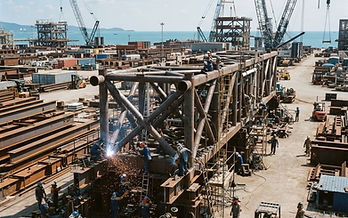
Two workshops totalling more than 33,000 m² plus an 80,000 m² assembly yard at Sattahip.
- 02
Structural steel fabrication to 10,000 tonnes a year, with the largest single module built at 2,500 tonnes.
- 03
Blast, prime and paint before dispatch, with dimensional reports issued against the approved drawings.
More on Fabrication
All articles


Request for quotation
Need fabricated steel to that standard?
Every enquiry is answered within 48 hours by our estimating team in Rayong. The priced quotation follows once drawings, quantities and standards are confirmed. Stainless steel fabrication, structural steel fabrication, pipe spooling, pressure vessels, steel tanks, mining equipment and conveyors, pig launchers, chutes and hoppers, send the package and we will price it.
Before you request a quotation
Steel fabrication quotation questions
What structural steel fabrication, pressure vessel and pipe spooling packages cost, what to send with an enquiry, and how delivery to site works.
Structural steel fabrication is priced from the section and plate tonnage, the detailing and drawing hours, welding and fitting manhours, NDT requirements, blast and coating system, packing and freight. Grade matters as much as weight: AS/NZS, ASTM, JIS and BS sections carry different mill prices, and heavy built up members take longer than rolled sections. Our Rayong workshop produces around 10,000 tonnes of structural steel fabrication a year, so a clear bill of materials is usually enough to price. Send the drawings and we answer within 48 hours; the priced quotation follows once quantities, standards and delivery dates are confirmed.
For steel fabrication work, send the drawings or IFC package, a bill of materials with material grades, the welding and NDT requirements, the coating specification, the delivery port and your site dates. Add the inspection and test plan, any third party inspection requirement, and whether trial assembly or match marking is needed. Where drawings are still in progress, a scope list with sizes, quantities and duty is enough to start, and the estimate is refined once the final package arrives. Every enquiry is answered within 48 hours, and the priced quotation is issued after scope, standards and quantities are confirmed.
Yes. Pressure vessel fabrication is carried out to ASME Section VIII Div. 1 under our ASME U stamp No. 43,462, or to AS/NZS and BS where the project specifies, covering separators, air receivers, water drums, waste heat recovery units and pig launchers. Steel tanks for fuel, biofuel, chemical, water and food duty are designed in house with our E Tank programme to API, ASME, BS and AS/NZS. Because structural steel, vessels, tanks and their supports are built in the same workshops, one enquiry can cover the vessel package, the tank package and the structural steel that carries them, with a single coating and documentation system and one shipment.
Steel fabrication Australia packages are scheduled from a 33,000 m2 Rayong yard with an 80,000 m2 assembly yard inside Sattahip port, so fabrication, trial assembly, blasting, coating and packing run in one place. Programme length depends on tonnage, material lead times, the coating system and inspection scope, and it is confirmed with the quotation. We quote FOB Laem Chabang, Map Ta Phut or Sattahip, or CIF and DAP to your Australian port, with packing lists, weights, lifting points and a data book per shipment. Staged deliveries can follow your site erection sequence instead of shipping everything at once.
There is no fixed minimum. Pipe spooling Australia packages run at up to 3,000 diameter inches per shift on SCH.40, from a single replacement spool to a full plant piping scope, with spools numbered, X rayed where specified and coated to match erection order. Mining equipment fabrication covers chutes, hoppers, ore bins, transfer towers and conveyor structures with Bisalloy, Hardox, rubber lining or hardfacing fitted in house, from one wear liner set to modules of up to 2,500 tonnes assembled at Sattahip. Send the scope list and we will tell you what the smallest sensible batch is for your programme.