


Manufacturing & Technology
Growth of Medical Manufacturing in Australia
Local medical production capacity is expanding, bringing demand for clean stainless fabrication and validated processes.
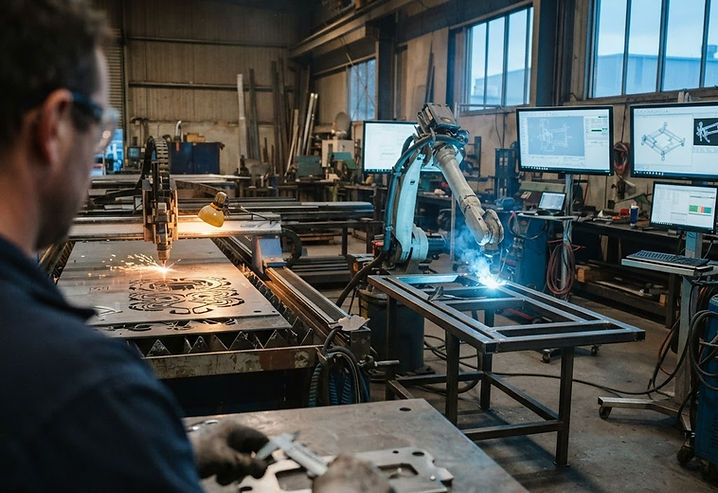
Australia has an expanding medical manufacturing industry with pharmaceutical giants such as Astra Zeneca, CSL, GlaxoSmithKline, Merck, Novartis, and Pfizer engaging Australian contract development and manufacturing organizations (CDMOs) in development of therapies. It has been setting global standards for innovation and quality and its medicines are much in demand. Medical manufacturing is part of Australia’s diverse and dynamic manufacturing sector which has been growing in different areas and making quality end products. It leads to the question, what is the secret sauce which enables Australia’s manufacturing to be so highly regarded? Let us explore this question further in this blog.
Support from Government
The Australian government has been facilitating conditions for growth, innovation, and further investment in medical manufacturing. Making medical products and medicines requires state of the art, skilled, advanced manufacturing and sheet metal fabrication processes. Governments and industry must work hand in hand to make the most of the opportunities. The Liberal National Party’s Modern Manufacturing Strategy, developed in close consultation with industry, set a solid foundation to build up Australia’s industrial base. The Coalition’s Modern Manufacturing Strategy provided a long term vision to support the scale and competitiveness of medical manufacturing. It outlined opportunities for Australian businesses based on strengths, emerging industry trends and market potential. A roadmap was laid out on how industry and government, together, could capture opportunities and address barriers to scale. This plan was backed with investment to support companies that want to grow their manufacturing locally. Building up Australian medical products and medicines manufacturing requires specific things from governments: they must ensure they build a skilled workforce so the sector can commercialize technologies and advanced manufacturing capabilities. Governments are the main customers for many medical products so government procurement must function well so that SMEs have the opportunity to provide services and products.

Asian Market and Complementary Medicine
Demand for health therapeutics in Asia is growing in line with its ageing population. The share of the population aged 65 years and over is expected to increase by nearly 2.5 times in the next decades. Treatments for the two leading causes of death, cardiovascular disease and cancer, will be welcomed. Australia’s proximity to and close business ties with Asia offer trade opportunities, including trade benefits as a result of steel manufacturing. Medicines manufactured in Australia can be exported across the region. Australia has free trade agreements with Asia’s largest economies, including China, Japan, and Korea, as well as fast growing ASEAN countries. Australia also has strong relationships with Asia’s leading universities and research institutions, opening up possibilities for R&D collaborations. As the booming populations of south and south east Asian middle classes grow, Australian made medical products should be their first port of call.
Australia are world leaders in manufacturing complementary medicines. They are known for great produce, innovation, and quality assured products, this is doubly so in medicine and preventative health. Complementary medicine manufacturing is a high demand and high growth industry. The medical products and medicines sector today supports 30,000 workers across the supply chain, and more than 2,500 manufacturing workers. It is a sector that needs to hit the highest of benchmarks for quality and safety. However, globally recognized regulation needs to balance safety and trust with market access. Government must support businesses as they navigate new markets so they can compete globally.
Final Thoughts
The medical manufacturing sector has been a priority for Australian governments and this approach is expected to continue in the future. The government is expected to announce further grants and incentives to heavy steel fabrication companies to support medical manufacturing and partnerships and collaborations are predicted to grow as well. A highly developed medical innovation ecosystem is to be leveraged on the back of Australia’s strong manufacturing base, and the future looks bright for this sector!
K999 Thailand carries out work of this kind through its steel fabrication capability team in Rayong.
Further reading
Follow Mining across the wider market on Project Atlas Intel.
How K999 can help
How we apply the technology
Faster quoting, cleaner detailing and fewer site surprises come from the tools we use before the first cut, and the articles here explain how those tools change the work.
3D modelling and detailing- 01
3D modelling and shop detailing that resolves clashes before fabrication starts.
- 02
Fibre laser cutting for plate profiles, with nesting planned around the rolling schedule.
- 03
Project management that reports progress against the same model the client approved.
More on Manufacturing & Technology
All articles

Request for quotation
Need fabricated steel to that standard?
Every enquiry is answered within 48 hours by our estimating team in Rayong. The priced quotation follows once drawings, quantities and standards are confirmed. Stainless steel fabrication, structural steel fabrication, pipe spooling, pressure vessels, steel tanks, mining equipment and conveyors, pig launchers, chutes and hoppers, send the package and we will price it.
Before you request a quotation
Steel fabrication quotation questions
What structural steel fabrication, pressure vessel and pipe spooling packages cost, what to send with an enquiry, and how delivery to site works.
Structural steel fabrication is priced from the section and plate tonnage, the detailing and drawing hours, welding and fitting manhours, NDT requirements, blast and coating system, packing and freight. Grade matters as much as weight: AS/NZS, ASTM, JIS and BS sections carry different mill prices, and heavy built up members take longer than rolled sections. Our Rayong workshop produces around 10,000 tonnes of structural steel fabrication a year, so a clear bill of materials is usually enough to price. Send the drawings and we answer within 48 hours; the priced quotation follows once quantities, standards and delivery dates are confirmed.
For steel fabrication work, send the drawings or IFC package, a bill of materials with material grades, the welding and NDT requirements, the coating specification, the delivery port and your site dates. Add the inspection and test plan, any third party inspection requirement, and whether trial assembly or match marking is needed. Where drawings are still in progress, a scope list with sizes, quantities and duty is enough to start, and the estimate is refined once the final package arrives. Every enquiry is answered within 48 hours, and the priced quotation is issued after scope, standards and quantities are confirmed.
Yes. Pressure vessel fabrication is carried out to ASME Section VIII Div. 1 under our ASME U stamp No. 43,462, or to AS/NZS and BS where the project specifies, covering separators, air receivers, water drums, waste heat recovery units and pig launchers. Steel tanks for fuel, biofuel, chemical, water and food duty are designed in house with our E Tank programme to API, ASME, BS and AS/NZS. Because structural steel, vessels, tanks and their supports are built in the same workshops, one enquiry can cover the vessel package, the tank package and the structural steel that carries them, with a single coating and documentation system and one shipment.
Steel fabrication Australia packages are scheduled from a 33,000 m2 Rayong yard with an 80,000 m2 assembly yard inside Sattahip port, so fabrication, trial assembly, blasting, coating and packing run in one place. Programme length depends on tonnage, material lead times, the coating system and inspection scope, and it is confirmed with the quotation. We quote FOB Laem Chabang, Map Ta Phut or Sattahip, or CIF and DAP to your Australian port, with packing lists, weights, lifting points and a data book per shipment. Staged deliveries can follow your site erection sequence instead of shipping everything at once.
There is no fixed minimum. Pipe spooling Australia packages run at up to 3,000 diameter inches per shift on SCH.40, from a single replacement spool to a full plant piping scope, with spools numbered, X rayed where specified and coated to match erection order. Mining equipment fabrication covers chutes, hoppers, ore bins, transfer towers and conveyor structures with Bisalloy, Hardox, rubber lining or hardfacing fitted in house, from one wear liner set to modules of up to 2,500 tonnes assembled at Sattahip. Send the scope list and we will tell you what the smallest sensible batch is for your programme.