


Fabrication
Heavy vs. Light - Types of Metal Fabrication
Heavy fabrication works thick plate and structural members under welding and lifting codes, light fabrication serves sheet and precision parts.
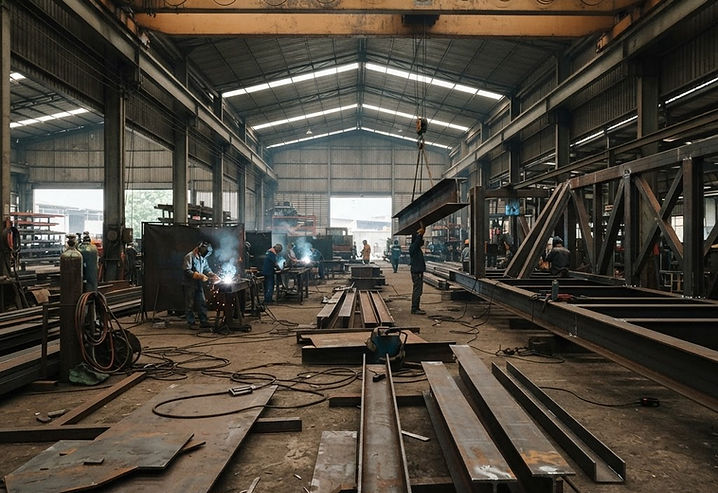
Fabricating metal is an intricate process which requires understanding of different techniques and products. Metals come in a wide variety of shapes, sizes, and colors, and are used for a wide range of applications; machining methods vary depending on the metal type, with heavy metals like steel, aluminum and titanium requiring more intensive procedures than lighter metals like brass. This leads to two types of metal fabrication, heavy and light, which have different manufacturing styles, applications etc. So, what is the distinction between these two fabrication techniques and how are they adding value to the manufacturing industry? This blog will look to address some of these points.
Processes: Any engineering technique performed on metal components thicker than one inch is considered heavy metal fabrication. Special methods are required to cut and shape “heavy” structural materials as compared to methods used on lighter metals. An example is gas metal arc welding (GMAW) which is efficient on a metal sheet plate.
Materials: Ferrous metal (which has iron as a major component) are exceedingly hard and durable and make for good heavy metal fabrication applications. Steel and, in some cases, stainless steel are mentioned while discussing the necessity of strength involved in developing heavy metal fabrication products.
Products: Large scale agricultural machinery and equipment, as well as access walkways, are other good examples, along with tanks and gantries. In fact, just about any produced structural element might be considered heavy fabrication.
Processes: Any engineering technique performed on metal components thinner than one inch is considered light metal fabrication. Examples are turret punch used for generating sheet metal shapes and press for forming. Resistance welding and alloy processing are also applicable while working on light fabrication operations.

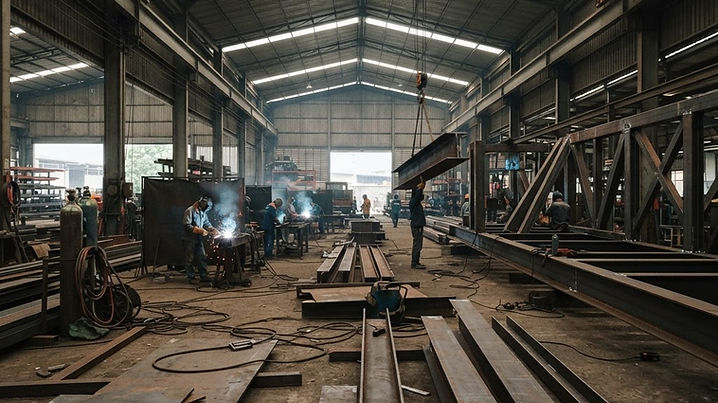
Materials: Steel, copper, aluminum, brass and bronze are considered to be “light” materials which are applicable for cutting, shaping and assembling various metal components. Very tensile materials are not suitable for light fabrication.
Products: Products like RV parts, brackets, toolboxes etc. are instances of end products of light fabrication. These are usually smaller architectural components, and hence are more manageable in size.
Steel fabrication is hugely popular with regard to heavy metal fabrication, e.g. steel fabrication has many applications in the mining industry. It is easy to see why, especially as we consider the following advantages it offers:
Tensile strength: The material is an alloy, typically consisting of very strong materials that actively prevent dislocation on an atomic scale. Steel’s reliability as a building material is unmatched.
High Resistance to Wear and Tear: Steel is a very tough material. It can withstand heat, flame, moisture, and wind, and it can be protected from rust and corrosion. Even termites and other wood boring insects won’t damage it.
Consistency and efficiency: These benefits have been realized as heavy steel manufacturing technology has advanced, allowing heavy steel fabrication companies greater consistency in steel construction. Steel is precisely made to specifications, which means it arrives at the construction site ready for installation.
Environmental friendliness: Steel is widely recognized as one of the most eco friendly building materials available. Over ninety percent of structural steel is recycled material, demonstrating the widespread nature of steel recycling. Furthermore, it may be remelted and reused indefinitely without degrading in quality.
It can thus be seen that heavy metal fabrication typically involves more complex machinery like lathes or mills, while products made from light metal stock can be molded using only hand tools. Welds and heat induction bending services are susceptible to severe strain when working with heavy metal fabrications and require regular testing to check durability. Steel, due to its malleability and widespread favor among architects and designers, is the material par excellence of contemporary building. Thus, while “heavy metal” may be the flavor for large scale manufacturing, “light metal” reigns supreme with regard to smaller and lighter products!
Further reading
Follow Renewable Energy across the wider market on Project Atlas Intel.
How K999 can help
Fabrication capacity behind the article
Articles in this section describe work we run every week in Rayong: cutting, forming, welding and assembly, under cover and in the yard, with the documentation that goes with it.
Structural steel fabrication- 01
Two workshops totalling more than 33,000 m² plus an 80,000 m² assembly yard at Sattahip.
- 02
Structural steel fabrication to 10,000 tonnes a year, with the largest single module built at 2,500 tonnes.
- 03
Blast, prime and paint before dispatch, with dimensional reports issued against the approved drawings.
More on Fabrication
All articles


Request for quotation
Need fabricated steel to that standard?
Every enquiry is answered within 48 hours by our estimating team in Rayong. The priced quotation follows once drawings, quantities and standards are confirmed. Stainless steel fabrication, structural steel fabrication, pipe spooling, pressure vessels, steel tanks, mining equipment and conveyors, pig launchers, chutes and hoppers, send the package and we will price it.
Before you request a quotation
Steel fabrication quotation questions
What structural steel fabrication, pressure vessel and pipe spooling packages cost, what to send with an enquiry, and how delivery to site works.
Structural steel fabrication is priced from the section and plate tonnage, the detailing and drawing hours, welding and fitting manhours, NDT requirements, blast and coating system, packing and freight. Grade matters as much as weight: AS/NZS, ASTM, JIS and BS sections carry different mill prices, and heavy built up members take longer than rolled sections. Our Rayong workshop produces around 10,000 tonnes of structural steel fabrication a year, so a clear bill of materials is usually enough to price. Send the drawings and we answer within 48 hours; the priced quotation follows once quantities, standards and delivery dates are confirmed.
For steel fabrication work, send the drawings or IFC package, a bill of materials with material grades, the welding and NDT requirements, the coating specification, the delivery port and your site dates. Add the inspection and test plan, any third party inspection requirement, and whether trial assembly or match marking is needed. Where drawings are still in progress, a scope list with sizes, quantities and duty is enough to start, and the estimate is refined once the final package arrives. Every enquiry is answered within 48 hours, and the priced quotation is issued after scope, standards and quantities are confirmed.
Yes. Pressure vessel fabrication is carried out to ASME Section VIII Div. 1 under our ASME U stamp No. 43,462, or to AS/NZS and BS where the project specifies, covering separators, air receivers, water drums, waste heat recovery units and pig launchers. Steel tanks for fuel, biofuel, chemical, water and food duty are designed in house with our E Tank programme to API, ASME, BS and AS/NZS. Because structural steel, vessels, tanks and their supports are built in the same workshops, one enquiry can cover the vessel package, the tank package and the structural steel that carries them, with a single coating and documentation system and one shipment.
Steel fabrication Australia packages are scheduled from a 33,000 m2 Rayong yard with an 80,000 m2 assembly yard inside Sattahip port, so fabrication, trial assembly, blasting, coating and packing run in one place. Programme length depends on tonnage, material lead times, the coating system and inspection scope, and it is confirmed with the quotation. We quote FOB Laem Chabang, Map Ta Phut or Sattahip, or CIF and DAP to your Australian port, with packing lists, weights, lifting points and a data book per shipment. Staged deliveries can follow your site erection sequence instead of shipping everything at once.
There is no fixed minimum. Pipe spooling Australia packages run at up to 3,000 diameter inches per shift on SCH.40, from a single replacement spool to a full plant piping scope, with spools numbered, X rayed where specified and coated to match erection order. Mining equipment fabrication covers chutes, hoppers, ore bins, transfer towers and conveyor structures with Bisalloy, Hardox, rubber lining or hardfacing fitted in house, from one wear liner set to modules of up to 2,500 tonnes assembled at Sattahip. Send the scope list and we will tell you what the smallest sensible batch is for your programme.