


Manufacturing & Technology
How AI Can Transform Manufacturing
Visual inspection, weld parameter monitoring and predictive maintenance are the practical first uses of AI in fabrication.
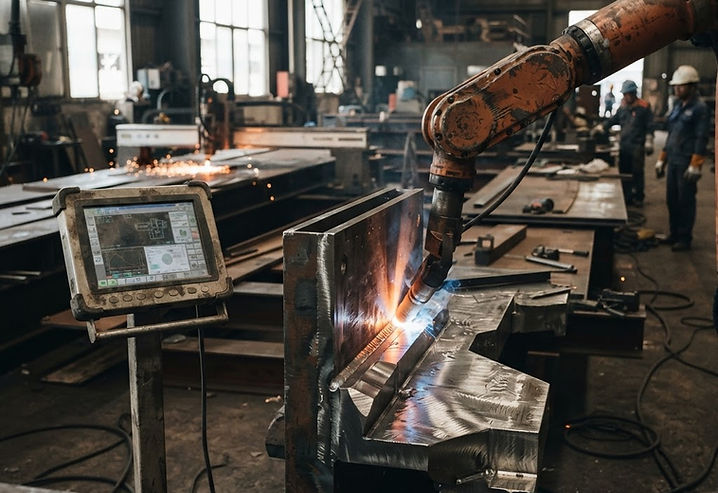
Artificial Intelligence is a buzzword with Generative AI “generating” the most hype. Globally, businesses have already started adopting AI for various use cases, and the Australian Government recently launched a public consultation to seek advice on how to mitigate potential risks and ensure it is applied responsibly. One of these uses cases is advanced manufacturing, which is a broad term that encompasses technologies applied to any manufacturing facility, including application software and AI tools to augment and generate higher value manufacturing output. So how can AI drive advanced manufacturing and what can manufacturers proactively do in this regard? Let us find out from this blog.
Speed and Safety
Part of removing human error to make manufacturing safer and faster means reducing reliance on human observation. As machinery drivers and operators are among the top three occupation groups with the highest rate of work related injuries in Australia at 6.5% in the 2021 to 2022 financial year, this makes a use case for AI analytics in augmenting workplace health and safety. A use case for workplace health and safety is driven by AI video surveillance in manufacturing. AI analytics can match workers’ physical position in relation to how they interact with machines, particularly heavy industrial machinery, facilitating a more comprehensive understanding of safety in workplace operations and injury.

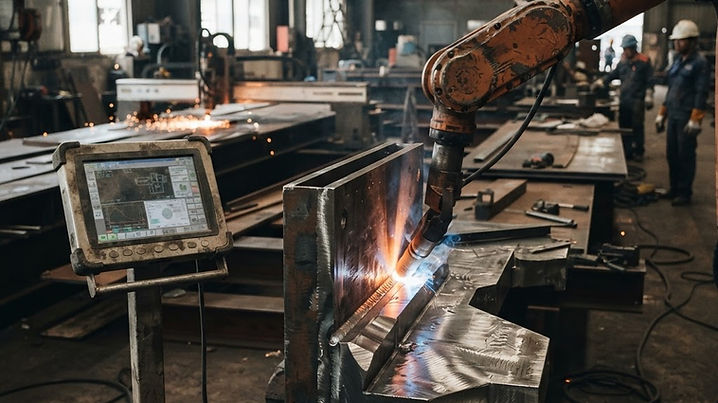
Intelligent operations is a top manufacturing technology trend and AI software can also manage workflows more effectively by identifying and allocating tasks. This can be taken one step further, with large site and heavy industrial manufacturing operations using Industry 4.0 technologies like digital twins to optimise these workflows, by using a virtual model designed to accurately reflect the manufacturing process to model operations and planning at significant scale. These digital twins can show how people and equipment can be moved and managed more quickly and safely around a site in a controlled manner before applying it to the actual operations. These use cases for AI are less about employing “robots to take manufacturing jobs”, and more about creating a productive workforce and giving advanced manufacturers a competitive edge. The challenge for individuals and corporations is to understand and embrace how this technology can enhance current advanced manufacturing processes, rather than downplaying the potential.
Upskilling Workers and Emerging Tech
With capital decisions carrying longer term implications, it is important for manufacturing businesses to consider their investment in any technologies and operational uplift, whether that be AI or other emerging technologies, including the current and future needs of upskilling their workforce and plan at least 5 or ten years’ ahead to avoid sunken costs and stranded assets. IT will also require upskilling of the workforce and considerations regarding ethics, privacy, and cybersecurity. Therefore, a comprehensive approach that combines AI implementation with human expertise is crucial for successful transformation in the manufacturing and pipe fabrication sectors.
The Final Bow
It is still to be determined how a future where advanced manufacturing is largely driven by AI looks like, however, it is expected that AI will make production more agile, efficient, and safe for a workforce that will become more highly skilled as they grow familiar with and train in it. So, is the hype around AI’s potential in advanced manufacturing justified? We may find out very soon.
K999 Thailand carries out work of this kind through its steel fabrication capability team in Rayong.
Further reading
Follow Critical Minerals across the wider market on Project Atlas Intel.
Calculation tool
Run the numbers for this yourself with the free storage tank articles from Engineering Toolbox Australia. Treat the result as a first check, then confirm the final design with your engineer.
How K999 can help
How we apply the technology
Faster quoting, cleaner detailing and fewer site surprises come from the tools we use before the first cut, and the articles here explain how those tools change the work.
3D modelling and detailing- 01
3D modelling and shop detailing that resolves clashes before fabrication starts.
- 02
Fibre laser cutting for plate profiles, with nesting planned around the rolling schedule.
- 03
Project management that reports progress against the same model the client approved.
More on Manufacturing & Technology
All articles

Request for quotation
Need fabricated steel to that standard?
Every enquiry is answered within 48 hours by our estimating team in Rayong. The priced quotation follows once drawings, quantities and standards are confirmed. Stainless steel fabrication, structural steel fabrication, pipe spooling, pressure vessels, steel tanks, mining equipment and conveyors, pig launchers, chutes and hoppers, send the package and we will price it.
Before you request a quotation
Steel fabrication quotation questions
What structural steel fabrication, pressure vessel and pipe spooling packages cost, what to send with an enquiry, and how delivery to site works.
Structural steel fabrication is priced from the section and plate tonnage, the detailing and drawing hours, welding and fitting manhours, NDT requirements, blast and coating system, packing and freight. Grade matters as much as weight: AS/NZS, ASTM, JIS and BS sections carry different mill prices, and heavy built up members take longer than rolled sections. Our Rayong workshop produces around 10,000 tonnes of structural steel fabrication a year, so a clear bill of materials is usually enough to price. Send the drawings and we answer within 48 hours; the priced quotation follows once quantities, standards and delivery dates are confirmed.
For steel fabrication work, send the drawings or IFC package, a bill of materials with material grades, the welding and NDT requirements, the coating specification, the delivery port and your site dates. Add the inspection and test plan, any third party inspection requirement, and whether trial assembly or match marking is needed. Where drawings are still in progress, a scope list with sizes, quantities and duty is enough to start, and the estimate is refined once the final package arrives. Every enquiry is answered within 48 hours, and the priced quotation is issued after scope, standards and quantities are confirmed.
Yes. Pressure vessel fabrication is carried out to ASME Section VIII Div. 1 under our ASME U stamp No. 43,462, or to AS/NZS and BS where the project specifies, covering separators, air receivers, water drums, waste heat recovery units and pig launchers. Steel tanks for fuel, biofuel, chemical, water and food duty are designed in house with our E Tank programme to API, ASME, BS and AS/NZS. Because structural steel, vessels, tanks and their supports are built in the same workshops, one enquiry can cover the vessel package, the tank package and the structural steel that carries them, with a single coating and documentation system and one shipment.
Steel fabrication Australia packages are scheduled from a 33,000 m2 Rayong yard with an 80,000 m2 assembly yard inside Sattahip port, so fabrication, trial assembly, blasting, coating and packing run in one place. Programme length depends on tonnage, material lead times, the coating system and inspection scope, and it is confirmed with the quotation. We quote FOB Laem Chabang, Map Ta Phut or Sattahip, or CIF and DAP to your Australian port, with packing lists, weights, lifting points and a data book per shipment. Staged deliveries can follow your site erection sequence instead of shipping everything at once.
There is no fixed minimum. Pipe spooling Australia packages run at up to 3,000 diameter inches per shift on SCH.40, from a single replacement spool to a full plant piping scope, with spools numbered, X rayed where specified and coated to match erection order. Mining equipment fabrication covers chutes, hoppers, ore bins, transfer towers and conveyor structures with Bisalloy, Hardox, rubber lining or hardfacing fitted in house, from one wear liner set to modules of up to 2,500 tonnes assembled at Sattahip. Send the scope list and we will tell you what the smallest sensible batch is for your programme.