


Fabrication
How to Reduce Laser Cutting Costs - Part I
Machine utilisation, cut speed and thickness discipline are the first levers on laser cutting cost per part.
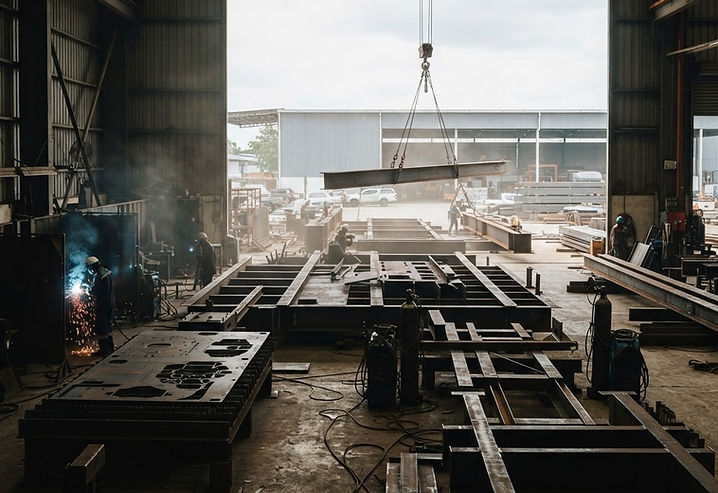
Metal cutting is an important operation in most fabrication projects and laser cutting is preferred in many sectors. The precisely cut two dimensional pieces function as machinery parts in industries from industrial baking to medicine. A common criticism of laser cutting is the cost involved during production, which can be quite high in many cases. However, many companies are unaware that their laser cutting costs, despite the production, could be significantly reduced by simple, alternate choices and communication with their laser cutting provider. So, how can the cost of laser cutting be reduced without compromising on the quality of the end deliverable? The first part of this two part blog will focus on two techniques while looking to answer this and other questions.
Consider Sheet Metal Type and Thickness
A variety of metals can be cut, including mild steel, stainless steel, aluminum, copper, and brass. The thickness of the selected metal can alter the edge quality of the cuts, but most importantly the thickness of the metal determines how quickly the beam can cut or change due to heat induction bending services. Each of these metals has an optimal cutting thickness that displays the most stable and untainted cut possible with minimal warping or variation. If a thicker or denser metal is selected, then the time spent by the laser cutting company on the design will increase. If that metal is necessary for the project, a thick metal paired with a simple design may balance out the cost. It is important to prioritize the factors that are most important to the company and the productivity of the fabrication task in many cases.

Optimize Space by Grouping and Nesting
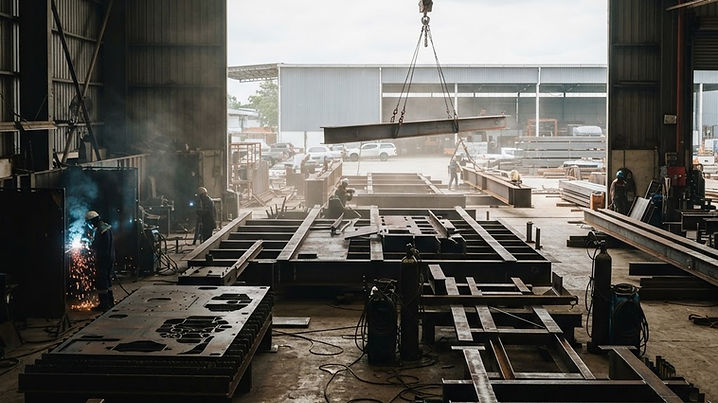
Laser cutting carves lines on sheet metal that are often spread out, with similar design elements and edges. However, eliminating empty segments in the design file dramatically diminishes the cost, in a similar way to avoiding double cut lines. It is efficient to reduce waste and scrap metal by increasing the usable portions of the sheet of metal. Filling the whole sheet of metal with the desired product is the ideal outcome. Wasting minuscule scrapings and debris is an inevitability most of the time, but more substantial portions of scrap metal can become profitable for the organization. Grouping and nesting are two variations of this principle.
Grouping the pieces just clusters them for efficient laser work. In general, the less distance the laser head must travel to make the next cut and the less scrap metal produced will keep more money in your pocket. This method is a simple way to create more space on the sheet of metal, and it accommodates circular cuts more easily than nesting does. Rounded lines, while expensive, may be necessary for the metal fabrication work. Positioning the shapes as close to one another as possible will be cost effective. Nesting is a more specific technique to reduce waste. This method rearranges the pieces to be cut so that they share common edges and create little excess space for optimal shapes. When complementary lines are placed together, the edge of two different shapes becomes one affordable slice. Nesting is another reason why finding the straightest lines for desired products (e.g., I beams in structural construction ) should be a priority because exact lines and angles are more likely to coincide for a common edge.
Summing Up
Laser cutting is a very technical process and it is important to understand which cost saving approach is a best fit for a metal fabrication engagement. Understanding the types of metal used and characteristics of laser cutting deliverables helps in devising more effective cost saving strategies. While these methods are useful in the context of laser cutting jobs, there are other cost saving techniques in laser cutting which will be discussed.
K999 Thailand carries out work of this kind through its laser cutting and profile cutting team in Rayong.
Further reading
Follow Power Generation across the wider market on Project Atlas Intel.
How K999 can help
Fabrication capacity behind the article
Articles in this section describe work we run every week in Rayong: cutting, forming, welding and assembly, under cover and in the yard, with the documentation that goes with it.
Structural steel fabrication- 01
Two workshops totalling more than 33,000 m² plus an 80,000 m² assembly yard at Sattahip.
- 02
Structural steel fabrication to 10,000 tonnes a year, with the largest single module built at 2,500 tonnes.
- 03
Blast, prime and paint before dispatch, with dimensional reports issued against the approved drawings.
More on Fabrication
All articles


Request for quotation
Need fabricated steel to that standard?
Every enquiry is answered within 48 hours by our estimating team in Rayong. The priced quotation follows once drawings, quantities and standards are confirmed. Stainless steel fabrication, structural steel fabrication, pipe spooling, pressure vessels, steel tanks, mining equipment and conveyors, pig launchers, chutes and hoppers, send the package and we will price it.
Before you request a quotation
Steel fabrication quotation questions
What structural steel fabrication, pressure vessel and pipe spooling packages cost, what to send with an enquiry, and how delivery to site works.
Structural steel fabrication is priced from the section and plate tonnage, the detailing and drawing hours, welding and fitting manhours, NDT requirements, blast and coating system, packing and freight. Grade matters as much as weight: AS/NZS, ASTM, JIS and BS sections carry different mill prices, and heavy built up members take longer than rolled sections. Our Rayong workshop produces around 10,000 tonnes of structural steel fabrication a year, so a clear bill of materials is usually enough to price. Send the drawings and we answer within 48 hours; the priced quotation follows once quantities, standards and delivery dates are confirmed.
For steel fabrication work, send the drawings or IFC package, a bill of materials with material grades, the welding and NDT requirements, the coating specification, the delivery port and your site dates. Add the inspection and test plan, any third party inspection requirement, and whether trial assembly or match marking is needed. Where drawings are still in progress, a scope list with sizes, quantities and duty is enough to start, and the estimate is refined once the final package arrives. Every enquiry is answered within 48 hours, and the priced quotation is issued after scope, standards and quantities are confirmed.
Yes. Pressure vessel fabrication is carried out to ASME Section VIII Div. 1 under our ASME U stamp No. 43,462, or to AS/NZS and BS where the project specifies, covering separators, air receivers, water drums, waste heat recovery units and pig launchers. Steel tanks for fuel, biofuel, chemical, water and food duty are designed in house with our E Tank programme to API, ASME, BS and AS/NZS. Because structural steel, vessels, tanks and their supports are built in the same workshops, one enquiry can cover the vessel package, the tank package and the structural steel that carries them, with a single coating and documentation system and one shipment.
Steel fabrication Australia packages are scheduled from a 33,000 m2 Rayong yard with an 80,000 m2 assembly yard inside Sattahip port, so fabrication, trial assembly, blasting, coating and packing run in one place. Programme length depends on tonnage, material lead times, the coating system and inspection scope, and it is confirmed with the quotation. We quote FOB Laem Chabang, Map Ta Phut or Sattahip, or CIF and DAP to your Australian port, with packing lists, weights, lifting points and a data book per shipment. Staged deliveries can follow your site erection sequence instead of shipping everything at once.
There is no fixed minimum. Pipe spooling Australia packages run at up to 3,000 diameter inches per shift on SCH.40, from a single replacement spool to a full plant piping scope, with spools numbered, X rayed where specified and coated to match erection order. Mining equipment fabrication covers chutes, hoppers, ore bins, transfer towers and conveyor structures with Bisalloy, Hardox, rubber lining or hardfacing fitted in house, from one wear liner set to modules of up to 2,500 tonnes assembled at Sattahip. Send the scope list and we will tell you what the smallest sensible batch is for your programme.