


Fabrication
How to Reduce Laser Cutting Costs - Part II
Nesting strategy, sheet utilisation and gas selection continue the cost reduction case for laser cut fabrication.
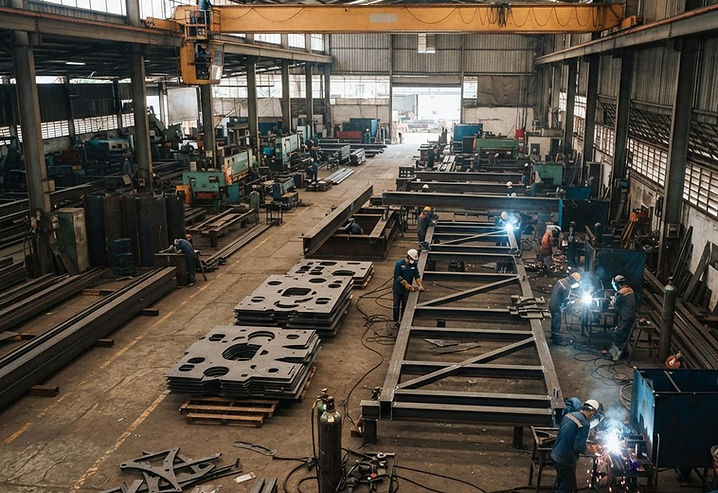
As discussed in the first part of the blog on reducing laser cutting costs, laser cutting production fits particular specifications and accurately delivers a piece’s details the first time. Many companies, small businesses, and industrial organizations tend to choose laser cutting because it produces barely perceptible edge effects from the cutting, unlike many other methods. Versatility in size and metal material is another benefit of laser cutting machinery, although these do have differences in price. In this blog, other means of diminishing expenses while using this incredible technology will be covered along with relevant considerations in this regard.
Creating Prototypes
Constructing a prototype of the fabrication design digitally, on paper or with a sturdier disposable material helps to develop a clear vision of the final product. The appearance of the design will be easier to tweak or simplify once there is a mock up involved. Ordering the full quantity of a laser cut product without refining the desired outcome is ineffective and drains the company bank account when another order is to be placed. It is good practice to print the design from a computer onto paper with the correct measurements and spacing between the two dimensional shapes to examine the problematic points that might cost more money in production. Digital models can also be useful since the capabilities of design software can be used to alter small scale issues. Performing this preliminary test by heavy steel fabrication companies increases confidence in the result and reduces any costs working out kinks that are caught early.
Placing a Small Order

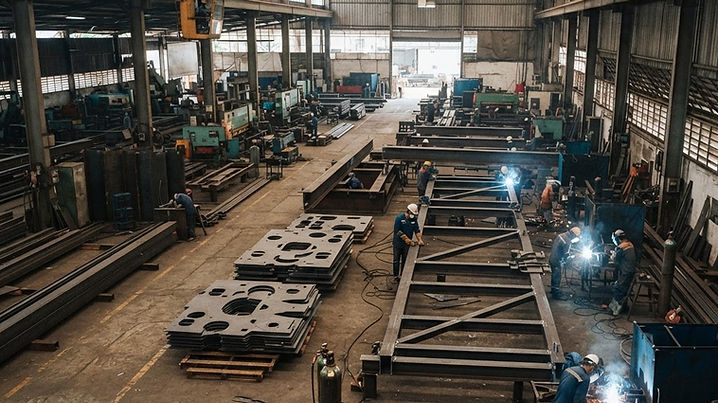
Once the simplified design and idea for the material have been confirmed, a small trial run of the exact supplies and design can reduce extra expenses before placing a substantial order. If certain aspects of the design are still unclear or testing of multiple metals is required, small orders will present the possibilities of several kinds of metal and the accurate implementation of your design. Any complications that arise in a small trial order will cost less than purchasing several big sheets of metal and then realizing that the specifications should have been different. Once it is evident that this metal is the fit for your intentions, the complete order can follow the small order.
Outsourcing Laser Cutting
When a project requires a precise cut that only laser cutting can accomplish, a do it yourself direction may be the first impulse. However, on site laser cutting involves expensive investments in mining plant and equipment, thorough training, and inconvenient maintenance. Rather than mastering laser cutting and facing these obstacles, it is more cost effective to outsource to experienced companies. Since laser cutting is an important fabrication technique, the equipment is substantial in size and cost. Purchasing laser cutting machinery, depending on the size and nature of your company, will likely not be reused enough to cover the costs. Necessary on site space is infringed on, and employee training also halts the production process.
Using a specialized outside team to perform the work saves space, time, and money. The machinery also demands regular upkeep, which raises costs even higher. Safety for the work space and the condition of the products require this maintenance, but the drawbacks of further expense, repairs and effort point to another solution, outsourcing. Enlisting the help of workers skilled in this area will expedite the project and reduce overheads. They are familiar with the best practices in laser cutting, already knowledgeable about this task and able to maintain the equipment elsewhere.
Final Thoughts
Cutting down on production time and increasing intentionality in design files will reduce the cost of custom cut pieces. Adjusting the orientation of the design if multiple pieces are manufactured will also diminish wasted metal and extra time. Overall, these techniques have the potential to ensure that the project should be finished sooner than ever before at a lower price. Hence, cutting is the way to go, for both laser and costs!
K999 Thailand carries out work of this kind through its laser cutting and profile cutting team in Rayong.
Further reading
Follow Battery Materials across the wider market on Project Atlas Intel.
Calculation tool
Run the numbers for this yourself with the free engineering formulas australia from Engineering Toolbox Australia. Treat the result as a first check, then confirm the final design with your engineer.
How K999 can help
Fabrication capacity behind the article
Articles in this section describe work we run every week in Rayong: cutting, forming, welding and assembly, under cover and in the yard, with the documentation that goes with it.
Structural steel fabrication- 01
Two workshops totalling more than 33,000 m² plus an 80,000 m² assembly yard at Sattahip.
- 02
Structural steel fabrication to 10,000 tonnes a year, with the largest single module built at 2,500 tonnes.
- 03
Blast, prime and paint before dispatch, with dimensional reports issued against the approved drawings.
More on Fabrication
All articles


Request for quotation
Need fabricated steel to that standard?
Every enquiry is answered within 48 hours by our estimating team in Rayong. The priced quotation follows once drawings, quantities and standards are confirmed. Stainless steel fabrication, structural steel fabrication, pipe spooling, pressure vessels, steel tanks, mining equipment and conveyors, pig launchers, chutes and hoppers, send the package and we will price it.
Before you request a quotation
Steel fabrication quotation questions
What structural steel fabrication, pressure vessel and pipe spooling packages cost, what to send with an enquiry, and how delivery to site works.
Structural steel fabrication is priced from the section and plate tonnage, the detailing and drawing hours, welding and fitting manhours, NDT requirements, blast and coating system, packing and freight. Grade matters as much as weight: AS/NZS, ASTM, JIS and BS sections carry different mill prices, and heavy built up members take longer than rolled sections. Our Rayong workshop produces around 10,000 tonnes of structural steel fabrication a year, so a clear bill of materials is usually enough to price. Send the drawings and we answer within 48 hours; the priced quotation follows once quantities, standards and delivery dates are confirmed.
For steel fabrication work, send the drawings or IFC package, a bill of materials with material grades, the welding and NDT requirements, the coating specification, the delivery port and your site dates. Add the inspection and test plan, any third party inspection requirement, and whether trial assembly or match marking is needed. Where drawings are still in progress, a scope list with sizes, quantities and duty is enough to start, and the estimate is refined once the final package arrives. Every enquiry is answered within 48 hours, and the priced quotation is issued after scope, standards and quantities are confirmed.
Yes. Pressure vessel fabrication is carried out to ASME Section VIII Div. 1 under our ASME U stamp No. 43,462, or to AS/NZS and BS where the project specifies, covering separators, air receivers, water drums, waste heat recovery units and pig launchers. Steel tanks for fuel, biofuel, chemical, water and food duty are designed in house with our E Tank programme to API, ASME, BS and AS/NZS. Because structural steel, vessels, tanks and their supports are built in the same workshops, one enquiry can cover the vessel package, the tank package and the structural steel that carries them, with a single coating and documentation system and one shipment.
Steel fabrication Australia packages are scheduled from a 33,000 m2 Rayong yard with an 80,000 m2 assembly yard inside Sattahip port, so fabrication, trial assembly, blasting, coating and packing run in one place. Programme length depends on tonnage, material lead times, the coating system and inspection scope, and it is confirmed with the quotation. We quote FOB Laem Chabang, Map Ta Phut or Sattahip, or CIF and DAP to your Australian port, with packing lists, weights, lifting points and a data book per shipment. Staged deliveries can follow your site erection sequence instead of shipping everything at once.
There is no fixed minimum. Pipe spooling Australia packages run at up to 3,000 diameter inches per shift on SCH.40, from a single replacement spool to a full plant piping scope, with spools numbered, X rayed where specified and coated to match erection order. Mining equipment fabrication covers chutes, hoppers, ore bins, transfer towers and conveyor structures with Bisalloy, Hardox, rubber lining or hardfacing fitted in house, from one wear liner set to modules of up to 2,500 tonnes assembled at Sattahip. Send the scope list and we will tell you what the smallest sensible batch is for your programme.