


Manufacturing & Technology
Impact of 3D Printing on Micro Molding
Printed inserts shorten micromould development, letting toolmakers test gate and cooling layouts before cutting steel.

In the realm of micromanufacturing, precision and innovation are paramount. Micromolding enables the production of minute components with intricate features that are often critical to the functionality of the final product. The precision achieved in micromolding is not just about miniaturization, it is about reproducing complex shapes with exacting tolerances that are measured in microns repeatably. Concurrently, the rise of 3D printing and applications of additive manufacturing (AM) technologies in industries has revolutionized prototyping and is beginning to impact production, offering unparalleled design freedom and rapid iteration capabilities. AM allows to produce shapes and structures that would be impossible or prohibitively expensive with conventional methods. This blog will look to explore the transformative shift in manufacturing by integrating 3D printing with micromolding.
Harmonizing Micro Molding With 3D Printing
The integration of 3D printing into micromolding manifests a synergistic relationship that leverages the strengths of both. Micromolding excels at mass producing parts with incredible precision, a critical requirement in industries where the margin for error is virtually nonexistent. It allows for the high volume production of tiny, detailed components with consistent quality. On the other side of this symbiotic partnership stands 3D printing, celebrated for its rapid prototyping and design flexibility. It bypasses many of the constraints of traditional manufacturing methods, such as the need for complex tooling. This combination of technologies enables steel fabrication Australia to swiftly move from design to prototype, allowing for comprehensive testing and optimization of parts in a fraction of the time previously required.
The practical outcomes of this fusion are significant. By employing 3D printing for initial prototyping and even “soft” mold creation for prototype or small batch runs, manufacturers can experiment with complex designs and achieve the desired precision without incurring the high costs and time delays associated with traditional mold making. This streamlined process accelerates the development cycle, ensuring that products, such as pressure vessels, can progress from conceptual sketches to tangible parts swiftly. As a result, the time to market for new products can be reduced, facilitating a quicker response to market trends and consumer demands.

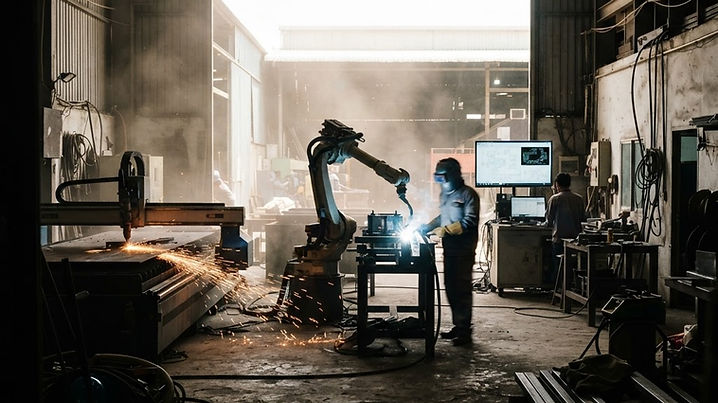
Accelerating Time to Market
The integration of micro AM into the micromolding process yields a significant strategic advantage, particularly when it comes to enhancing market responsiveness. The most conspicuous benefit here is the dramatic reduction in time to market for parts produced through this method. Micro AM can produce soft molds in a fraction of the time of traditional steel molds, effectively condensing the product development cycle. This rapid tooling process means that prototypes can be quickly evaluated, refined, and approved for production without the usual lag, thereby compressing the timeline from concept to commercial availability.
This expedited tooling process afforded by micro AM not only catalyzes the prototyping phase but also propels a quicker transition to production for smaller batches of parts. When parts are needed in the millions, there is no replacement for micromolding now, but the ability to swiftly produce and modify soft molds aligns perfectly with the dynamic nature of market demands, allowing manufacturers to adapt and respond with agility. As a result, products can be introduced into the market at a pace that keeps up with, or even outstrips, consumer expectations and competitive pressures. The implications of this are considerable, offering heavy steel fabrication companies the capability to innovate rapidly, capitalize on emerging trends, and satisfy the ever shortening windows of market opportunity.
Concluding Statement
As we look into the future of manufacturing, the continued integration of 3D printing and micromolding holds the promise of igniting substantial advancements. This integration is poised to not just enhance but potentially redefine the manufacturing paradigms that have stood for decades. The evolution of materials suited for microscale additive manufacturing, alongside advancements in the technology itself, heralds a future where the complexity of micromolded parts will surge, yet the efficiency of their production will simultaneously increase. The manufacturing landscape is approaching an era where the ability to produce complex parts rapidly and cost effectively will not be an extraordinary feat, but a standard expectation.
K999 Thailand carries out work of this kind through its steel fabrication capability team in Rayong.
Further reading
Follow Oil & Gas across the wider market on Project Atlas Intel.
Calculation tool
Run the numbers for this yourself with the free civil engineering calculator from Engineering Toolbox Australia. Treat the result as a first check, then confirm the final design with your engineer.
How K999 can help
How we apply the technology
Faster quoting, cleaner detailing and fewer site surprises come from the tools we use before the first cut, and the articles here explain how those tools change the work.
3D modelling and detailing- 01
3D modelling and shop detailing that resolves clashes before fabrication starts.
- 02
Fibre laser cutting for plate profiles, with nesting planned around the rolling schedule.
- 03
Project management that reports progress against the same model the client approved.
More on Manufacturing & Technology
All articles

Request for quotation
Need fabricated steel to that standard?
Every enquiry is answered within 48 hours by our estimating team in Rayong. The priced quotation follows once drawings, quantities and standards are confirmed. Stainless steel fabrication, structural steel fabrication, pipe spooling, pressure vessels, steel tanks, mining equipment and conveyors, pig launchers, chutes and hoppers, send the package and we will price it.
Before you request a quotation
Steel fabrication quotation questions
What structural steel fabrication, pressure vessel and pipe spooling packages cost, what to send with an enquiry, and how delivery to site works.
Structural steel fabrication is priced from the section and plate tonnage, the detailing and drawing hours, welding and fitting manhours, NDT requirements, blast and coating system, packing and freight. Grade matters as much as weight: AS/NZS, ASTM, JIS and BS sections carry different mill prices, and heavy built up members take longer than rolled sections. Our Rayong workshop produces around 10,000 tonnes of structural steel fabrication a year, so a clear bill of materials is usually enough to price. Send the drawings and we answer within 48 hours; the priced quotation follows once quantities, standards and delivery dates are confirmed.
For steel fabrication work, send the drawings or IFC package, a bill of materials with material grades, the welding and NDT requirements, the coating specification, the delivery port and your site dates. Add the inspection and test plan, any third party inspection requirement, and whether trial assembly or match marking is needed. Where drawings are still in progress, a scope list with sizes, quantities and duty is enough to start, and the estimate is refined once the final package arrives. Every enquiry is answered within 48 hours, and the priced quotation is issued after scope, standards and quantities are confirmed.
Yes. Pressure vessel fabrication is carried out to ASME Section VIII Div. 1 under our ASME U stamp No. 43,462, or to AS/NZS and BS where the project specifies, covering separators, air receivers, water drums, waste heat recovery units and pig launchers. Steel tanks for fuel, biofuel, chemical, water and food duty are designed in house with our E Tank programme to API, ASME, BS and AS/NZS. Because structural steel, vessels, tanks and their supports are built in the same workshops, one enquiry can cover the vessel package, the tank package and the structural steel that carries them, with a single coating and documentation system and one shipment.
Steel fabrication Australia packages are scheduled from a 33,000 m2 Rayong yard with an 80,000 m2 assembly yard inside Sattahip port, so fabrication, trial assembly, blasting, coating and packing run in one place. Programme length depends on tonnage, material lead times, the coating system and inspection scope, and it is confirmed with the quotation. We quote FOB Laem Chabang, Map Ta Phut or Sattahip, or CIF and DAP to your Australian port, with packing lists, weights, lifting points and a data book per shipment. Staged deliveries can follow your site erection sequence instead of shipping everything at once.
There is no fixed minimum. Pipe spooling Australia packages run at up to 3,000 diameter inches per shift on SCH.40, from a single replacement spool to a full plant piping scope, with spools numbered, X rayed where specified and coated to match erection order. Mining equipment fabrication covers chutes, hoppers, ore bins, transfer towers and conveyor structures with Bisalloy, Hardox, rubber lining or hardfacing fitted in house, from one wear liner set to modules of up to 2,500 tonnes assembled at Sattahip. Send the scope list and we will tell you what the smallest sensible batch is for your programme.