


Industry News
Impact of Metal Fabrication on the Unorganized Sector
Small workshops provide flexibility and local employment, but quality consistency and safety remain their biggest gaps.
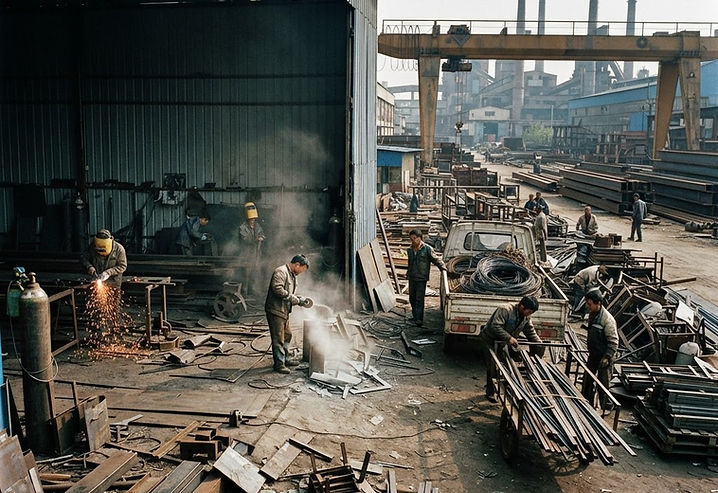
Metal fabrication is a cornerstone of various industries, providing vital components and infrastructure. While this field is often dominated by large, organized enterprises, it also has significant implications for the unorganized sector, an essential yet often overlooked segment of the economy. The unorganized sector, comprising informal businesses and workers without formal contracts, plays a crucial role in job creation and local economies, especially in developing countries. This blog explores how metal fabrication impacts the unorganized sector, addressing its benefits, challenges, and potential for future growth.
Economic Empowerment and Employment Opportunities
One of the most notable impacts of metal fabrication on the unorganized sector is job creation. In many regions, skilled artisans and craftsmen engage in metal fabrication as a primary source of income. These individuals often work in small workshops or operate from their homes, producing everything from simple tools to complex machinery parts, including exotic metal fabrication. By providing employment opportunities, the unorganized sector contributes significantly to poverty alleviation and economic empowerment. The informal nature of these businesses allows workers to quickly adapt to local demands, offering customized solutions that larger firms may overlook. This flexibility enables them to respond to the unique needs of their communities, fostering innovation and creativity. As a result, the unorganized sector becomes a vital part of the local economy, generating income and sustaining livelihoods for countless families.
Accessibility and Affordability

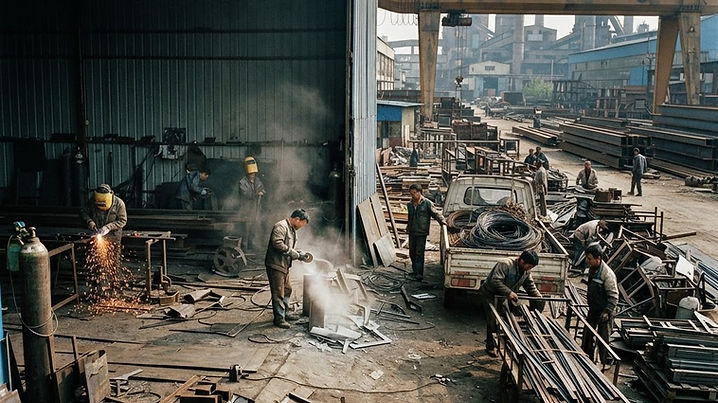
Metal fabrication in the unorganized sector often provides accessible and affordable products to local consumers. Informal fabricators typically operate with lower overhead costs, enabling them to offer competitive prices. This affordability is essential in areas where formal businesses may be scarce or pricing is prohibitive. A family in need of a metal gate, for instance, may find it more economical to approach a local fabricator rather than a larger, formal manufacturer. Moreover, unorganized sector fabricators are more likely to tailor their offerings to meet specific local preferences and needs such as the growing demand of metal fabrication in agriculture. This customization not only strengthens community ties but also reinforces local craftsmanship and cultural identity. In many cases, these artisans produce items that reflect regional styles and traditions, contributing to a vibrant local economy.
Challenges Facing the Unorganized Sector
Despite its numerous benefits, the unorganized sector faces significant challenges. One of the most pressing issues is the lack of regulation and oversight. Informal metal fabricators often operate outside formal labor laws, which can lead to unsafe working conditions, long hours, and inadequate compensation. This has led to the introduction of modern slavery clauses in Australian manufacturing. Workers in this sector may not have access to essential benefits such as health insurance or retirement plans, leaving them vulnerable to economic instability. Quality control is another challenge. While many unorganized fabricators take pride in their workmanship, the absence of formal standards can result in inconsistencies. Some consumers may be hesitant to trust products from informal sources, which can hinder the growth of these businesses. Metal fabrication can pose environmental and safety risks, especially in settings like mining plant and equipment Australia. The use of hazardous materials, improper waste disposal, and insufficient safety measures can lead to pollution and health hazards for workers and local communities.
Closing Comments
The impact of metal fabrication on the unorganized sector is profound, offering both opportunities and challenges. By recognizing and addressing the unique dynamics of this sector, we can unlock its potential to drive economic growth, empower communities, and promote sustainable practices. Supporting structural steel fabrication in the unorganized sector not only helps strengthen local economies but also fosters resilience and innovation in a rapidly changing world. As we look toward the future, a collaborative approach can transform the unorganized sector into a more sustainable and impactful part of the broader economy.
Further reading
Follow project owner and operator data across the wider market on Project Atlas Intel.
Calculation tool
Run the numbers for this yourself with the free engineering calculator australia from Engineering Toolbox Australia. Treat the result as a first check, then confirm the final design with your engineer.
How K999 can help
Where we fit the story
Trade policy, commodity cycles and energy markets decide when projects move, and they decide what gets fabricated. These articles collect the changes we track for our clients.
See our projects- 01
Work delivered for mining, energy, processing and manufacturing clients across Australia and Southeast Asia.
- 02
Fabrication in Rayong with assembly at Sattahip, shipping from Laem Chabang and Map Ta Phut.
- 03
Enquiries answered within 48 hours by our estimating team.
More on Industry News
All articles


Request for quotation
Need fabricated steel to that standard?
Every enquiry is answered within 48 hours by our estimating team in Rayong. The priced quotation follows once drawings, quantities and standards are confirmed. Stainless steel fabrication, structural steel fabrication, pipe spooling, pressure vessels, steel tanks, mining equipment and conveyors, pig launchers, chutes and hoppers, send the package and we will price it.
Before you request a quotation
Steel fabrication quotation questions
What structural steel fabrication, pressure vessel and pipe spooling packages cost, what to send with an enquiry, and how delivery to site works.
Structural steel fabrication is priced from the section and plate tonnage, the detailing and drawing hours, welding and fitting manhours, NDT requirements, blast and coating system, packing and freight. Grade matters as much as weight: AS/NZS, ASTM, JIS and BS sections carry different mill prices, and heavy built up members take longer than rolled sections. Our Rayong workshop produces around 10,000 tonnes of structural steel fabrication a year, so a clear bill of materials is usually enough to price. Send the drawings and we answer within 48 hours; the priced quotation follows once quantities, standards and delivery dates are confirmed.
For steel fabrication work, send the drawings or IFC package, a bill of materials with material grades, the welding and NDT requirements, the coating specification, the delivery port and your site dates. Add the inspection and test plan, any third party inspection requirement, and whether trial assembly or match marking is needed. Where drawings are still in progress, a scope list with sizes, quantities and duty is enough to start, and the estimate is refined once the final package arrives. Every enquiry is answered within 48 hours, and the priced quotation is issued after scope, standards and quantities are confirmed.
Yes. Pressure vessel fabrication is carried out to ASME Section VIII Div. 1 under our ASME U stamp No. 43,462, or to AS/NZS and BS where the project specifies, covering separators, air receivers, water drums, waste heat recovery units and pig launchers. Steel tanks for fuel, biofuel, chemical, water and food duty are designed in house with our E Tank programme to API, ASME, BS and AS/NZS. Because structural steel, vessels, tanks and their supports are built in the same workshops, one enquiry can cover the vessel package, the tank package and the structural steel that carries them, with a single coating and documentation system and one shipment.
Steel fabrication Australia packages are scheduled from a 33,000 m2 Rayong yard with an 80,000 m2 assembly yard inside Sattahip port, so fabrication, trial assembly, blasting, coating and packing run in one place. Programme length depends on tonnage, material lead times, the coating system and inspection scope, and it is confirmed with the quotation. We quote FOB Laem Chabang, Map Ta Phut or Sattahip, or CIF and DAP to your Australian port, with packing lists, weights, lifting points and a data book per shipment. Staged deliveries can follow your site erection sequence instead of shipping everything at once.
There is no fixed minimum. Pipe spooling Australia packages run at up to 3,000 diameter inches per shift on SCH.40, from a single replacement spool to a full plant piping scope, with spools numbered, X rayed where specified and coated to match erection order. Mining equipment fabrication covers chutes, hoppers, ore bins, transfer towers and conveyor structures with Bisalloy, Hardox, rubber lining or hardfacing fitted in house, from one wear liner set to modules of up to 2,500 tonnes assembled at Sattahip. Send the scope list and we will tell you what the smallest sensible batch is for your programme.