


Manufacturing & Technology
Innovations in Medical Manufacturing
Cleanroom fabrication, additive implants and automated inspection are lifting precision and traceability in medical manufacturing.
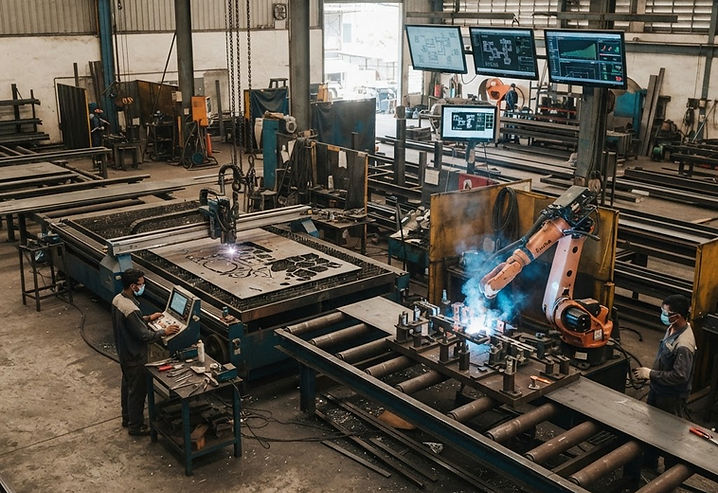
In the realm of healthcare, advancements in medical manufacturing play a pivotal role in transforming how we diagnose, treat, and manage various medical conditions. There has been a growth of medical manufacturing in countries like Australia. From cutting edge technologies to novel materials and streamlined production processes, innovations in medical manufacturing are not only enhancing the efficiency and effectiveness of healthcare delivery but also shaping the future of medicine itself. This blog will take a deeper look at this interesting subject.
3D Printing and Rapid Prototyping
One of the most transformative innovations in medical manufacturing is 3D printing, also known as additive manufacturing. This technology has revolutionized the production of medical devices, prosthetics, and even pharmaceuticals. Unlike traditional manufacturing methods, which often involve subtractive processes and the limitations of mass production, 3D printing allows for the creation of complex geometries with unparalleled precision. In healthcare, 3D printing enables the fabrication of patient specific implants and prosthetics tailored to individual anatomy. Surgeons can now use 3D printed models of a patient’s organ or bone structure to plan and practice complex surgeries beforehand, significantly reducing surgical risks and improving outcomes. For example, titanium implants can be 3D printed to match the exact dimensions and contours of a patient’s bone, promoting faster healing and better integration.
Usage of Smart Materials

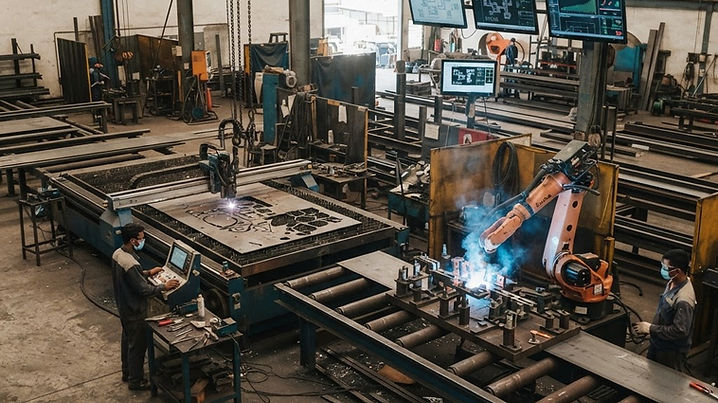
Advancements in materials science, particularly in the development of smart materials and nanotechnology, are opening new frontiers in medical treatment. Smart materials can respond to changes in their environment or interact with biological systems, making them ideal for controlled drug delivery systems and implantable devices. Nanotechnology has enabled the development of nano scale devices and sensors that can detect biomarkers at early stages of disease, offering opportunities for early diagnosis and targeted treatment. These tiny devices are also being explored for their potential in regenerative medicine, where they could aid in tissue repair and regeneration at the cellular level.
Data Driven Healthcare
The integration of data analytics and artificial intelligence (AI) into medical manufacturing is revolutionizing healthcare delivery through personalized medicine and predictive analytics. By analysing vast amounts of patient data, AI can transform manufacturing by identifying patterns and correlations that help healthcare providers tailor treatments to individual patients’ needs and predict disease progression. In manufacturing, AI powered systems optimize production schedules, predict equipment maintenance needs, and ensure regulatory compliance, thereby improving operational efficiency and reducing costs. Real time data analytics also enable continuous quality monitoring throughout the manufacturing process, ensuring that medical devices and pharmaceuticals meet stringent safety and efficacy standards.
Impact of Sustainability Practices
In addition to technological advancements, there is a growing emphasis on sustainability within the medical manufacturing sector. Innovations in materials and production processes are reducing the environmental impact of healthcare practices. For example, the development of biodegradable materials for implants and packaging materials helps minimize waste and pollution. Furthermore, initiatives to optimize energy use in manufacturing facilities and reduce carbon footprints are gaining traction. By adopting sustainable practices, steel fabrication Australia is not only contributing to environmental conservation but also ensuring long term viability and resilience in the face of global challenges.
Conclusion
Looking forward, the future of medical manufacturing holds exciting possibilities. Emerging technologies such as bioprinting, which involves the printing of living tissues and organs, could revolutionize transplantation and regenerative medicine. Furthermore, advancements in augmented reality and virtual reality are enhancing surgical training and patient education, fostering a more informed and engaged healthcare ecosystem. In conclusion, innovations in medical manufacturing are reshaping the landscape of healthcare by advancing personalized medicine, improving treatment outcomes, and optimizing operational efficiency. As these technologies continue to evolve, their integration into clinical practice holds the promise of a healthier, more sustainable future.
K999 Thailand carries out work of this kind through its steel fabrication capability team in Rayong.
Further reading
Follow gigafactory projects in the US across the wider market on Project Atlas Intel.
Calculation tool
Run the numbers for this yourself with the free mechanical engineering calculator from Engineering Toolbox Australia. Treat the result as a first check, then confirm the final design with your engineer.
How K999 can help
How we apply the technology
Faster quoting, cleaner detailing and fewer site surprises come from the tools we use before the first cut, and the articles here explain how those tools change the work.
3D modelling and detailing- 01
3D modelling and shop detailing that resolves clashes before fabrication starts.
- 02
Fibre laser cutting for plate profiles, with nesting planned around the rolling schedule.
- 03
Project management that reports progress against the same model the client approved.
More on Manufacturing & Technology
All articles

Request for quotation
Need fabricated steel to that standard?
Every enquiry is answered within 48 hours by our estimating team in Rayong. The priced quotation follows once drawings, quantities and standards are confirmed. Stainless steel fabrication, structural steel fabrication, pipe spooling, pressure vessels, steel tanks, mining equipment and conveyors, pig launchers, chutes and hoppers, send the package and we will price it.
Before you request a quotation
Steel fabrication quotation questions
What structural steel fabrication, pressure vessel and pipe spooling packages cost, what to send with an enquiry, and how delivery to site works.
Structural steel fabrication is priced from the section and plate tonnage, the detailing and drawing hours, welding and fitting manhours, NDT requirements, blast and coating system, packing and freight. Grade matters as much as weight: AS/NZS, ASTM, JIS and BS sections carry different mill prices, and heavy built up members take longer than rolled sections. Our Rayong workshop produces around 10,000 tonnes of structural steel fabrication a year, so a clear bill of materials is usually enough to price. Send the drawings and we answer within 48 hours; the priced quotation follows once quantities, standards and delivery dates are confirmed.
For steel fabrication work, send the drawings or IFC package, a bill of materials with material grades, the welding and NDT requirements, the coating specification, the delivery port and your site dates. Add the inspection and test plan, any third party inspection requirement, and whether trial assembly or match marking is needed. Where drawings are still in progress, a scope list with sizes, quantities and duty is enough to start, and the estimate is refined once the final package arrives. Every enquiry is answered within 48 hours, and the priced quotation is issued after scope, standards and quantities are confirmed.
Yes. Pressure vessel fabrication is carried out to ASME Section VIII Div. 1 under our ASME U stamp No. 43,462, or to AS/NZS and BS where the project specifies, covering separators, air receivers, water drums, waste heat recovery units and pig launchers. Steel tanks for fuel, biofuel, chemical, water and food duty are designed in house with our E Tank programme to API, ASME, BS and AS/NZS. Because structural steel, vessels, tanks and their supports are built in the same workshops, one enquiry can cover the vessel package, the tank package and the structural steel that carries them, with a single coating and documentation system and one shipment.
Steel fabrication Australia packages are scheduled from a 33,000 m2 Rayong yard with an 80,000 m2 assembly yard inside Sattahip port, so fabrication, trial assembly, blasting, coating and packing run in one place. Programme length depends on tonnage, material lead times, the coating system and inspection scope, and it is confirmed with the quotation. We quote FOB Laem Chabang, Map Ta Phut or Sattahip, or CIF and DAP to your Australian port, with packing lists, weights, lifting points and a data book per shipment. Staged deliveries can follow your site erection sequence instead of shipping everything at once.
There is no fixed minimum. Pipe spooling Australia packages run at up to 3,000 diameter inches per shift on SCH.40, from a single replacement spool to a full plant piping scope, with spools numbered, X rayed where specified and coated to match erection order. Mining equipment fabrication covers chutes, hoppers, ore bins, transfer towers and conveyor structures with Bisalloy, Hardox, rubber lining or hardfacing fitted in house, from one wear liner set to modules of up to 2,500 tonnes assembled at Sattahip. Send the scope list and we will tell you what the smallest sensible batch is for your programme.