


Manufacturing & Technology
Lean is the Future of Manufacturing
Flow, standard work and visual control cut work in progress in fabrication bays with long cycle assemblies.
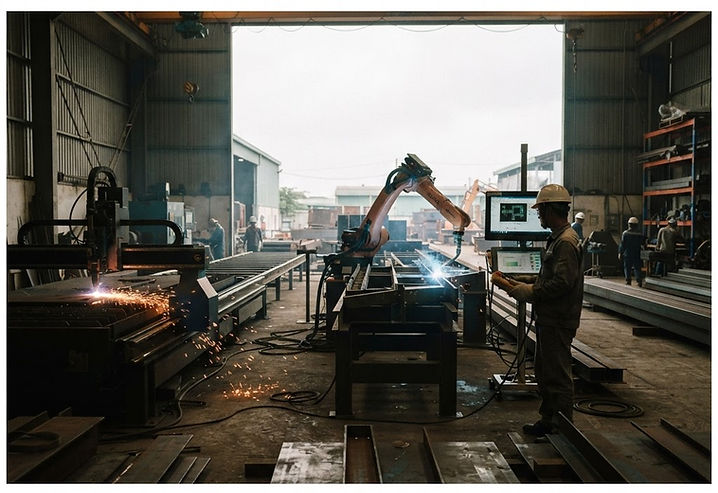
Lean, a system that reduces production and response times from suppliers to customers, is continuing to transform the manufacturing industry through its focus on efficiency, productivity, and the reduction of waste for producers and suppliers of goods. Amazon, Toyota, and other major corporations are strong proponents of applying the principles of lean to their business. To satisfy a customer base that wants it “now,” Amazon took all their processes apart and found myriad ways to eliminate waste, which for lean manufacturing can mean everything from reevaluating the materials required for producing and shipping a product, to the processes used to get that product from design to customer. Reducing wait times and eliminating extraneous handling and labour through lean improves the bottom line. The capital saved can then be reinvested in new and better products and processes to further improve the customer experience, which in turn fuels business growth.
Out With the Old
The lean manufacturing journey begins by recognizing that the old way of running operations may be holding the company back, and potentially making one less competitive in the marketplace. A heavy steel fabrication company needs to be willing to invest the time and capital needed, or it will result in a failed effort. Once the budget has been set, spend some time identifying areas of waste. This can include wait times, unnecessary processing, overproduction, human movement, excess inventory, and task complexity. Next, set expectations within the company that innovative change such as work sampling is coming, and how everyone will benefit from the forthcoming improvements.
Build a New Pyramid

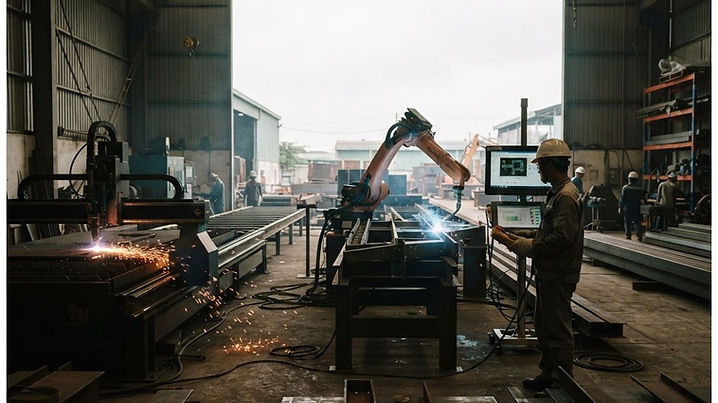
The first step is to reevaluate the current work pyramid. In traditional manufacturing and structural steel fabrication organizations, the base of the pyramid typically consists of line workers, while the company’s CEO and executive team sit at the top. The new, “lean” way of thinking flips that pyramid, so now, the most important people, those who will be responsible for the company’s continuous improvement, are the line workers. Acceptance of cultural change is important, else manufacturing processes such as heat induction bending services will not be successful. One will end up wasting a lot of money on some shiny new tools that ultimately will not deliver what was being expected. But if one can get over that hurdle, the rest is smooth sailing by comparison.
Hire a Good Coach
To identify the cultural changes the manufacturing organization is going to need to make, it is essential to hire a qualified coach. Comparable to a fitness trainer, a good coach stays for six months or more to teach everything required to know to get into lean shape. They will evaluate the current organizational structure, identify areas of inefficiency, teach teams ways to recognize the importance of communication, coach them through the business transformation, and get everybody working on a continuous improvement path.
Prepare for the Journey
Be ready for the long haul. Once the inefficiencies are identified, develop new repeatable processes designed to eliminate that waste. This includes creating revised roles and responsibilities and ensuring everybody knows their place in the new organizational structure. From there, move on to value stream mapping, where every step of a given process is diagrammed including updating standard work roles and responsibilities for everyone within the company. And do not forget to incorporate suppliers into the new processes. Their symbiotic cooperation will help to strengthen the existing relationship and further propel manufacturing operations. And lastly, strive for continuous improvement, because doing so will uncover never ending opportunities to improve the company.
Closing Thoughts
Lean manufacturing is a paradigm shift. During that transformation, manufacturers and steel fabrication Australia will find that some employees are set in their ways and will question the need for change. However, once the new organizational mechanics are in place, expect employee morale to improve significantly, because everyone at all layers in the company will feel like valued contributors, which leads to improved productivity. However, it is important to understand that lean manufacturing is not something that happens overnight. Remember, this is a journey, not a sprint!
K999 Thailand carries out work of this kind through its steel fabrication capability team in Rayong.
Further reading
Follow Power Generation across the wider market on Project Atlas Intel.
Calculation tool
Run the numbers for this yourself with the free engineering standards explained from Engineering Toolbox Australia. Treat the result as a first check, then confirm the final design with your engineer.
How K999 can help
How we apply the technology
Faster quoting, cleaner detailing and fewer site surprises come from the tools we use before the first cut, and the articles here explain how those tools change the work.
3D modelling and detailing- 01
3D modelling and shop detailing that resolves clashes before fabrication starts.
- 02
Fibre laser cutting for plate profiles, with nesting planned around the rolling schedule.
- 03
Project management that reports progress against the same model the client approved.
More on Manufacturing & Technology
All articles

Request for quotation
Need fabricated steel to that standard?
Every enquiry is answered within 48 hours by our estimating team in Rayong. The priced quotation follows once drawings, quantities and standards are confirmed. Stainless steel fabrication, structural steel fabrication, pipe spooling, pressure vessels, steel tanks, mining equipment and conveyors, pig launchers, chutes and hoppers, send the package and we will price it.
Before you request a quotation
Steel fabrication quotation questions
What structural steel fabrication, pressure vessel and pipe spooling packages cost, what to send with an enquiry, and how delivery to site works.
Structural steel fabrication is priced from the section and plate tonnage, the detailing and drawing hours, welding and fitting manhours, NDT requirements, blast and coating system, packing and freight. Grade matters as much as weight: AS/NZS, ASTM, JIS and BS sections carry different mill prices, and heavy built up members take longer than rolled sections. Our Rayong workshop produces around 10,000 tonnes of structural steel fabrication a year, so a clear bill of materials is usually enough to price. Send the drawings and we answer within 48 hours; the priced quotation follows once quantities, standards and delivery dates are confirmed.
For steel fabrication work, send the drawings or IFC package, a bill of materials with material grades, the welding and NDT requirements, the coating specification, the delivery port and your site dates. Add the inspection and test plan, any third party inspection requirement, and whether trial assembly or match marking is needed. Where drawings are still in progress, a scope list with sizes, quantities and duty is enough to start, and the estimate is refined once the final package arrives. Every enquiry is answered within 48 hours, and the priced quotation is issued after scope, standards and quantities are confirmed.
Yes. Pressure vessel fabrication is carried out to ASME Section VIII Div. 1 under our ASME U stamp No. 43,462, or to AS/NZS and BS where the project specifies, covering separators, air receivers, water drums, waste heat recovery units and pig launchers. Steel tanks for fuel, biofuel, chemical, water and food duty are designed in house with our E Tank programme to API, ASME, BS and AS/NZS. Because structural steel, vessels, tanks and their supports are built in the same workshops, one enquiry can cover the vessel package, the tank package and the structural steel that carries them, with a single coating and documentation system and one shipment.
Steel fabrication Australia packages are scheduled from a 33,000 m2 Rayong yard with an 80,000 m2 assembly yard inside Sattahip port, so fabrication, trial assembly, blasting, coating and packing run in one place. Programme length depends on tonnage, material lead times, the coating system and inspection scope, and it is confirmed with the quotation. We quote FOB Laem Chabang, Map Ta Phut or Sattahip, or CIF and DAP to your Australian port, with packing lists, weights, lifting points and a data book per shipment. Staged deliveries can follow your site erection sequence instead of shipping everything at once.
There is no fixed minimum. Pipe spooling Australia packages run at up to 3,000 diameter inches per shift on SCH.40, from a single replacement spool to a full plant piping scope, with spools numbered, X rayed where specified and coated to match erection order. Mining equipment fabrication covers chutes, hoppers, ore bins, transfer towers and conveyor structures with Bisalloy, Hardox, rubber lining or hardfacing fitted in house, from one wear liner set to modules of up to 2,500 tonnes assembled at Sattahip. Send the scope list and we will tell you what the smallest sensible batch is for your programme.