


Manufacturing & Technology
Manufacturing Evolution Over Last Five Years
Automation, digital records and supply volatility reshaped manufacturing priorities between 2019 and 2024.
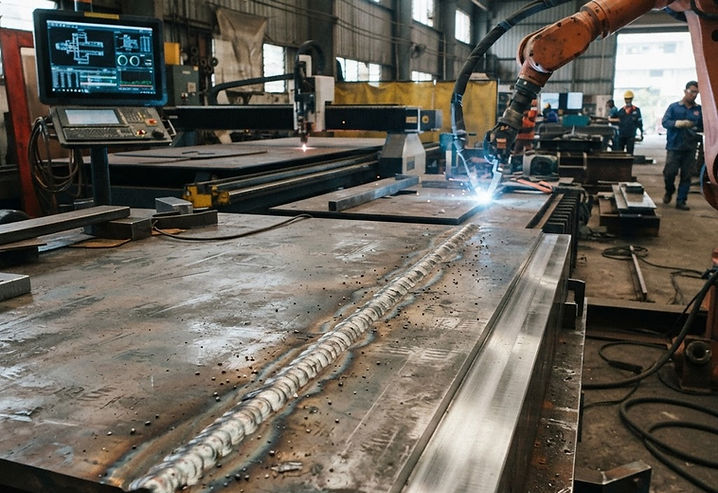
The manufacturing industry has undergone significant transformation over the past five years, marked by technological advancements, shifting global dynamics, and evolving consumer preferences. From the rise of Industry 4.0 to the challenges posed by geopolitical uncertainties and the COVID 19 pandemic, manufacturers have navigated a rapidly changing landscape. In this blog, we delve into key trends and developments that have shaped the manufacturing sector over the last half decade, highlighting both challenges and opportunities that have emerged.
Embrace of Industry 4.0 Technologies
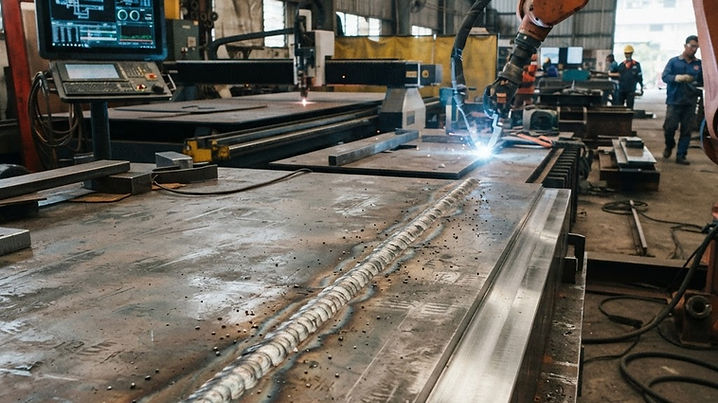
The past five years have witnessed a widespread adoption of Industry 4.0 technologies across the manufacturing sector. From advanced robotics and automation to Internet of Things (IoT) devices and artificial intelligence (AI), manufacturers have embraced digital transformation to enhance efficiency, productivity, and flexibility. Smart factories equipped with interconnected systems and data analytics capabilities have revolutionized production processes, enabling real time monitoring, predictive maintenance, and agile manufacturing.
Reshoring and Supply Chain Resilience
The COVID 19 pandemic exposed vulnerabilities in global supply chains, prompting many manufacturers to reconsider their sourcing strategies. Over the last five years, there has been a trend towards reshoring and nearshoring as companies seek to mitigate risks associated with disruptions and strengthen postpandemic supply chains. Building resilience into supply chains through diversification, localization, and closer collaboration with suppliers has become a priority for manufacturers looking to enhance agility and responsiveness to market fluctuations.

Sustainability and Circular Economy
Environmental sustainability has emerged as a key focus area for the manufacturing industry in recent years. With increasing awareness of climate change and resource scarcity, manufacturers are embracing sustainable practices to minimize environmental impact and meet regulatory requirements. The concept of the circular economy, which aims to reduce waste and maximize resource efficiency through recycling and reuse, has gained traction within the manufacturing sector. Companies are investing in eco friendly technologies such as heat induction bending services, renewable energy sources, and closed loop systems to minimize waste generation and carbon emissions.
Resilience Amidst Disruptions
The manufacturing industry has faced numerous disruptions over the past five years, including trade tensions, natural disasters, and the COVID 19 pandemic. These disruptions have underscored the importance of resilience and adaptability in manufacturing operations. Heavy steel fabrication companies that have invested in digitalization, supply chain visibility, and risk management have been better equipped to weather the storm and pivot swiftly in response to changing market conditions. The ability to anticipate and mitigate risks will continue to be critical for manufacturers in the years ahead.
Skills Gap and Workforce Development
As manufacturing becomes increasingly digitized and automated, there is a growing need for a skilled workforce capable of leveraging advanced technologies. However, a widening skills gap has been a challenge facing the metal fabrication industry, with shortages of workers trained in STEM (science, technology, engineering, and mathematics) disciplines and digital skills. Over the last five years, manufacturers have ramped up efforts to address this challenge through investments in workforce training, apprenticeship programs, and partnerships with educational institutions. Building a talent pipeline equipped for the demands of modern manufacturing will be essential for future growth and innovation.
Closing Comments
The past five years have been transformative for the manufacturing industry, characterized by technological innovation, supply chain disruptions, and a heightened focus on sustainability and resilience. As manufacturers navigate the challenges and opportunities of a rapidly evolving landscape, adaptability, agility, and forward thinking will be key to driving success in the years to come. By embracing digitalization, prioritizing sustainability, and investing in talent development, manufacturers can position themselves for continued growth and competitiveness in an ever changing global marketplace.
K999 Thailand carries out work of this kind through its steel fabrication capability team in Rayong.
Further reading
Follow FEED and FID tracking across the wider market on Project Atlas Intel.
How K999 can help
How we apply the technology
Faster quoting, cleaner detailing and fewer site surprises come from the tools we use before the first cut, and the articles here explain how those tools change the work.
3D modelling and detailing- 01
3D modelling and shop detailing that resolves clashes before fabrication starts.
- 02
Fibre laser cutting for plate profiles, with nesting planned around the rolling schedule.
- 03
Project management that reports progress against the same model the client approved.
More on Manufacturing & Technology
All articles

Request for quotation
Need fabricated steel to that standard?
Every enquiry is answered within 48 hours by our estimating team in Rayong. The priced quotation follows once drawings, quantities and standards are confirmed. Stainless steel fabrication, structural steel fabrication, pipe spooling, pressure vessels, steel tanks, mining equipment and conveyors, pig launchers, chutes and hoppers, send the package and we will price it.
Before you request a quotation
Steel fabrication quotation questions
What structural steel fabrication, pressure vessel and pipe spooling packages cost, what to send with an enquiry, and how delivery to site works.
Structural steel fabrication is priced from the section and plate tonnage, the detailing and drawing hours, welding and fitting manhours, NDT requirements, blast and coating system, packing and freight. Grade matters as much as weight: AS/NZS, ASTM, JIS and BS sections carry different mill prices, and heavy built up members take longer than rolled sections. Our Rayong workshop produces around 10,000 tonnes of structural steel fabrication a year, so a clear bill of materials is usually enough to price. Send the drawings and we answer within 48 hours; the priced quotation follows once quantities, standards and delivery dates are confirmed.
For steel fabrication work, send the drawings or IFC package, a bill of materials with material grades, the welding and NDT requirements, the coating specification, the delivery port and your site dates. Add the inspection and test plan, any third party inspection requirement, and whether trial assembly or match marking is needed. Where drawings are still in progress, a scope list with sizes, quantities and duty is enough to start, and the estimate is refined once the final package arrives. Every enquiry is answered within 48 hours, and the priced quotation is issued after scope, standards and quantities are confirmed.
Yes. Pressure vessel fabrication is carried out to ASME Section VIII Div. 1 under our ASME U stamp No. 43,462, or to AS/NZS and BS where the project specifies, covering separators, air receivers, water drums, waste heat recovery units and pig launchers. Steel tanks for fuel, biofuel, chemical, water and food duty are designed in house with our E Tank programme to API, ASME, BS and AS/NZS. Because structural steel, vessels, tanks and their supports are built in the same workshops, one enquiry can cover the vessel package, the tank package and the structural steel that carries them, with a single coating and documentation system and one shipment.
Steel fabrication Australia packages are scheduled from a 33,000 m2 Rayong yard with an 80,000 m2 assembly yard inside Sattahip port, so fabrication, trial assembly, blasting, coating and packing run in one place. Programme length depends on tonnage, material lead times, the coating system and inspection scope, and it is confirmed with the quotation. We quote FOB Laem Chabang, Map Ta Phut or Sattahip, or CIF and DAP to your Australian port, with packing lists, weights, lifting points and a data book per shipment. Staged deliveries can follow your site erection sequence instead of shipping everything at once.
There is no fixed minimum. Pipe spooling Australia packages run at up to 3,000 diameter inches per shift on SCH.40, from a single replacement spool to a full plant piping scope, with spools numbered, X rayed where specified and coated to match erection order. Mining equipment fabrication covers chutes, hoppers, ore bins, transfer towers and conveyor structures with Bisalloy, Hardox, rubber lining or hardfacing fitted in house, from one wear liner set to modules of up to 2,500 tonnes assembled at Sattahip. Send the scope list and we will tell you what the smallest sensible batch is for your programme.