


Manufacturing & Technology
Manufacturing SMEs Must Take Cybersecurity Seriously
With manufacturing facing an unprecedented onslaught of cyberattacks, investment in the cyber status of manufacturing has never been more important.
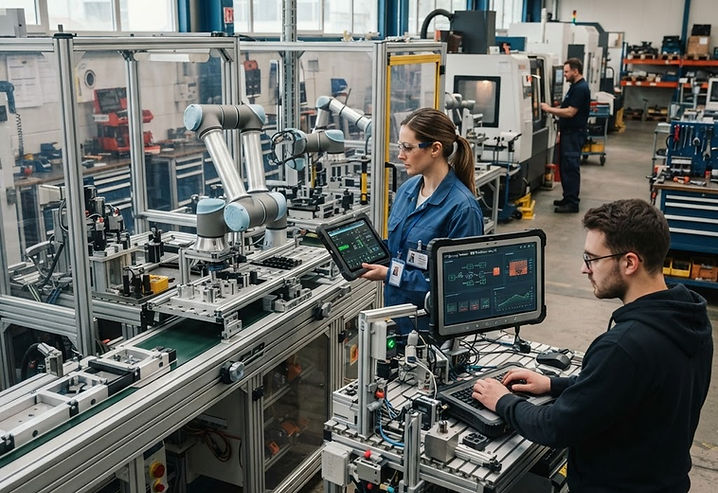
With manufacturing facing an unprecedented onslaught of cyberattacks, investment in the cyber status of manufacturing has never been more important. But now there is one more reason, and a very personal one for directors: the growing risk of serious penalties and even jail time in cases of gross negligence. The Australian federal government has been ramping up privacy and cybersecurity rules in recent years, most recently with the Notifiable Data Breaches scheme and the Security of Critical Infrastructure Act. Harsh penalties cannot be dismissed as a problem just for big businesses. Companies with turnovers of $3 million or more can be subject to fines of up to $50 million for the business, with directors liable for up to $2.5 million, removal from the board, or even imprisonment for gross negligence leading to significant financial loss or damage to shareholder value.
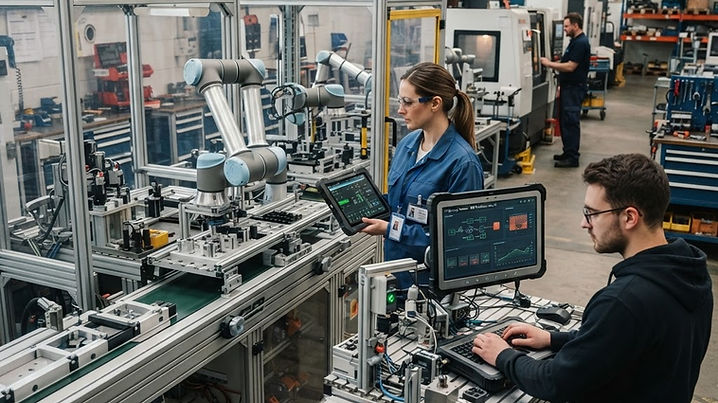
Authorities are gearing up for enforcement, with ASIC Chairman Joe Longo telling The Australian Financial Review Cyber Summit in September 2023 that “cyber resilience has got to be a top priority.” “If things go wrong, ASIC will be looking for the right case where company directors and boards failed to take reasonable steps, or make reasonable investments proportionate to the risks that their business poses,” Mr. Longo said. “I can assure you that in the right case ASIC will commence proceedings if we have reason to believe those steps were not taken.” Manufacturers and steel fabrication Australia tend to focus on making things. But it is imperative they also protect their data because they are extremely susceptible to cybercrime.
According to IBM’s X Force Threat Intelligence Report, manufacturing has the dubious honour of being the most attacked industry by cybercriminals, for the third consecutive year. The report found that last year, manufacturers made up more than 25% of security incidents. Malware attacks, which include ransomware, were the most common. According to IBM’s report, security fundamentals such as patching, multifactor authentication, or least privilege principles can prevent 85% of incidents. But manufacturers are not always doing these things. This points to serious breaches in cybersecurity for the industry. The reason 34% of manufacturers and heavy steel fabrication companies pay a ransom? They cannot afford downtime. In a marker of the urgency around cybersecurity, “Cybersecurity Strategies for SME Manufacturers” featured as the closing keynote at the Central Innovations inaugural Manufacturing Innovation Thought Leadership Conference in May.
Strategic Adviser to Corporate IT and manufacturing Shane Williams talked about how SME manufacturers can navigate the complexities of digital transformation and the imperative for robust cybersecurity measures. Issues such as resolving data issues, ensuring secure communication, and developing effective cybersecurity strategies were discussed, along with practical steps for safeguarding digital assets without requiring deep technical knowledge. He gave the example of a cyberattack where a phishing email reached a pressure vessels manufacturer’s finance department, intercepting an invoice resulting in payment to a different bank account. Once the client found out, they shut down their account. Because of a long standing relationship, the company recovered eventually. “It took them two years to get back their market share from one incident that lasted for one day, for one invoice,” Mr. Williams said. “It’s not the $15,000 invoice that’s the problem or the $20,000 in forensic IT to fix it; it’s two years’ worth of lost revenue from your biggest customer and the reputational damage.”
K999 Thailand carries out work of this kind through its steel fabrication capability team in Rayong.
Further reading
Follow Renewable Energy across the wider market on Project Atlas Intel.
How K999 can help
How we apply the technology
Faster quoting, cleaner detailing and fewer site surprises come from the tools we use before the first cut, and the articles here explain how those tools change the work.
3D modelling and detailing- 01
3D modelling and shop detailing that resolves clashes before fabrication starts.
- 02
Fibre laser cutting for plate profiles, with nesting planned around the rolling schedule.
- 03
Project management that reports progress against the same model the client approved.
More on Manufacturing & Technology
All articles

Request for quotation
Need fabricated steel to that standard?
Every enquiry is answered within 48 hours by our estimating team in Rayong. The priced quotation follows once drawings, quantities and standards are confirmed. Stainless steel fabrication, structural steel fabrication, pipe spooling, pressure vessels, steel tanks, mining equipment and conveyors, pig launchers, chutes and hoppers, send the package and we will price it.
Before you request a quotation
Steel fabrication quotation questions
What structural steel fabrication, pressure vessel and pipe spooling packages cost, what to send with an enquiry, and how delivery to site works.
Structural steel fabrication is priced from the section and plate tonnage, the detailing and drawing hours, welding and fitting manhours, NDT requirements, blast and coating system, packing and freight. Grade matters as much as weight: AS/NZS, ASTM, JIS and BS sections carry different mill prices, and heavy built up members take longer than rolled sections. Our Rayong workshop produces around 10,000 tonnes of structural steel fabrication a year, so a clear bill of materials is usually enough to price. Send the drawings and we answer within 48 hours; the priced quotation follows once quantities, standards and delivery dates are confirmed.
For steel fabrication work, send the drawings or IFC package, a bill of materials with material grades, the welding and NDT requirements, the coating specification, the delivery port and your site dates. Add the inspection and test plan, any third party inspection requirement, and whether trial assembly or match marking is needed. Where drawings are still in progress, a scope list with sizes, quantities and duty is enough to start, and the estimate is refined once the final package arrives. Every enquiry is answered within 48 hours, and the priced quotation is issued after scope, standards and quantities are confirmed.
Yes. Pressure vessel fabrication is carried out to ASME Section VIII Div. 1 under our ASME U stamp No. 43,462, or to AS/NZS and BS where the project specifies, covering separators, air receivers, water drums, waste heat recovery units and pig launchers. Steel tanks for fuel, biofuel, chemical, water and food duty are designed in house with our E Tank programme to API, ASME, BS and AS/NZS. Because structural steel, vessels, tanks and their supports are built in the same workshops, one enquiry can cover the vessel package, the tank package and the structural steel that carries them, with a single coating and documentation system and one shipment.
Steel fabrication Australia packages are scheduled from a 33,000 m2 Rayong yard with an 80,000 m2 assembly yard inside Sattahip port, so fabrication, trial assembly, blasting, coating and packing run in one place. Programme length depends on tonnage, material lead times, the coating system and inspection scope, and it is confirmed with the quotation. We quote FOB Laem Chabang, Map Ta Phut or Sattahip, or CIF and DAP to your Australian port, with packing lists, weights, lifting points and a data book per shipment. Staged deliveries can follow your site erection sequence instead of shipping everything at once.
There is no fixed minimum. Pipe spooling Australia packages run at up to 3,000 diameter inches per shift on SCH.40, from a single replacement spool to a full plant piping scope, with spools numbered, X rayed where specified and coated to match erection order. Mining equipment fabrication covers chutes, hoppers, ore bins, transfer towers and conveyor structures with Bisalloy, Hardox, rubber lining or hardfacing fitted in house, from one wear liner set to modules of up to 2,500 tonnes assembled at Sattahip. Send the scope list and we will tell you what the smallest sensible batch is for your programme.