


Industry News
Metal Fabrication in Warfare
Conflict drives demand for armour, bridging and repair fabrication, and history shows how fast that demand reshapes shops.
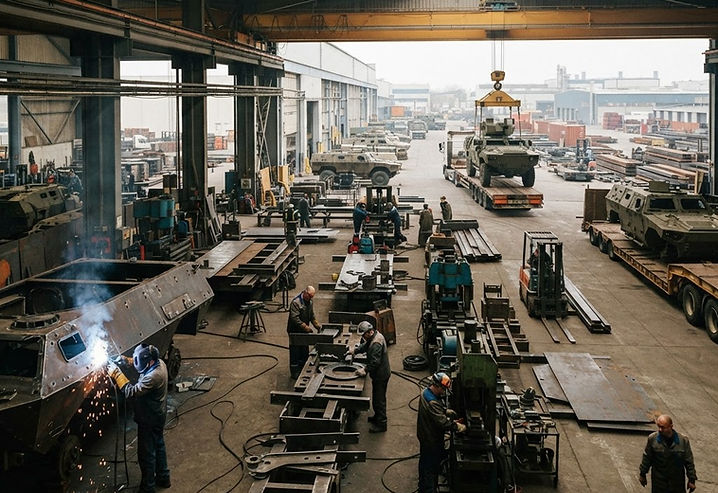
In the crucible of warfare, the quality of equipment and technology often determines the outcome of battles and wars. One of the unsung heroes of military prowess is metal fabrication. This process, which involves shaping and assembling metal parts to create everything from simple tools to complex machinery, has played a pivotal role in both historical and modern conflicts.
Historical Foundations
The roots of metal fabrication in warfare can be traced back to ancient times. During the Bronze Age, the development of bronze weapons marked a significant technological leap. Soldiers armed with bronze swords and shields had a distinct advantage over their adversaries wielding stone or wooden weapons. The evolution from bronze to iron, and later steel, further revolutionized combat. The ability to forge stronger, more durable weapons and armor using hand tools for sheet metal fabrication gave armies a crucial edge. Medieval warfare saw advancements in metalworking techniques. Blacksmiths became central figures, crafting everything from swords and armor to siege weapons like catapults and trebuchets. The advent of gunpowder and firearms in the late medieval period shifted the focus of metal fabrication to produce cannons, muskets, and other artillery pieces. The skill and precision involved in these creations directly impacted the effectiveness of military technology.
Industrial Age Innovations

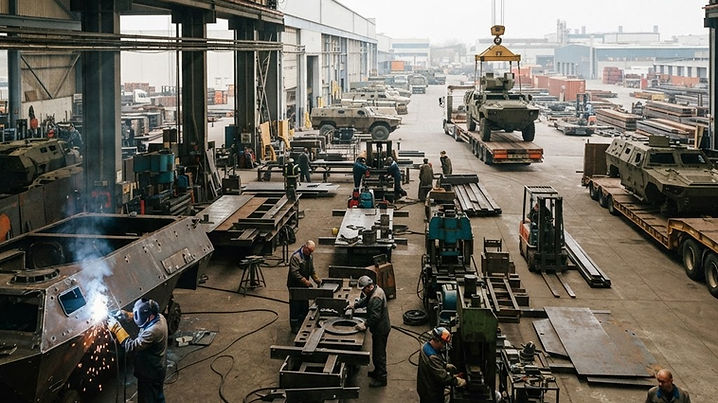
The Industrial Revolution brought about a seismic shift in metal fabrication, significantly altering warfare. The introduction of mass production techniques allowed for the rapid and efficient manufacture of military equipment. Factories began churning out rifles, ammunition, water tanks and vehicles on an unprecedented scale. This period also saw the advent of ironclad warships, which were the first steam powered naval vessels protected by metal armor, marking the end of the wooden warship era. World War I further highlighted the importance of pipe fabrication Australia in warfare. The conflict introduced new technologies, such as tanks and airplanes, both of which relied heavily on metalworking. The creation of these machines required not only innovative design but also precise metal fabrication techniques. Tanks, with their armored plates and complex mechanisms, represented a major leap in military engineering, while airplanes required lightweight yet sturdy metal frames for effective performance in the air.
World War II and Beyond
World War II was a testament to the critical role of metal fabrication. The war effort necessitated the production of vast quantities of metal goods, including everything from small arms to massive warships and aircraft. Factories were retooled to focus on wartime production, and techniques such as heat induction bending services advanced rapidly. The war saw the development of new alloys and improved manufacturing processes that enhanced the durability and effectiveness of military equipment. The postwar era continued to build on these advancements. The Cold War era saw the development of even more sophisticated weapons systems, including nuclear submarines and advanced fighter jets. The importance of metal fabrication extended beyond conventional warfare to include precision engineering for space exploration and satellite technology, areas where high quality metal parts are essential. In contemporary warfare, metal fabrication remains at the forefront of military technology. Modern armed forces rely on a wide array of equipment, from advanced tanks and armored vehicles to drones and stealth aircraft. The precision and efficiency of metal fabrication have only improved with the advent of computer aided design (CAD) and advanced postprocessing techniques in additive manufacturing, which allows to produce complex metal parts with unprecedented accuracy.
Finishing Touches
Steel fabrication has been, and continues to be, a cornerstone of military technology and strategy. From ancient swords to modern stealth fighters, the ability to shape and assemble metal parts has profoundly influenced the effectiveness and advancement of military equipment. As technology progresses, the role of metal fabrication will likely evolve, but its fundamental importance in shaping the tools of war remains constant. In understanding the history and impact of metal fabrication, we gain a deeper appreciation for the craftsmanship and innovation that underpin the equipment that has shaped and continues to shape the course of warfare.
Further reading
Follow contract award tracking across the wider market on Project Atlas Intel.
Calculation tool
Run the numbers for this yourself with the free fabrication calculator from Engineering Toolbox Australia. Treat the result as a first check, then confirm the final design with your engineer.
How K999 can help
Where we fit the story
Trade policy, commodity cycles and energy markets decide when projects move, and they decide what gets fabricated. These articles collect the changes we track for our clients.
See our projects- 01
Work delivered for mining, energy, processing and manufacturing clients across Australia and Southeast Asia.
- 02
Fabrication in Rayong with assembly at Sattahip, shipping from Laem Chabang and Map Ta Phut.
- 03
Enquiries answered within 48 hours by our estimating team.
More on Industry News
All articles


Request for quotation
Need fabricated steel to that standard?
Every enquiry is answered within 48 hours by our estimating team in Rayong. The priced quotation follows once drawings, quantities and standards are confirmed. Stainless steel fabrication, structural steel fabrication, pipe spooling, pressure vessels, steel tanks, mining equipment and conveyors, pig launchers, chutes and hoppers, send the package and we will price it.
Before you request a quotation
Steel fabrication quotation questions
What structural steel fabrication, pressure vessel and pipe spooling packages cost, what to send with an enquiry, and how delivery to site works.
Structural steel fabrication is priced from the section and plate tonnage, the detailing and drawing hours, welding and fitting manhours, NDT requirements, blast and coating system, packing and freight. Grade matters as much as weight: AS/NZS, ASTM, JIS and BS sections carry different mill prices, and heavy built up members take longer than rolled sections. Our Rayong workshop produces around 10,000 tonnes of structural steel fabrication a year, so a clear bill of materials is usually enough to price. Send the drawings and we answer within 48 hours; the priced quotation follows once quantities, standards and delivery dates are confirmed.
For steel fabrication work, send the drawings or IFC package, a bill of materials with material grades, the welding and NDT requirements, the coating specification, the delivery port and your site dates. Add the inspection and test plan, any third party inspection requirement, and whether trial assembly or match marking is needed. Where drawings are still in progress, a scope list with sizes, quantities and duty is enough to start, and the estimate is refined once the final package arrives. Every enquiry is answered within 48 hours, and the priced quotation is issued after scope, standards and quantities are confirmed.
Yes. Pressure vessel fabrication is carried out to ASME Section VIII Div. 1 under our ASME U stamp No. 43,462, or to AS/NZS and BS where the project specifies, covering separators, air receivers, water drums, waste heat recovery units and pig launchers. Steel tanks for fuel, biofuel, chemical, water and food duty are designed in house with our E Tank programme to API, ASME, BS and AS/NZS. Because structural steel, vessels, tanks and their supports are built in the same workshops, one enquiry can cover the vessel package, the tank package and the structural steel that carries them, with a single coating and documentation system and one shipment.
Steel fabrication Australia packages are scheduled from a 33,000 m2 Rayong yard with an 80,000 m2 assembly yard inside Sattahip port, so fabrication, trial assembly, blasting, coating and packing run in one place. Programme length depends on tonnage, material lead times, the coating system and inspection scope, and it is confirmed with the quotation. We quote FOB Laem Chabang, Map Ta Phut or Sattahip, or CIF and DAP to your Australian port, with packing lists, weights, lifting points and a data book per shipment. Staged deliveries can follow your site erection sequence instead of shipping everything at once.
There is no fixed minimum. Pipe spooling Australia packages run at up to 3,000 diameter inches per shift on SCH.40, from a single replacement spool to a full plant piping scope, with spools numbered, X rayed where specified and coated to match erection order. Mining equipment fabrication covers chutes, hoppers, ore bins, transfer towers and conveyor structures with Bisalloy, Hardox, rubber lining or hardfacing fitted in house, from one wear liner set to modules of up to 2,500 tonnes assembled at Sattahip. Send the scope list and we will tell you what the smallest sensible batch is for your programme.