


Manufacturing & Technology
Minimizing Unplanned Downtime in Manufacturing
Condition monitoring and planned spares keep critical machines running, which matters most where a stop stalls the whole line.
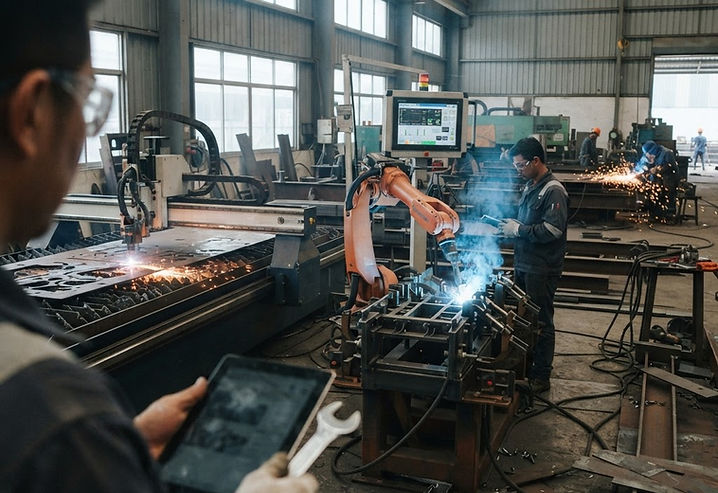
“Downtime”, a word that strikes fear into the hearts of manufacturing managers worldwide. The mere mention of it signals potential disruptions, delays, and financial losses. Unplanned downtime during peak operating hours can wreak havoc on production schedules, leading to delivery delays and wasted resources. The disruption of production hampers schedules, inflicts significant financial losses, and jeopardizes market competitiveness. Addressing downtime is not just about minimizing pauses; it is a strategic imperative that requires a multifaceted approach. This blog explores the ongoing quest to minimize downtime in manufacturing and the multifaceted strategies employed to achieve operational excellence.
What is Downtime?
Simply put, downtime is any duration in which a machine or process is not running. However, not all downtime is created equally. There are two types of downtime, planned and unplanned. Planned downtime is a strategic pause in operations scheduled to maintain machinery and processes for large products like water tanks. It is essential for conducting inspections, cleaning, and part replacements, ensuring optimal equipment performance. For instance, using data from production schedules, an MIS/ERP optimizes maintenance downtime by calculating machine hours and scheduling maintenance when necessary. This proactive approach minimizes unexpected breakdowns, prolongs machinery lifespan, and ensures consistent production levels. Unplanned downtime refers to any unscheduled event that causes a machine or process to be offline, such as equipment failures (e.g., failure of grease ), breakages, material shortages, or human errors. It can also be the result of inefficient scheduling, or even slow changeovers between shifts. While planned downtime for maintenance and upgrades is manageable, unplanned downtime is the real culprit, leading to lost revenue and delayed orders.
How to Reduce Downtime: Best Practices for Downtime Reduction
Monitor Real Time Data: Real time monitoring systems, offer invaluable insights into machine status, job progress, and resource availability. By leveraging real time data, operators can swiftly identify and address potential issues in processes like heat induction bending services before they escalate into major downtime events, ensuring proactive intervention and uninterrupted production flow.

Properly Train Production Line Employees: Investing in comprehensive training programs equips the manufacturing workforce with the skills needed to identify and resolve issues promptly. Well trained employees contribute to error reduction, adherence to best practices, and efficient troubleshooting, ultimately minimizing downtime and maximizing productivity.
Upgrade Manufacturing Equipment: Outdated machinery is a common culprit behind downtime incidents. By upgrading to modern, more efficient equipment such as the latest mining plant and equipment, the manufacturer can enhance productivity and minimize the risk of breakdowns associated with aging machinery, ensuring smooth and uninterrupted operations.
Maintain Effective Changeovers: Optimizing changeover processes is essential for minimizing downtime during product transitions. Streamlining changeover procedures and implementing efficient protocols can significantly reduce the time required to switch between products, maximizing uptime and production efficiency.
Continuous Improvement: Regularly reviewing and improving scheduling processes based on downtime analysis is crucial for ongoing efficiency gains. Leveraging advanced MIS/ERP systems enables continuous improvement by providing actionable insights into operational performance, facilitating data driven decision making, and driving ongoing optimization efforts via asset resilience.
Invest in Technology: Harnessing the power of a robust MIS/ERP/MES system, that can assist in optimizing production processes and minimizing downtime. These sophisticated solutions offer Industry 4.0 features that will monitor, analyse, and optimize workflows empowering manufacturing companies to maximize uptime and manage planned downtime effectively.
Final Thoughts
The journey towards minimizing downtime and maximizing efficiency in packaging operations requires a multifaceted approach, with digital transformation serving as a pivotal solution. By seamlessly integrating Management Information Systems (MIS) into business ecosystem, the manufacturer is not just digitizing operations, the fundamental way of doing business is transformed. The benefits are manifold: real time data sharing empowers decision makers to take immediate action, robust downtime tracking and analysis pave the way for preventative measures, and investments in advanced technologies ensure streamlined workflows and heightened productivity.
K999 Thailand carries out work of this kind through its steel fabrication capability team in Rayong.
Further reading
Follow fabrication yards in Southeast Asia across the wider market on Project Atlas Intel.
How K999 can help
How we apply the technology
Faster quoting, cleaner detailing and fewer site surprises come from the tools we use before the first cut, and the articles here explain how those tools change the work.
3D modelling and detailing- 01
3D modelling and shop detailing that resolves clashes before fabrication starts.
- 02
Fibre laser cutting for plate profiles, with nesting planned around the rolling schedule.
- 03
Project management that reports progress against the same model the client approved.
More on Manufacturing & Technology
All articles

Request for quotation
Need fabricated steel to that standard?
Every enquiry is answered within 48 hours by our estimating team in Rayong. The priced quotation follows once drawings, quantities and standards are confirmed. Stainless steel fabrication, structural steel fabrication, pipe spooling, pressure vessels, steel tanks, mining equipment and conveyors, pig launchers, chutes and hoppers, send the package and we will price it.
Before you request a quotation
Steel fabrication quotation questions
What structural steel fabrication, pressure vessel and pipe spooling packages cost, what to send with an enquiry, and how delivery to site works.
Structural steel fabrication is priced from the section and plate tonnage, the detailing and drawing hours, welding and fitting manhours, NDT requirements, blast and coating system, packing and freight. Grade matters as much as weight: AS/NZS, ASTM, JIS and BS sections carry different mill prices, and heavy built up members take longer than rolled sections. Our Rayong workshop produces around 10,000 tonnes of structural steel fabrication a year, so a clear bill of materials is usually enough to price. Send the drawings and we answer within 48 hours; the priced quotation follows once quantities, standards and delivery dates are confirmed.
For steel fabrication work, send the drawings or IFC package, a bill of materials with material grades, the welding and NDT requirements, the coating specification, the delivery port and your site dates. Add the inspection and test plan, any third party inspection requirement, and whether trial assembly or match marking is needed. Where drawings are still in progress, a scope list with sizes, quantities and duty is enough to start, and the estimate is refined once the final package arrives. Every enquiry is answered within 48 hours, and the priced quotation is issued after scope, standards and quantities are confirmed.
Yes. Pressure vessel fabrication is carried out to ASME Section VIII Div. 1 under our ASME U stamp No. 43,462, or to AS/NZS and BS where the project specifies, covering separators, air receivers, water drums, waste heat recovery units and pig launchers. Steel tanks for fuel, biofuel, chemical, water and food duty are designed in house with our E Tank programme to API, ASME, BS and AS/NZS. Because structural steel, vessels, tanks and their supports are built in the same workshops, one enquiry can cover the vessel package, the tank package and the structural steel that carries them, with a single coating and documentation system and one shipment.
Steel fabrication Australia packages are scheduled from a 33,000 m2 Rayong yard with an 80,000 m2 assembly yard inside Sattahip port, so fabrication, trial assembly, blasting, coating and packing run in one place. Programme length depends on tonnage, material lead times, the coating system and inspection scope, and it is confirmed with the quotation. We quote FOB Laem Chabang, Map Ta Phut or Sattahip, or CIF and DAP to your Australian port, with packing lists, weights, lifting points and a data book per shipment. Staged deliveries can follow your site erection sequence instead of shipping everything at once.
There is no fixed minimum. Pipe spooling Australia packages run at up to 3,000 diameter inches per shift on SCH.40, from a single replacement spool to a full plant piping scope, with spools numbered, X rayed where specified and coated to match erection order. Mining equipment fabrication covers chutes, hoppers, ore bins, transfer towers and conveyor structures with Bisalloy, Hardox, rubber lining or hardfacing fitted in house, from one wear liner set to modules of up to 2,500 tonnes assembled at Sattahip. Send the scope list and we will tell you what the smallest sensible batch is for your programme.