


Industry News
Modern Slavery Clauses in Australian Manufacturing
Australian reporting requirements push manufacturers to audit labour practices through their supply chains, including offshore fabrication.
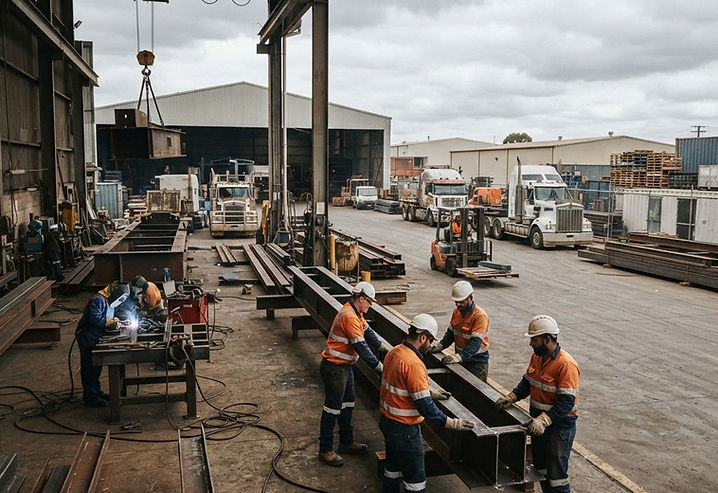
At first glance, modern slavery does not seem to be an issue facing Australian manufacturers. But the statistics prove otherwise. The Australian government estimated that there could be between 1,300 to 1,900 people in conditions of modern slavery in Australia at any given time. The manufacturing sector is considered high risk due to its supply chain complexities and reliance on migrant labour. Australia’s Modern Slavery Act 2018 requires heavy steel fabrication companies with annual consolidated revenue of more than $100 million to report annually on the risks of modern slavery in their operations and supply chains, and actions taken to address those risks. So, how are slavery clauses incorporated in agreements? Let us find out in this blog.
Need and Types of Modern Slavery Clauses
The policy in the Modern Slavery Act is to develop, improve and maintain responsible and transparent supply chains. Notably, the Act requires that businesses subject to it report on their due diligence and remediation processes for preventing and addressing modern slavery practices in their supply chains. Contracts may help businesses satisfy these obligations. Agreements with enforceable modern slavery clauses may also assist businesses with resisting litigation and reputational harm.
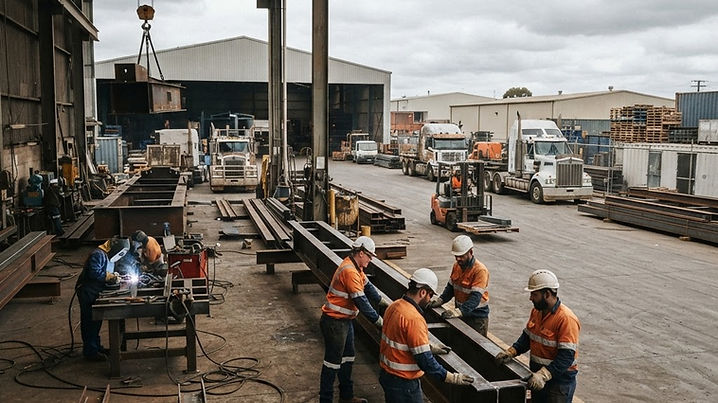
In practice, the drafting approaches for addressing modern slavery in supply chains vary widely. Many contracts between buyers and suppliers include a supplier code of conduct which may address modern slavery. Other drafting approaches include bringing warranties and representations into the contract, importing standards, or obliging a supplier to become a member of a group with prescribed supply chain management requirements which also improves manufacturing traceability. The common feature of these approaches is that they put the onus on the supplier. Consequently, these approaches are problematic because they ignore that the buyer’s purchasing practices may significantly contribute to modern slavery and human trafficking violations. These abuses include aggressive pricing, tight delivery schedules, belated changes to pipe fabrication Australia order quantities, late orders, inaccurate product specifications and forecasting of production needs, lack of support for the supplier, and failures to incentivise elimination of modern slavery in the supply chain.
Alternative Drafting Solution
A good alternative to weighing obligations on the supplier requires that, as part of metal fabrication marketing and sales, both the purchaser and the supplier maintain a human rights due diligence process. While this approach may still impose supplier representations and warranties, it also binds the buyer to responsible purchasing practices. This may include binding the buyer to a responsible purchasing code of conduct and providing for supplier termination if, through the purchasing, modern slavery is unavoidable in the supply chain. A comprehensive treatment of this alternative approach has been provided by the Working Group of the Business Law Section of the American Bar Association. Along with better sharing obligations between the supplier and purchaser, this approach helps reporting entities address their obligation under the Act by describing their due diligence and remediation processes for preventing and addressing modern slavery practices in their supply chains.
Closing Thoughts
It is necessary to recognise the signs of modern slavery. They can include apparent restriction of movement, signs of physical or psychological abuse, fear of authorities, lack of control over earnings, and retention of identity documents by someone else. Section 16(1)(c) of the Modern Slavery Act requires that the reporting entity describe the risks of modern slavery practices in its operations. the reporting entity often must do an initial scoping exercise to identify and describe the modern slavery risks. It remains essential to do this scoping exercise before embarking on the actual contract negotiations and drafting. The Australian Government has published guidance on this initial scoping exercise.
Further reading
Follow public procurement tenders in Europe across the wider market on Project Atlas Intel.
How K999 can help
Where we fit the story
Trade policy, commodity cycles and energy markets decide when projects move, and they decide what gets fabricated. These articles collect the changes we track for our clients.
See our projects- 01
Work delivered for mining, energy, processing and manufacturing clients across Australia and Southeast Asia.
- 02
Fabrication in Rayong with assembly at Sattahip, shipping from Laem Chabang and Map Ta Phut.
- 03
Enquiries answered within 48 hours by our estimating team.
More on Industry News
All articles


Request for quotation
Need fabricated steel to that standard?
Every enquiry is answered within 48 hours by our estimating team in Rayong. The priced quotation follows once drawings, quantities and standards are confirmed. Stainless steel fabrication, structural steel fabrication, pipe spooling, pressure vessels, steel tanks, mining equipment and conveyors, pig launchers, chutes and hoppers, send the package and we will price it.
Before you request a quotation
Steel fabrication quotation questions
What structural steel fabrication, pressure vessel and pipe spooling packages cost, what to send with an enquiry, and how delivery to site works.
Structural steel fabrication is priced from the section and plate tonnage, the detailing and drawing hours, welding and fitting manhours, NDT requirements, blast and coating system, packing and freight. Grade matters as much as weight: AS/NZS, ASTM, JIS and BS sections carry different mill prices, and heavy built up members take longer than rolled sections. Our Rayong workshop produces around 10,000 tonnes of structural steel fabrication a year, so a clear bill of materials is usually enough to price. Send the drawings and we answer within 48 hours; the priced quotation follows once quantities, standards and delivery dates are confirmed.
For steel fabrication work, send the drawings or IFC package, a bill of materials with material grades, the welding and NDT requirements, the coating specification, the delivery port and your site dates. Add the inspection and test plan, any third party inspection requirement, and whether trial assembly or match marking is needed. Where drawings are still in progress, a scope list with sizes, quantities and duty is enough to start, and the estimate is refined once the final package arrives. Every enquiry is answered within 48 hours, and the priced quotation is issued after scope, standards and quantities are confirmed.
Yes. Pressure vessel fabrication is carried out to ASME Section VIII Div. 1 under our ASME U stamp No. 43,462, or to AS/NZS and BS where the project specifies, covering separators, air receivers, water drums, waste heat recovery units and pig launchers. Steel tanks for fuel, biofuel, chemical, water and food duty are designed in house with our E Tank programme to API, ASME, BS and AS/NZS. Because structural steel, vessels, tanks and their supports are built in the same workshops, one enquiry can cover the vessel package, the tank package and the structural steel that carries them, with a single coating and documentation system and one shipment.
Steel fabrication Australia packages are scheduled from a 33,000 m2 Rayong yard with an 80,000 m2 assembly yard inside Sattahip port, so fabrication, trial assembly, blasting, coating and packing run in one place. Programme length depends on tonnage, material lead times, the coating system and inspection scope, and it is confirmed with the quotation. We quote FOB Laem Chabang, Map Ta Phut or Sattahip, or CIF and DAP to your Australian port, with packing lists, weights, lifting points and a data book per shipment. Staged deliveries can follow your site erection sequence instead of shipping everything at once.
There is no fixed minimum. Pipe spooling Australia packages run at up to 3,000 diameter inches per shift on SCH.40, from a single replacement spool to a full plant piping scope, with spools numbered, X rayed where specified and coated to match erection order. Mining equipment fabrication covers chutes, hoppers, ore bins, transfer towers and conveyor structures with Bisalloy, Hardox, rubber lining or hardfacing fitted in house, from one wear liner set to modules of up to 2,500 tonnes assembled at Sattahip. Send the scope list and we will tell you what the smallest sensible batch is for your programme.