


Industry News
Navigating Global Steel Volatility and Supply Chain Shifts
Global steel markets face significant disruption from trade barriers and production shifts. Fabricators must prioritize material traceability and quality certification to mitigate risks while navigating evolving supply chain constraints in the energy and mining sectors.
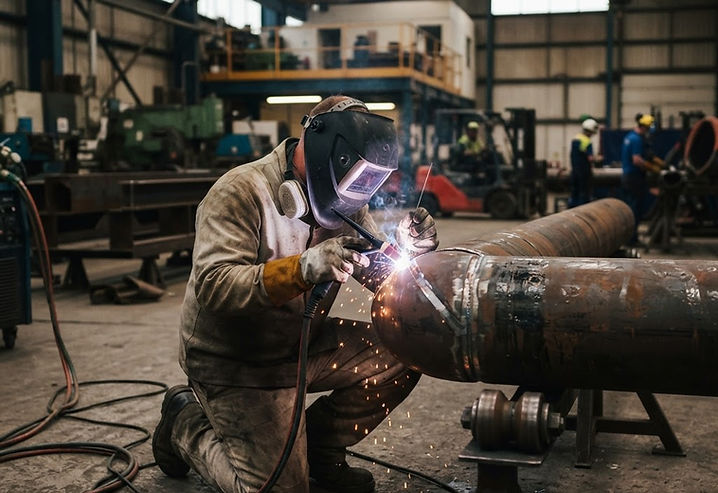
The global steel landscape is undergoing a period of intense volatility as of late 2026. Major producers are grappling with trade barriers, shifting import quotas, and the high costs associated with the transition to green steelmaking. For industrial fabricators and project owners, these macro-level changes are translating into localized supply gaps and increased pressure on material quality assurance. Understanding these dynamics is essential for maintaining project schedules and budget integrity in the mining, oil, and gas sectors.
How do trade barriers and production shifts impact your project procurement?
Recent data indicates that global steel trade is being heavily disrupted by trade protection measures and the diversion of surplus production. Major economies have introduced carbon border taxes and reduced import quotas to protect domestic industries from an influx of low-cost steel products. This has created a complex environment where traditional supply routes are no longer reliable. Fabricators must now account for potential delays in material delivery and the risk of sudden price fluctuations caused by these shifting trade policies.
Project owners and engineering contractors are increasingly finding that standard procurement strategies are insufficient. When sourcing steel for critical infrastructure, the focus must shift toward verifying the origin and compliance of every batch. Relying on established supply chains is no longer a guarantee of availability or quality. It is vital to engage with suppliers who can demonstrate robust traceability and provide clear documentation for all structural steel profiles.
Why is material quality certification becoming a business imperative?
Quality failures in structural steel carry consequences that extend far beyond the immediate cost of replacement. Fabricators are often left to absorb the financial impact of project delays, additional testing, and potential contractual penalties when nonconforming material enters the supply chain. This risk is particularly acute as the industry transitions to new production methods, such as scrap-based milling, which requires stricter oversight to ensure consistent grade compliance.
To mitigate these risks, industry bodies are promoting formal material quality certification programs. These initiatives aim to strengthen traceability and ensure that all materials meet specified standards before they reach the workshop floor. Whether you are fabricating complex components like pig launchers and receivers or large-scale structural frames, requiring certification from your suppliers is a necessary step to level the playing field. It ensures that all competitors are tendering on the same basis of quality and compliance.
What should buyers of fabricated steel do to mitigate supply risks?
Buyers must adopt a proactive approach to risk management by integrating quality and availability assessments into their procurement process. It is no longer enough to simply request a product; you must verify that the supplier has the capacity to deliver the required quantity within your project timeframe. If a specific grade or size is unavailable locally, you should work with your engineering team to identify compliant alternatives early in the design phase.
Furthermore, developers and contractors should stipulate that all materials must conform to recognized quality standards as a condition of tendering. By requesting material from certified suppliers, you reduce the likelihood of encountering nonconforming steel that could derail your project. As the industry continues to evolve, maintaining a flexible and well-vetted supply chain will be the most effective way to navigate the current period of uncertainty.
More detail on how we deliver this work is on our pig launchers and receivers page.
For the calculations behind this topic, the free free engineering calculators from Engineering Toolbox Australia is a practical starting point.
Calculation tool
Run the numbers for this yourself with the free free engineering calculators from Engineering Toolbox Australia. Treat the result as a first check, then confirm the final design with your engineer.
How K999 can help
Where we fit the story
Trade policy, commodity cycles and energy markets decide when projects move, and they decide what gets fabricated. These articles collect the changes we track for our clients.
See our projects- 01
Work delivered for mining, energy, processing and manufacturing clients across Australia and Southeast Asia.
- 02
Fabrication in Rayong with assembly at Sattahip, shipping from Laem Chabang and Map Ta Phut.
- 03
Enquiries answered within 48 hours by our estimating team.
More on Industry News
All articles


Request for quotation
Need fabricated steel to that standard?
Every enquiry is answered within 48 hours by our estimating team in Rayong. The priced quotation follows once drawings, quantities and standards are confirmed. Stainless steel fabrication, structural steel fabrication, pipe spooling, pressure vessels, steel tanks, mining equipment and conveyors, pig launchers, chutes and hoppers, send the package and we will price it.
Before you request a quotation
Steel fabrication quotation questions
What structural steel fabrication, pressure vessel and pipe spooling packages cost, what to send with an enquiry, and how delivery to site works.
Structural steel fabrication is priced from the section and plate tonnage, the detailing and drawing hours, welding and fitting manhours, NDT requirements, blast and coating system, packing and freight. Grade matters as much as weight: AS/NZS, ASTM, JIS and BS sections carry different mill prices, and heavy built up members take longer than rolled sections. Our Rayong workshop produces around 10,000 tonnes of structural steel fabrication a year, so a clear bill of materials is usually enough to price. Send the drawings and we answer within 48 hours; the priced quotation follows once quantities, standards and delivery dates are confirmed.
For steel fabrication work, send the drawings or IFC package, a bill of materials with material grades, the welding and NDT requirements, the coating specification, the delivery port and your site dates. Add the inspection and test plan, any third party inspection requirement, and whether trial assembly or match marking is needed. Where drawings are still in progress, a scope list with sizes, quantities and duty is enough to start, and the estimate is refined once the final package arrives. Every enquiry is answered within 48 hours, and the priced quotation is issued after scope, standards and quantities are confirmed.
Yes. Pressure vessel fabrication is carried out to ASME Section VIII Div. 1 under our ASME U stamp No. 43,462, or to AS/NZS and BS where the project specifies, covering separators, air receivers, water drums, waste heat recovery units and pig launchers. Steel tanks for fuel, biofuel, chemical, water and food duty are designed in house with our E Tank programme to API, ASME, BS and AS/NZS. Because structural steel, vessels, tanks and their supports are built in the same workshops, one enquiry can cover the vessel package, the tank package and the structural steel that carries them, with a single coating and documentation system and one shipment.
Steel fabrication Australia packages are scheduled from a 33,000 m2 Rayong yard with an 80,000 m2 assembly yard inside Sattahip port, so fabrication, trial assembly, blasting, coating and packing run in one place. Programme length depends on tonnage, material lead times, the coating system and inspection scope, and it is confirmed with the quotation. We quote FOB Laem Chabang, Map Ta Phut or Sattahip, or CIF and DAP to your Australian port, with packing lists, weights, lifting points and a data book per shipment. Staged deliveries can follow your site erection sequence instead of shipping everything at once.
There is no fixed minimum. Pipe spooling Australia packages run at up to 3,000 diameter inches per shift on SCH.40, from a single replacement spool to a full plant piping scope, with spools numbered, X rayed where specified and coated to match erection order. Mining equipment fabrication covers chutes, hoppers, ore bins, transfer towers and conveyor structures with Bisalloy, Hardox, rubber lining or hardfacing fitted in house, from one wear liner set to modules of up to 2,500 tonnes assembled at Sattahip. Send the scope list and we will tell you what the smallest sensible batch is for your programme.