


Materials & Coatings
Painting - Ultimate Metal Finishing Technique
Surface preparation, primer compatibility and dry film thickness decide whether a paint system survives site conditions.
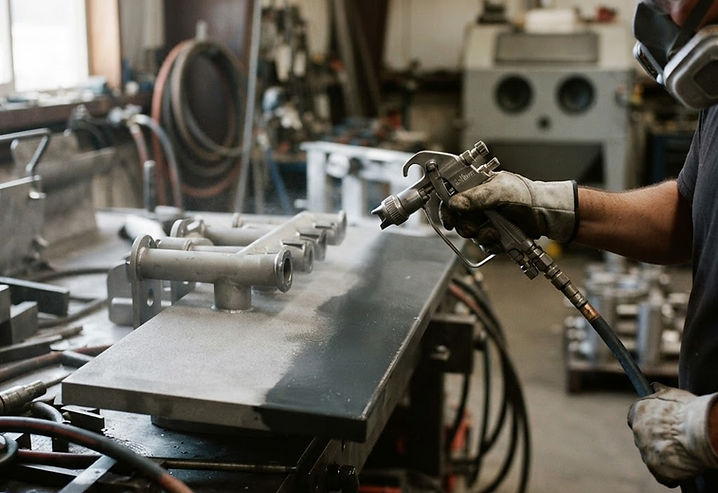
Industrial metal painting is a metal finishing technique applied to fabricated metal products, parts, or components in structural steel fabrication. It is a popular metal coating technique that offers both a functional and aesthetic value to fabricated metal products. Without proper finishing, there are some metals that will begin to tarnish and corrode due to exposure to rain, moisture, marine salts, or ultraviolet light or degrade from the routine effects of corrosive chemicals and agents found in selective industrial and manufacturing environments. While there are other finishing techniques like powder coating or galvanizing, industrial metal painting provides a distinct finishing touch by protecting metal surfaces to ensure durability. This blog will deep dive into this fascinating topic.
The Painting Process
As a finishing technique, painting adds protective layers to the surfaces of metal parts. Traditional painting applications utilize wet painting and powder coating methods that involve spraying or coating paints or pigments on metal parts. Before the paint is applied, metal surface areas are prepped and cleaned according to the condition of the substrate and the type of coating to be applied. The latter needs to be specified as it relates to each type of metal. Electrostatic paint guns are commonly employed by fabricators to spray electrically charged paint particles onto conductive metal surfaces. The result produces a uniform coat that can stand up to the toughest environments. Dry coating finishes utilize similar electrostatic processes but with specially designed powder coating guns.
Commonly Painted Metals

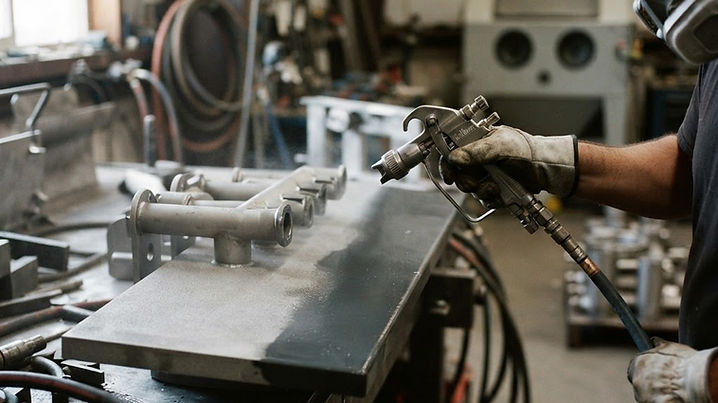
Metal painting services and procedures vary depending on the type of metal that requires a coating. However, the most common industrial metals painted are aluminum and carbon steel. In regards to the former, though aluminum does not often require coating due to its good corrosion resistant properties, in certain environments coatings are needed to provide added protection to the surface. Painting aluminum is also an option to enhance the material’s aesthetic appeal. As an alternative service to painting, aluminum can also be treated with a chemical conversion process via chemical film passivation that adds further corrosion protection to parts and components (e.g., corrosion of pipes ). On the other hand, carbon steel is an industrial metal that requires painting. Of the many favorable properties that make carbon steel prized by fabricators, the one property it does not hold is corrosion resistance. In general, any exposed exterior applications of carbon steel must be protected from corrosion by painting or some other method of coating. Such protective coating inhibits rust and any other chemical reactions in the surrounding environment that could result in corroding the material.
Industries Using Metal Painting
As fabricated metal parts, components, and products are integral to industrial manufacturing worldwide, metal painting services are employed in nearly every industrial sector. Metal paint is required for building and construction, automotive and aerospace, agriculture, mining, all related marine industries, utilities, and energy, any instance where conditions warrant protective coating of metal materials and corrosion resistance is critical. This would include any types of steel structures, agricultural and construction machinery, bridges, pressure vessels, wind turbines, any seafaring vessel, industrial springs, cisterns, handrails, wastewater treatment plants, cranes and conveyors, and immersed metal structures.
Conclusion
It can thus be observed that industrial metal painting provides a hard, durable finish that protects metal surfaces from adverse chemical reactions, physical contact, and exposure. Also, with the exception of certain stainless steel applications in architecture and design, painting metal visually improves the finished appearance of metal products, offering a smooth and uniform appearance. So, it is time manufacturers and fabricators paint the town red, or, in this case, their finished products!
K999 Thailand carries out work of this kind through its abrasive blasting and protective coating team in Rayong.
Further reading
Follow Oil & Gas across the wider market on Project Atlas Intel.
How K999 can help
Material selection and surface protection
We fabricate in stainless, duplex, carbon steel and nickel alloys, and we finish those materials for the environment they will live in, from coastal yards to process plants.
Stainless steel fabrication- 01
Stainless and duplex fabrication with matched filler metals and controlled interpass temperature.
- 02
Abrasive blasting to the specified surface profile before protective coating application.
- 03
Rubber lining and hardfacing for abrasive slurries, chutes and wear plates.
More on Materials & Coatings
All articles


Request for quotation
Need fabricated steel to that standard?
Every enquiry is answered within 48 hours by our estimating team in Rayong. The priced quotation follows once drawings, quantities and standards are confirmed. Stainless steel fabrication, structural steel fabrication, pipe spooling, pressure vessels, steel tanks, mining equipment and conveyors, pig launchers, chutes and hoppers, send the package and we will price it.
Before you request a quotation
Steel fabrication quotation questions
What structural steel fabrication, pressure vessel and pipe spooling packages cost, what to send with an enquiry, and how delivery to site works.
Structural steel fabrication is priced from the section and plate tonnage, the detailing and drawing hours, welding and fitting manhours, NDT requirements, blast and coating system, packing and freight. Grade matters as much as weight: AS/NZS, ASTM, JIS and BS sections carry different mill prices, and heavy built up members take longer than rolled sections. Our Rayong workshop produces around 10,000 tonnes of structural steel fabrication a year, so a clear bill of materials is usually enough to price. Send the drawings and we answer within 48 hours; the priced quotation follows once quantities, standards and delivery dates are confirmed.
For steel fabrication work, send the drawings or IFC package, a bill of materials with material grades, the welding and NDT requirements, the coating specification, the delivery port and your site dates. Add the inspection and test plan, any third party inspection requirement, and whether trial assembly or match marking is needed. Where drawings are still in progress, a scope list with sizes, quantities and duty is enough to start, and the estimate is refined once the final package arrives. Every enquiry is answered within 48 hours, and the priced quotation is issued after scope, standards and quantities are confirmed.
Yes. Pressure vessel fabrication is carried out to ASME Section VIII Div. 1 under our ASME U stamp No. 43,462, or to AS/NZS and BS where the project specifies, covering separators, air receivers, water drums, waste heat recovery units and pig launchers. Steel tanks for fuel, biofuel, chemical, water and food duty are designed in house with our E Tank programme to API, ASME, BS and AS/NZS. Because structural steel, vessels, tanks and their supports are built in the same workshops, one enquiry can cover the vessel package, the tank package and the structural steel that carries them, with a single coating and documentation system and one shipment.
Steel fabrication Australia packages are scheduled from a 33,000 m2 Rayong yard with an 80,000 m2 assembly yard inside Sattahip port, so fabrication, trial assembly, blasting, coating and packing run in one place. Programme length depends on tonnage, material lead times, the coating system and inspection scope, and it is confirmed with the quotation. We quote FOB Laem Chabang, Map Ta Phut or Sattahip, or CIF and DAP to your Australian port, with packing lists, weights, lifting points and a data book per shipment. Staged deliveries can follow your site erection sequence instead of shipping everything at once.
There is no fixed minimum. Pipe spooling Australia packages run at up to 3,000 diameter inches per shift on SCH.40, from a single replacement spool to a full plant piping scope, with spools numbered, X rayed where specified and coated to match erection order. Mining equipment fabrication covers chutes, hoppers, ore bins, transfer towers and conveyor structures with Bisalloy, Hardox, rubber lining or hardfacing fitted in house, from one wear liner set to modules of up to 2,500 tonnes assembled at Sattahip. Send the scope list and we will tell you what the smallest sensible batch is for your programme.