


Materials & Coatings
Pipe Corrosion - Causes and Prevention Techniques
Internal and external corrosion drivers in process pipe, with lining, coating and material selection as the countermeasures.
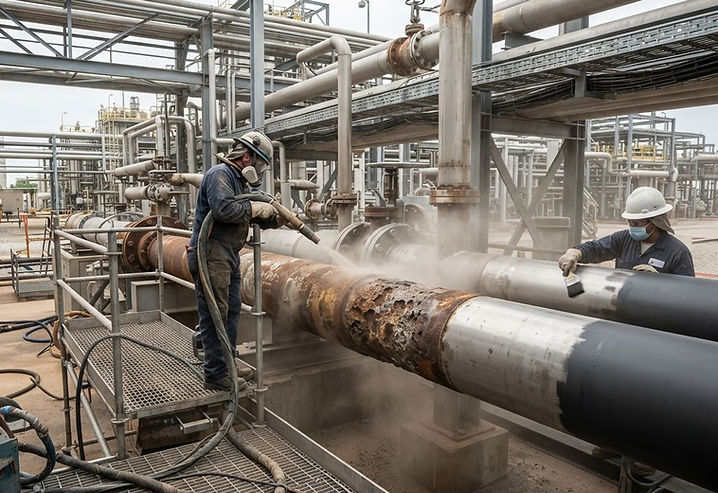
Metal pipes are essential in our day to day lives and in industry for transporting and distributing liquids (e.g., oil, water etc.) from one point to the other. When corrosion takes place, the impacted pipe starts disintegrating and the distribution of liquids is impacted. For pipes transporting water, corrosion may also impact the color, taste, and odor of water. This may be harmful in cases where the water is meant for human consumption. Along with the pipe itself, pipe fabrication connections are seriously impacted by corrosion. So, what are the causes of corrosion and how can it be prevented? This blog will look to discuss this interesting topic going forward.
Causes of Pipe Corrosion
Acidity and Alkalinity, Acidity is one of the factors that cause corrosion in metal pipes. Water has a low PH if it is untreated because of the presence of carbonic acid or other acids. The presence of these acids in water causes corrosion as they will react with pipes. This reaction will go on for a while and eventually the pipes get corroded. Alkalinity refers to bases which are contained in water. These bases are not good for pipes since they are anticorrosive.
Electric Current, It is well known that most of the water pipes are underground. Hence, the electric current will come from earthing. The excess electricity is damped to the ground to prevent accidents in electrical appliances. This electric current that goes to the ground will cause corrosion in these pipes.

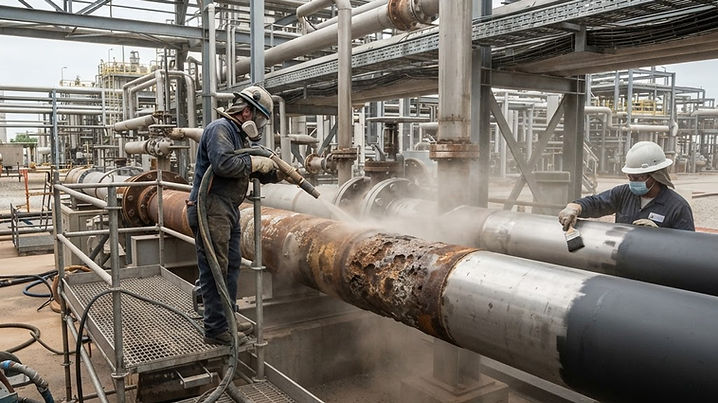
Material and Organic Constituents, Water contains minerals and organic constituents. These dissolved minerals have a great chance of causing corrosion in pipes if they are not eliminated. For instance, dissolved oxygen in water facilitates corrosion in pipes. The only way to eliminate the minerals and organic constituents in water is by treating that water before entering the pipes.
Prevention of Pipe Corrosion
Cathodic Prevention, Cathodic protection is the use of electrical current to prevent corrosion. This is done by connecting the pipe to the negative pole of a DC generator or the anode metals like magnesium so the entire pipe acts as a cathode. The cathodic protection method is very effective for metal pipes that are buried. When the pipe is made to be a cathode, then this will greatly prevent corrosion simply because corrosion only occurs at the anode and not the cathode since corrosion is an electrochemical process.
Proper Pipe Material, The type of pipe material used for welding pipes also has a great influence on preventing corrosion. There are pipe materials that are resistant to corrosion, these kinds of pipe materials will do a great job of preventing corrosion. The best pipe materials that one should consider using are the alloys of iron or steel with chromium, copper, or nickel. They are quite expensive, but they are the best pipe materials for prevention of corrosion and also helps in reducing scrap during the pipe manufacturing process.
Water Treatment, Water treatment involves adjusting the pH value. The moment the PH value is low or high that will facilitate the corrosion of the pipes. So, the water must be treated and the PH should be between 6.5 to 8.5, this is the PH that will prevent the pipes from corroding. Also, treating water tends to take control of calcium carbonate which increases the alkalinity of water. Removal of oxygen from water also aids in the prevention of corrosion in metal pipes, since oxygen is one of the factors that increase corrosion in pipes. The addition of sodium silicate in water when treating it also prevents corrosion in pipes.
The Last Word
It is important to note that corrosion of pipes cannot be eliminated since oxygen will always be available unless the earth is filled with inert gases. However, corrosion needs to be managed to the maximum extent possible else it will impact pipes in the long run and replacement of pipes will be an additional expense. Thus, pipe corrosion is an ongoing phenomenon and the management of corrosion by heavy steel fabrication companies needs to be an ongoing practice as well!
K999 Thailand carries out work of this kind through its abrasive blasting and protective coating team in Rayong.
Further reading
Follow EPC contractors in Southeast Asia across the wider market on Project Atlas Intel.
Calculation tool
Run the numbers for this yourself with the free civil engineering calculator from Engineering Toolbox Australia. Treat the result as a first check, then confirm the final design with your engineer.
How K999 can help
Material selection and surface protection
We fabricate in stainless, duplex, carbon steel and nickel alloys, and we finish those materials for the environment they will live in, from coastal yards to process plants.
Stainless steel fabrication- 01
Stainless and duplex fabrication with matched filler metals and controlled interpass temperature.
- 02
Abrasive blasting to the specified surface profile before protective coating application.
- 03
Rubber lining and hardfacing for abrasive slurries, chutes and wear plates.
More on Materials & Coatings
All articles


Request for quotation
Need fabricated steel to that standard?
Every enquiry is answered within 48 hours by our estimating team in Rayong. The priced quotation follows once drawings, quantities and standards are confirmed. Stainless steel fabrication, structural steel fabrication, pipe spooling, pressure vessels, steel tanks, mining equipment and conveyors, pig launchers, chutes and hoppers, send the package and we will price it.
Before you request a quotation
Steel fabrication quotation questions
What structural steel fabrication, pressure vessel and pipe spooling packages cost, what to send with an enquiry, and how delivery to site works.
Structural steel fabrication is priced from the section and plate tonnage, the detailing and drawing hours, welding and fitting manhours, NDT requirements, blast and coating system, packing and freight. Grade matters as much as weight: AS/NZS, ASTM, JIS and BS sections carry different mill prices, and heavy built up members take longer than rolled sections. Our Rayong workshop produces around 10,000 tonnes of structural steel fabrication a year, so a clear bill of materials is usually enough to price. Send the drawings and we answer within 48 hours; the priced quotation follows once quantities, standards and delivery dates are confirmed.
For steel fabrication work, send the drawings or IFC package, a bill of materials with material grades, the welding and NDT requirements, the coating specification, the delivery port and your site dates. Add the inspection and test plan, any third party inspection requirement, and whether trial assembly or match marking is needed. Where drawings are still in progress, a scope list with sizes, quantities and duty is enough to start, and the estimate is refined once the final package arrives. Every enquiry is answered within 48 hours, and the priced quotation is issued after scope, standards and quantities are confirmed.
Yes. Pressure vessel fabrication is carried out to ASME Section VIII Div. 1 under our ASME U stamp No. 43,462, or to AS/NZS and BS where the project specifies, covering separators, air receivers, water drums, waste heat recovery units and pig launchers. Steel tanks for fuel, biofuel, chemical, water and food duty are designed in house with our E Tank programme to API, ASME, BS and AS/NZS. Because structural steel, vessels, tanks and their supports are built in the same workshops, one enquiry can cover the vessel package, the tank package and the structural steel that carries them, with a single coating and documentation system and one shipment.
Steel fabrication Australia packages are scheduled from a 33,000 m2 Rayong yard with an 80,000 m2 assembly yard inside Sattahip port, so fabrication, trial assembly, blasting, coating and packing run in one place. Programme length depends on tonnage, material lead times, the coating system and inspection scope, and it is confirmed with the quotation. We quote FOB Laem Chabang, Map Ta Phut or Sattahip, or CIF and DAP to your Australian port, with packing lists, weights, lifting points and a data book per shipment. Staged deliveries can follow your site erection sequence instead of shipping everything at once.
There is no fixed minimum. Pipe spooling Australia packages run at up to 3,000 diameter inches per shift on SCH.40, from a single replacement spool to a full plant piping scope, with spools numbered, X rayed where specified and coated to match erection order. Mining equipment fabrication covers chutes, hoppers, ore bins, transfer towers and conveyor structures with Bisalloy, Hardox, rubber lining or hardfacing fitted in house, from one wear liner set to modules of up to 2,500 tonnes assembled at Sattahip. Send the scope list and we will tell you what the smallest sensible batch is for your programme.