


Manufacturing & Technology
Post Processing Techniques in Additive Manufacturing
Stress relief, support removal and surface finishing decide whether a printed part meets its engineering specification.
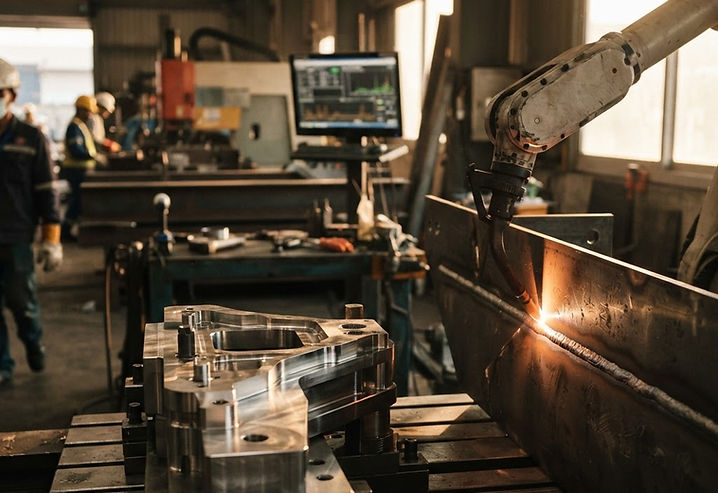
There has been an increasing tendency to move towards additive manufacturing (AM) in recent years. This is due to the process’ enhanced ability to manufacture complex geometries, customised parts, and intricate designs in manufacturing work. However, the secret sauce in ensuring that AM parts reach their full potential is during the postprocessing phase. This is because, postthe fabrication phase, there may be subtle imperfections which if not attended to during postprocessing, can compromise the functionality of the part or diminish its aesthetic value. This article dives into the significant role various postprocessing techniques play and how carefully planned postprocessing can be the difference maker in AM.
Mass Finishing
Advanced mass finishing postprocessing techniques are designed to improve the surface finish of AM parts. These methods, which include vibratory finishing, heat induction bending services and centrifugal disc finishing, use media and compounds in a contained environment to polish and smooth parts. Advanced mass finishing plays a crucial role in the postprocessing phase of AM, bringing several key benefits to the table. One of its primary advantages is the assurance of consistency and uniformity. Regardless of the diverse geometries of parts, mass finishing provides a consistent finish to each, ensuring that every piece meets the desired standard. Furthermore, this process significantly improves the surface quality of the parts. This enhancement is not just a cosmetic one; a better surface finish often translates to improved functional performance across various applications such as pressure vessels. Whether it is reducing wear and tear in mechanical components or amplifying the aesthetic allure of consumer products, the benefits are tangible and manifold.
Additionally, scalability remains one of the standout attributes of advanced mass finishing. Especially pertinent for higher volume production, this technique is adept at managing multiple parts simultaneously. By doing so, it not only maintains the quality across the board but also guarantees a high throughput, making it an indispensable tool for industries aiming for both quality and quantity in their manufacturing endeavors.

Shot Blasting
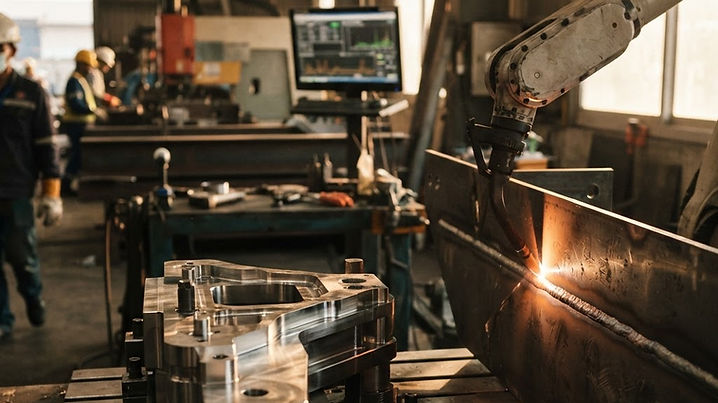
Shot blasting is another postprocessing technique wherein tiny metallic or nonmetallic shots are propelled at high velocity onto the AM part’s surface. This not only cleans the surface from contaminants but also prepares it for subsequent steps like painting or specialized coatings. Shot blasting is a pivotal link to finished fabrication, characterised by its speed and efficiency. The method can swiftly clean and prepare surfaces, positioning it as an ideal choice for expansive AM operations where time is of the essence. Beyond mere cleansing, shot blasting plays a pivotal role in surface profiling. The precision of the process ensures that the desired surface roughness is achieved, setting the stage for subsequent coatings. This meticulous preparation guarantees better adhesion of these coatings, which is integral for many applications.
Furthermore, the longevity imparted by shot blasting cannot be overlooked. The process meticulously removes both imperfections and contaminants from the parts. This thorough cleansing not only enhances the immediate appearance and functionality of the parts but also contributes to their long term durability. As a result, shot blasted parts often boast a prolonged lifespan, offering users more value and reliability from each component, reaffirming the importance of this postprocessing technique in the AM landscape.
Conclusion
The growth and adoption of AM in industries worldwide have spotlighted the importance of a robust and efficient process chain. As AM continues to redefine manufacturing paradigms, businesses must recognize the pivotal role of advanced mass finishing and shot blasting in optimizing efficiency and accelerating production. As the saying goes, “A chain is only as strong as its weakest link.” In the world of AM, a well thought out postprocessing strategy could very well be the strongest link in the chain!
K999 Thailand carries out work of this kind through its steel fabrication capability team in Rayong.
Further reading
Follow critical minerals projects in the United States across the wider market on Project Atlas Intel.
Calculation tool
Run the numbers for this yourself with the free tank volume calculator from Engineering Toolbox Australia. Treat the result as a first check, then confirm the final design with your engineer.
How K999 can help
How we apply the technology
Faster quoting, cleaner detailing and fewer site surprises come from the tools we use before the first cut, and the articles here explain how those tools change the work.
3D modelling and detailing- 01
3D modelling and shop detailing that resolves clashes before fabrication starts.
- 02
Fibre laser cutting for plate profiles, with nesting planned around the rolling schedule.
- 03
Project management that reports progress against the same model the client approved.
More on Manufacturing & Technology
All articles

Request for quotation
Need fabricated steel to that standard?
Every enquiry is answered within 48 hours by our estimating team in Rayong. The priced quotation follows once drawings, quantities and standards are confirmed. Stainless steel fabrication, structural steel fabrication, pipe spooling, pressure vessels, steel tanks, mining equipment and conveyors, pig launchers, chutes and hoppers, send the package and we will price it.
Before you request a quotation
Steel fabrication quotation questions
What structural steel fabrication, pressure vessel and pipe spooling packages cost, what to send with an enquiry, and how delivery to site works.
Structural steel fabrication is priced from the section and plate tonnage, the detailing and drawing hours, welding and fitting manhours, NDT requirements, blast and coating system, packing and freight. Grade matters as much as weight: AS/NZS, ASTM, JIS and BS sections carry different mill prices, and heavy built up members take longer than rolled sections. Our Rayong workshop produces around 10,000 tonnes of structural steel fabrication a year, so a clear bill of materials is usually enough to price. Send the drawings and we answer within 48 hours; the priced quotation follows once quantities, standards and delivery dates are confirmed.
For steel fabrication work, send the drawings or IFC package, a bill of materials with material grades, the welding and NDT requirements, the coating specification, the delivery port and your site dates. Add the inspection and test plan, any third party inspection requirement, and whether trial assembly or match marking is needed. Where drawings are still in progress, a scope list with sizes, quantities and duty is enough to start, and the estimate is refined once the final package arrives. Every enquiry is answered within 48 hours, and the priced quotation is issued after scope, standards and quantities are confirmed.
Yes. Pressure vessel fabrication is carried out to ASME Section VIII Div. 1 under our ASME U stamp No. 43,462, or to AS/NZS and BS where the project specifies, covering separators, air receivers, water drums, waste heat recovery units and pig launchers. Steel tanks for fuel, biofuel, chemical, water and food duty are designed in house with our E Tank programme to API, ASME, BS and AS/NZS. Because structural steel, vessels, tanks and their supports are built in the same workshops, one enquiry can cover the vessel package, the tank package and the structural steel that carries them, with a single coating and documentation system and one shipment.
Steel fabrication Australia packages are scheduled from a 33,000 m2 Rayong yard with an 80,000 m2 assembly yard inside Sattahip port, so fabrication, trial assembly, blasting, coating and packing run in one place. Programme length depends on tonnage, material lead times, the coating system and inspection scope, and it is confirmed with the quotation. We quote FOB Laem Chabang, Map Ta Phut or Sattahip, or CIF and DAP to your Australian port, with packing lists, weights, lifting points and a data book per shipment. Staged deliveries can follow your site erection sequence instead of shipping everything at once.
There is no fixed minimum. Pipe spooling Australia packages run at up to 3,000 diameter inches per shift on SCH.40, from a single replacement spool to a full plant piping scope, with spools numbered, X rayed where specified and coated to match erection order. Mining equipment fabrication covers chutes, hoppers, ore bins, transfer towers and conveyor structures with Bisalloy, Hardox, rubber lining or hardfacing fitted in house, from one wear liner set to modules of up to 2,500 tonnes assembled at Sattahip. Send the scope list and we will tell you what the smallest sensible batch is for your programme.