


Manufacturing & Technology
Potential Benefits of Augmented Reality in Manufacturing
AR overlays work instructions on the assembly, shortening training for complex builds and reducing wrong part picks.
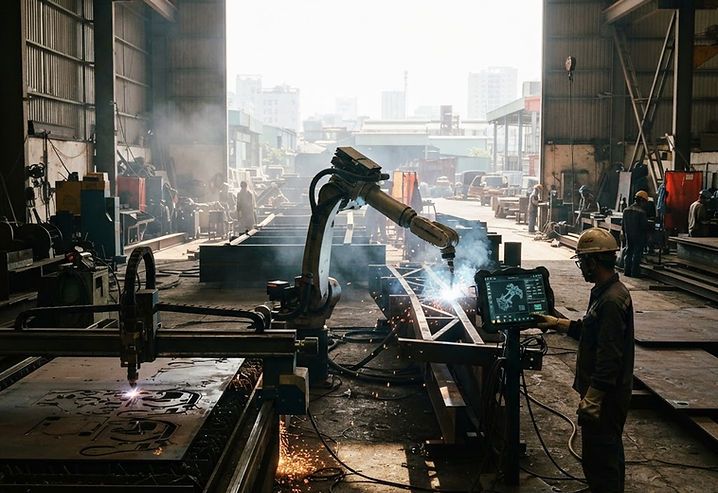
It is no secret that Australian manufacturers and fabricators have been facing enormous challenges over the last few years. This includes tackling a widespread skills gap, experiencing difficulties in finding skilled workers despite job vacancies in Australia peaking at a record 480,900 positions in 2022, managing an ageing workforce with projections that around 40% of the workforce will be over 55 by 2050 and the loss of important skills as older workers head towards retirement. To mitigate these challenges, manufacturers must take their digital transformation to the next level and embrace intelligent technology such as augmented reality (AR) to better support frontline workers. How does AR make manufacturers’ lives better? Let us find out further in this blog.
Industry 4.0 and the smart factory
Industry 4.0 has delivered advances such as robotics in the oil and gas industry, artificial intelligence (AI), AR, and virtual reality (VR). With the rise of the smart factory, technologies such as AR will be the driving force behind increased profitability, better quality goods, and faster production. Already, many enterprises are benefitting from AR through quality control, maintenance, and repair, streamlined workflows, and remote onboarding and training, to improve productivity, enhance safety, and tackle the skills gap. There is incredible potential for AR to be deployed to support frontline workers on factory floors, from manufacturing to food and beverage packaging. AR can equip frontline staff with digitized manufacturing processes through ‘smart glasses.’ These glasses can replace error prone paper lists or manuals and enable smoothly guided assembly. They ensure the user always has all relevant information in view, and both hands free for their current activity. AR enabled cameras and sensors can also provide a standard quality assurance system that ensures perfect results in each production step.

AR in action
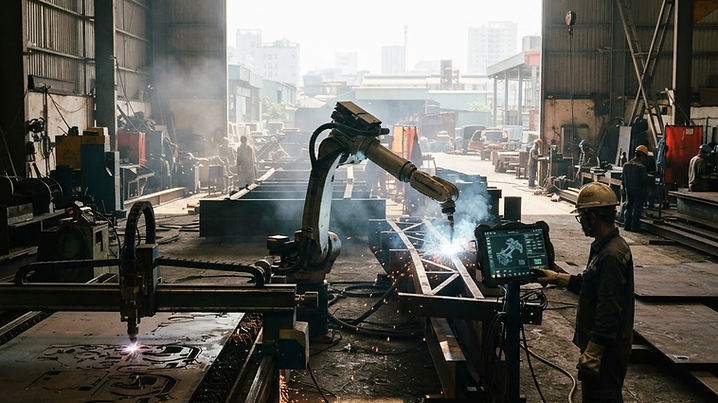
Users showcase how AR streamlines frontline activities in warehouses and on factory floors of heavy steel fabrication companies. Global soft drink giant Coca Cola Hellenic Bottling Company (HBC) switched to smart glasses and remote assistance from TeamViewer to improve picking quality and pallet packing accuracy in its warehouse. Using smart glasses, Coca Cola’s employees at any of its 54 locations can contact experts remotely via video call and get help to restore operations with a minimum of downtime. Management visits and training can now also be carried out remotely over video calls, streamlining and extending the transfer of skills. However, the real value of AR is that it can be deployed anywhere, anytime, to solve multiple challenges. Both Toyota and BMW use AR in the field to help their technicians work more efficiently and effectively to get customers back into their vehicles sooner. Using AR, technicians can contact experts directly through their smart glasses. The camera in the smart glasses captures the mechanic’s exact field of view and the image is transmitted to a remote expert through a video call in real time. The expert assesses the situation, offers technical advice, and helps solve problems efficiently and collaboratively. Parts of the vehicle’s assembly instructions, including pipe fabrication components, can also be displayed directly in the technician’s field of vision on site, or instructions can be visually clarified using remote support features. While this improves customer service, it also means that technical support engineers can help far more in field technicians without wasting a large amount of time on the road.
Closing Thoughts
With Industry 4.0 now commonplace, it is time for Australian manufacturers to move forward and invest in solutions such as AR to help deliver exceptional experiences for their frontline staff. AR lets manufacturers better support their staff while simultaneously improving productivity, tackling skills gaps, and minimizing errors. The AR train is starting its journey and manufacturers need to hop on at the earliest!
K999 Thailand carries out work of this kind through its steel fabrication capability team in Rayong.
Further reading
Follow Oil & Gas across the wider market on Project Atlas Intel.
Calculation tool
Run the numbers for this yourself with the free civil engineering calculator from Engineering Toolbox Australia. Treat the result as a first check, then confirm the final design with your engineer.
How K999 can help
How we apply the technology
Faster quoting, cleaner detailing and fewer site surprises come from the tools we use before the first cut, and the articles here explain how those tools change the work.
3D modelling and detailing- 01
3D modelling and shop detailing that resolves clashes before fabrication starts.
- 02
Fibre laser cutting for plate profiles, with nesting planned around the rolling schedule.
- 03
Project management that reports progress against the same model the client approved.
More on Manufacturing & Technology
All articles

Request for quotation
Need fabricated steel to that standard?
Every enquiry is answered within 48 hours by our estimating team in Rayong. The priced quotation follows once drawings, quantities and standards are confirmed. Stainless steel fabrication, structural steel fabrication, pipe spooling, pressure vessels, steel tanks, mining equipment and conveyors, pig launchers, chutes and hoppers, send the package and we will price it.
Before you request a quotation
Steel fabrication quotation questions
What structural steel fabrication, pressure vessel and pipe spooling packages cost, what to send with an enquiry, and how delivery to site works.
Structural steel fabrication is priced from the section and plate tonnage, the detailing and drawing hours, welding and fitting manhours, NDT requirements, blast and coating system, packing and freight. Grade matters as much as weight: AS/NZS, ASTM, JIS and BS sections carry different mill prices, and heavy built up members take longer than rolled sections. Our Rayong workshop produces around 10,000 tonnes of structural steel fabrication a year, so a clear bill of materials is usually enough to price. Send the drawings and we answer within 48 hours; the priced quotation follows once quantities, standards and delivery dates are confirmed.
For steel fabrication work, send the drawings or IFC package, a bill of materials with material grades, the welding and NDT requirements, the coating specification, the delivery port and your site dates. Add the inspection and test plan, any third party inspection requirement, and whether trial assembly or match marking is needed. Where drawings are still in progress, a scope list with sizes, quantities and duty is enough to start, and the estimate is refined once the final package arrives. Every enquiry is answered within 48 hours, and the priced quotation is issued after scope, standards and quantities are confirmed.
Yes. Pressure vessel fabrication is carried out to ASME Section VIII Div. 1 under our ASME U stamp No. 43,462, or to AS/NZS and BS where the project specifies, covering separators, air receivers, water drums, waste heat recovery units and pig launchers. Steel tanks for fuel, biofuel, chemical, water and food duty are designed in house with our E Tank programme to API, ASME, BS and AS/NZS. Because structural steel, vessels, tanks and their supports are built in the same workshops, one enquiry can cover the vessel package, the tank package and the structural steel that carries them, with a single coating and documentation system and one shipment.
Steel fabrication Australia packages are scheduled from a 33,000 m2 Rayong yard with an 80,000 m2 assembly yard inside Sattahip port, so fabrication, trial assembly, blasting, coating and packing run in one place. Programme length depends on tonnage, material lead times, the coating system and inspection scope, and it is confirmed with the quotation. We quote FOB Laem Chabang, Map Ta Phut or Sattahip, or CIF and DAP to your Australian port, with packing lists, weights, lifting points and a data book per shipment. Staged deliveries can follow your site erection sequence instead of shipping everything at once.
There is no fixed minimum. Pipe spooling Australia packages run at up to 3,000 diameter inches per shift on SCH.40, from a single replacement spool to a full plant piping scope, with spools numbered, X rayed where specified and coated to match erection order. Mining equipment fabrication covers chutes, hoppers, ore bins, transfer towers and conveyor structures with Bisalloy, Hardox, rubber lining or hardfacing fitted in house, from one wear liner set to modules of up to 2,500 tonnes assembled at Sattahip. Send the scope list and we will tell you what the smallest sensible batch is for your programme.