


Manufacturing & Technology
Power of Manufacturing Traceability
Heat numbers, weld maps and inspection records let a fabricator prove compliance years after a package shipped.
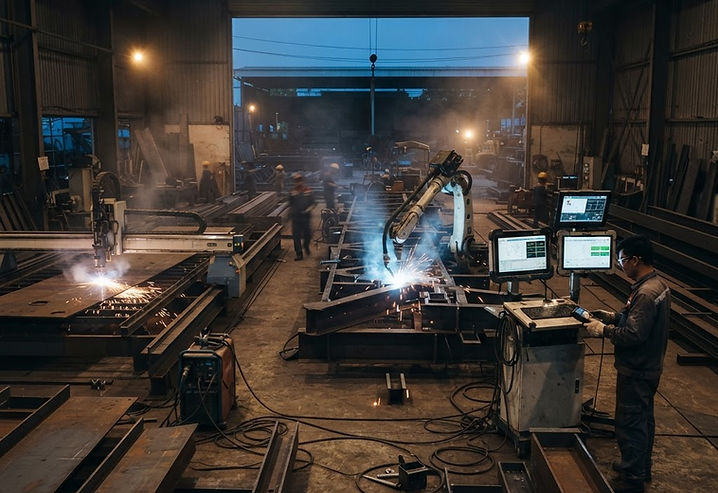
In a manufacturing landscape defined by rigorous standards, emerging technologies, and customer demands for exceptional quality, traceability has become a paramount necessity. Regulatory bodies worldwide enforce stringent controls and conduct frequent audits, making it imperative for manufacturers to have a handle on every facet of their production process. Overlooking risks could result in severe penalties and damaging recalls. The blog explores how traceability functions as the lifeline of today’s highly regulated industries and how it can be harnessed to effectively neutralize product recall risks.
Grave Impact of Product Recall Risks
In industries such as aerospace, automotive, medical devices and pipe fabrication, the stakes are invariably high due to the extreme levels of regulations governing them. The term “recall risks” is, hence, a menacing phrase that sends a ripple of unease through these sectors. The reasons for these jitters are multifold. A product recall, arising due to factors such as noncompliance with the set standards, product defects, or quality control issues, can be an immense logistical challenge, leading to significant financial drain and irreparable damage to your brand’s reputation and consumer trust.
Rise of Traceability in Manufacturing
In the face of such daunting challenges, traceability in manufacturing proves to be a formidable ally. In the pretraceability era, manufacturers faced the herculean task of maintaining comprehensive oversight over their entire production line and supply chain. However, the incorporation of traceability components within a Manufacturing Execution System (MES) solution marks a paradigm shift in this scenario. These components empower you with real time, transparent visibility into every stage of production, from sourcing raw materials, through tracking materials down to single piece and its entire history and lot information and associating that without error to each final end unit produced. This granular insight enables you to swiftly identify potential issues and drive quality management. As a result, it minimizes the risk of product recalls, thus circumventing the associated financial losses and reputational damage.
Core Traceability Components

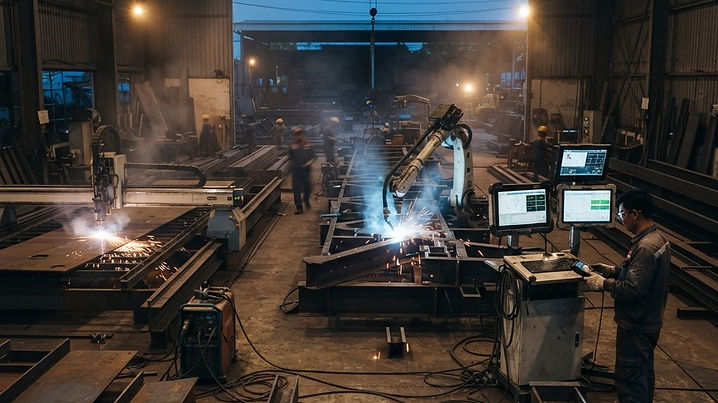
Understanding the manufacturing execution system benefits, particularly the value of traceability components, can substantially alleviate risks. Let us delve deeper into these features:
Real time data capture and visibility.
Data is the backbone of traceability, providing the means to track, verify, and document the entire lifecycle of products or materials. The ability to easily capture and retrieve data in real time and present it in an easy to understand manner is a significant advantage offered by modern MES solutions. Real time data capture and visibility via AI video surveillance means you can swiftly spot and rectify issues, whether it is an equipment failure, a sudden spike in defect rates, or a drop in production efficiency. This immediate identification and resolution of issues often prove crucial in preventing expensive recalls.
Detailed audit trails.
In a highly regulated environment, having a detailed and accurate record of every operation and transaction is critical. Audit trails provided by MES solutions ensure that every movement of goods, every adjustment in parameters, and every quality check is recorded and easily retrievable. These digital ‘paper trails’ simplify the process of inspections and audits. By highlighting exactly where a defect or noncompliance occurred, audit trails help in swift recall management, saving precious time and resources.
Supplier quality management.
The role of suppliers in future proofing manufacturing supply chains is undeniable. The quality of raw materials sourced from suppliers can significantly impact the final product’s quality. Therefore, having robust inspection, data capture, and analytics is essential. The right MES solutions can enable you to closely monitor the quality and compliance of raw materials and your suppliers. This proactive approach helps minimize the risk of introducing defects or noncompliance issues into the production process, thereby mitigating recall risks.
The Last Word
In a rapidly changing manufacturing landscape marked by stringent regulatory norms and high consumer expectations, recall risks present an ongoing challenge. By deploying advanced traceability measures, you can fortify your operations against potential setbacks. As discussed above, the stakes are high in the highly regulated manufacturing and steel fabrication Australia sector. The potential risks emanating from product recalls (such as pressure vessels ) are not merely financial but can significantly damage a company’s reputation and customer trust. However, armed with robust traceability capabilities, in a modern MES platform, you can navigate this precarious path with increased confidence.
K999 Thailand carries out work of this kind through its steel fabrication capability team in Rayong.
Further reading
Follow project contacts directory across the wider market on Project Atlas Intel.
How K999 can help
How we apply the technology
Faster quoting, cleaner detailing and fewer site surprises come from the tools we use before the first cut, and the articles here explain how those tools change the work.
3D modelling and detailing- 01
3D modelling and shop detailing that resolves clashes before fabrication starts.
- 02
Fibre laser cutting for plate profiles, with nesting planned around the rolling schedule.
- 03
Project management that reports progress against the same model the client approved.
More on Manufacturing & Technology
All articles

Request for quotation
Need fabricated steel to that standard?
Every enquiry is answered within 48 hours by our estimating team in Rayong. The priced quotation follows once drawings, quantities and standards are confirmed. Stainless steel fabrication, structural steel fabrication, pipe spooling, pressure vessels, steel tanks, mining equipment and conveyors, pig launchers, chutes and hoppers, send the package and we will price it.
Before you request a quotation
Steel fabrication quotation questions
What structural steel fabrication, pressure vessel and pipe spooling packages cost, what to send with an enquiry, and how delivery to site works.
Structural steel fabrication is priced from the section and plate tonnage, the detailing and drawing hours, welding and fitting manhours, NDT requirements, blast and coating system, packing and freight. Grade matters as much as weight: AS/NZS, ASTM, JIS and BS sections carry different mill prices, and heavy built up members take longer than rolled sections. Our Rayong workshop produces around 10,000 tonnes of structural steel fabrication a year, so a clear bill of materials is usually enough to price. Send the drawings and we answer within 48 hours; the priced quotation follows once quantities, standards and delivery dates are confirmed.
For steel fabrication work, send the drawings or IFC package, a bill of materials with material grades, the welding and NDT requirements, the coating specification, the delivery port and your site dates. Add the inspection and test plan, any third party inspection requirement, and whether trial assembly or match marking is needed. Where drawings are still in progress, a scope list with sizes, quantities and duty is enough to start, and the estimate is refined once the final package arrives. Every enquiry is answered within 48 hours, and the priced quotation is issued after scope, standards and quantities are confirmed.
Yes. Pressure vessel fabrication is carried out to ASME Section VIII Div. 1 under our ASME U stamp No. 43,462, or to AS/NZS and BS where the project specifies, covering separators, air receivers, water drums, waste heat recovery units and pig launchers. Steel tanks for fuel, biofuel, chemical, water and food duty are designed in house with our E Tank programme to API, ASME, BS and AS/NZS. Because structural steel, vessels, tanks and their supports are built in the same workshops, one enquiry can cover the vessel package, the tank package and the structural steel that carries them, with a single coating and documentation system and one shipment.
Steel fabrication Australia packages are scheduled from a 33,000 m2 Rayong yard with an 80,000 m2 assembly yard inside Sattahip port, so fabrication, trial assembly, blasting, coating and packing run in one place. Programme length depends on tonnage, material lead times, the coating system and inspection scope, and it is confirmed with the quotation. We quote FOB Laem Chabang, Map Ta Phut or Sattahip, or CIF and DAP to your Australian port, with packing lists, weights, lifting points and a data book per shipment. Staged deliveries can follow your site erection sequence instead of shipping everything at once.
There is no fixed minimum. Pipe spooling Australia packages run at up to 3,000 diameter inches per shift on SCH.40, from a single replacement spool to a full plant piping scope, with spools numbered, X rayed where specified and coated to match erection order. Mining equipment fabrication covers chutes, hoppers, ore bins, transfer towers and conveyor structures with Bisalloy, Hardox, rubber lining or hardfacing fitted in house, from one wear liner set to modules of up to 2,500 tonnes assembled at Sattahip. Send the scope list and we will tell you what the smallest sensible batch is for your programme.