


Fabrication
Pro Tips for Fabricating Heavy Industrial Steel Structures
Learn essential shop floor techniques for managing heavy steel fabrication. This guide covers distortion control, smart material procurement, and critical quality inspection practices for industrial projects.

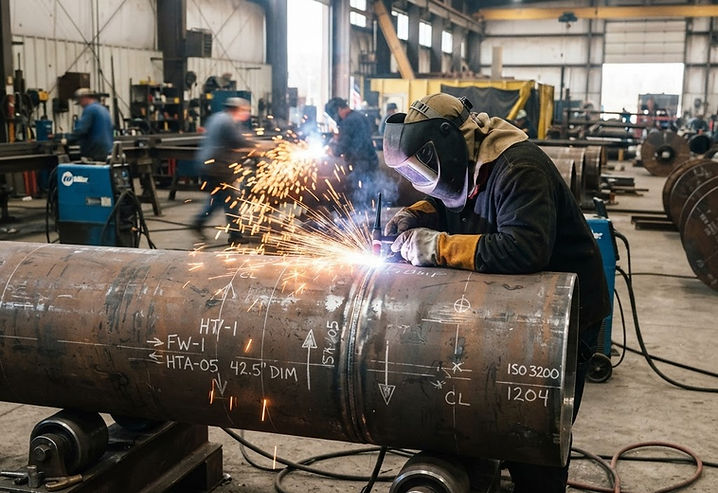
Precision in industrial steel fabrication often hinges on the small, overlooked details managed on the shop floor. Experienced fabricators know that theory and practice frequently diverge when dealing with large structures destined for mining or gas assets. These hard-won lessons help project managers and engineers avoid common rework cycles. By focusing on workflow, you can optimize your next project using our capability statement to ensure high standards.
How can you effectively minimize distortion in thick section welding?
Heavy plate welding inevitably causes heat-induced movement that complicates assembly. One proven method is the back-stepping technique, which distributes heat more evenly across the joint length. Always maintain strict control over your inter-pass temperatures to prevent excessive buildup that pulls the steel out of alignment.
Balance your weld profiles by alternating sides whenever possible. This symmetrical approach counteracts the contraction forces that occur as the weld bead cools. Using temporary bracing or strongbacks can also lock components in place until the structural welds gain sufficient cooling strength.
Which procurement strategies prevent costly fabrication delays?
Accurate material estimation is the first step in avoiding project downtime. When you need to verify quantities for structural members, use a reliable steel take-off calculator to ensure your purchase orders match the assembly drawings perfectly. Incorrect calculations often lead to surplus waste or critical shortages that halt production.
Source your raw materials based on the specific environmental requirements of the final site. Materials destined for offshore or chemical plants require traceable certificates from the initial melt to the final cutting stage. Check industrial project intelligence to understand the long-term site demands that influence your procurement specifications.
How should you streamline quality control for large assemblies?
Quality control is most effective when it is baked into the fabrication process rather than treated as a final inspection event. Implement a system of in-process hold points that require verification before the next step begins. This prevents the costly mistake of welding hidden elements that might fail a later non-destructive test.
Document every measurement during the fit-up stage while the steel remains accessible. Keep your calibrated tools readily available near the assembly stations to encourage frequent checking. A small measurement error caught during fit-up saves hours of rework once the structure is fully welded and rigid. Clear communication between the shop floor and the engineering office remains the best defense against recurring dimensional issues. Focus on these practical steps to improve efficiency and reduce the overall cost of your industrial steel fabrication projects.
More detail on how we deliver this work is on our our capability statement page.
Further reading
Follow procurement intelligence across the wider market on Project Atlas Intel.
Calculation tool
Run the numbers for this yourself with the free steel take-off calculator from Engineering Toolbox Australia. Treat the result as a first check, then confirm the final design with your engineer.
How K999 can help
Fabrication capacity behind the article
Articles in this section describe work we run every week in Rayong: cutting, forming, welding and assembly, under cover and in the yard, with the documentation that goes with it.
Structural steel fabrication- 01
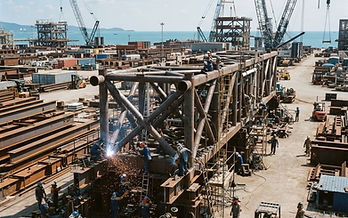
Two workshops totalling more than 33,000 m² plus an 80,000 m² assembly yard at Sattahip.
- 02
Structural steel fabrication to 10,000 tonnes a year, with the largest single module built at 2,500 tonnes.
- 03
Blast, prime and paint before dispatch, with dimensional reports issued against the approved drawings.
More on Fabrication
All articles


Request for quotation
Need fabricated steel to that standard?
Every enquiry is answered within 48 hours by our estimating team in Rayong. The priced quotation follows once drawings, quantities and standards are confirmed. Stainless steel fabrication, structural steel fabrication, pipe spooling, pressure vessels, steel tanks, mining equipment and conveyors, pig launchers, chutes and hoppers, send the package and we will price it.
Before you request a quotation
Steel fabrication quotation questions
What structural steel fabrication, pressure vessel and pipe spooling packages cost, what to send with an enquiry, and how delivery to site works.
Structural steel fabrication is priced from the section and plate tonnage, the detailing and drawing hours, welding and fitting manhours, NDT requirements, blast and coating system, packing and freight. Grade matters as much as weight: AS/NZS, ASTM, JIS and BS sections carry different mill prices, and heavy built up members take longer than rolled sections. Our Rayong workshop produces around 10,000 tonnes of structural steel fabrication a year, so a clear bill of materials is usually enough to price. Send the drawings and we answer within 48 hours; the priced quotation follows once quantities, standards and delivery dates are confirmed.
For steel fabrication work, send the drawings or IFC package, a bill of materials with material grades, the welding and NDT requirements, the coating specification, the delivery port and your site dates. Add the inspection and test plan, any third party inspection requirement, and whether trial assembly or match marking is needed. Where drawings are still in progress, a scope list with sizes, quantities and duty is enough to start, and the estimate is refined once the final package arrives. Every enquiry is answered within 48 hours, and the priced quotation is issued after scope, standards and quantities are confirmed.
Yes. Pressure vessel fabrication is carried out to ASME Section VIII Div. 1 under our ASME U stamp No. 43,462, or to AS/NZS and BS where the project specifies, covering separators, air receivers, water drums, waste heat recovery units and pig launchers. Steel tanks for fuel, biofuel, chemical, water and food duty are designed in house with our E Tank programme to API, ASME, BS and AS/NZS. Because structural steel, vessels, tanks and their supports are built in the same workshops, one enquiry can cover the vessel package, the tank package and the structural steel that carries them, with a single coating and documentation system and one shipment.
Steel fabrication Australia packages are scheduled from a 33,000 m2 Rayong yard with an 80,000 m2 assembly yard inside Sattahip port, so fabrication, trial assembly, blasting, coating and packing run in one place. Programme length depends on tonnage, material lead times, the coating system and inspection scope, and it is confirmed with the quotation. We quote FOB Laem Chabang, Map Ta Phut or Sattahip, or CIF and DAP to your Australian port, with packing lists, weights, lifting points and a data book per shipment. Staged deliveries can follow your site erection sequence instead of shipping everything at once.
There is no fixed minimum. Pipe spooling Australia packages run at up to 3,000 diameter inches per shift on SCH.40, from a single replacement spool to a full plant piping scope, with spools numbered, X rayed where specified and coated to match erection order. Mining equipment fabrication covers chutes, hoppers, ore bins, transfer towers and conveyor structures with Bisalloy, Hardox, rubber lining or hardfacing fitted in house, from one wear liner set to modules of up to 2,500 tonnes assembled at Sattahip. Send the scope list and we will tell you what the smallest sensible batch is for your programme.